Most roof tiles crack for one of five reasons. Someone has put weight on them, something has fallen on them, frost has worked into the material, the tile has simply aged, or the way it was fixed has put it under strain. A single cracked tile is usually a small repair. A spread of them across a slope is more often a sign that the covering itself is wearing out.
The cause matters because it decides what happens next. A tile broken by a ladder needs replacing and nothing more. Tiles cracking in rows because they have been soaking up water and freezing for decades will keep cracking however many are swapped. Below is how to tell the difference, and what each one means for your roof.
Weight in the wrong place
Roof tiles are strong in the way they are meant to be loaded, lying on battens and carrying rain and wind, but most are not made to be walked on. Marley, the tile manufacturer, says plainly in its guide to cracked roof tiles that most tiles are not designed to be walked on once installed, and that any weight applied can crack or break them.
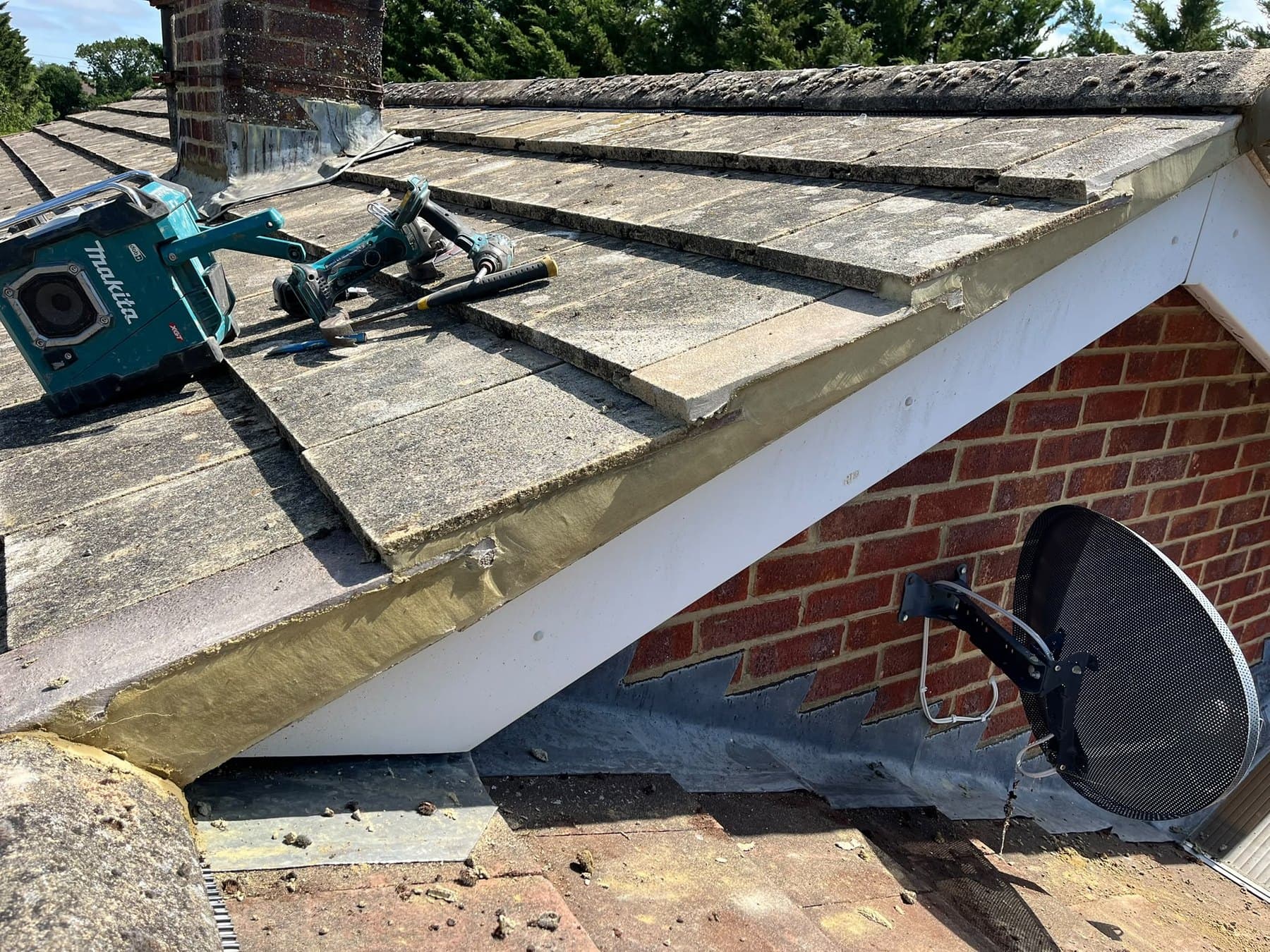
So a crop of cracked tiles often traces back to a visit to the roof by somebody. Aerial and satellite fitters, solar installers, window cleaners reaching a dormer, a neighbour retrieving a ball, even a roofer who did not use the right kit. The cracks tend to cluster along a route, near a chimney, below a dish or around a roof window, which is often the clue.
The proper way onto a tiled roof is a roof ladder hooked over the ridge or crawling boards that spread the load across many tiles, with packing under them. Marley's advice on walking on roof tiles says the same, because point loading is what breaks tiles. If somebody is going up to fit something, it is fair to ask how they will get across your roof before they start.
Things falling on the roof
A branch coming down in a gale, a slate blown off a neighbour's roof, or a brick or a pot falling from a chimney stack will crack whatever it lands on. Storm damage of this kind is usually easy to read, because the broken tiles sit in one patch, often with the culprit still lying in the gutter.
The chimney deserves a look of its own here. A stack with loose pots, crumbling mortar or a split cap sheds pieces onto the slope below it, so cracked tiles beneath a chimney are often a chimney problem. How to spot storm damage covers what to check after a blow, and our chimney repairs deal with the stack itself.
Frost, water and age
Clay and concrete tiles both absorb some water. When a wet tile freezes, the water in it expands and pushes the material apart from the inside. One frost does nothing visible, but years of them open up fine cracks, flake the surface away or split the tile in layers. Clay tiles sold today are tested against exactly that, under BS EN 539-2, the European test for the frost resistance of clay roofing tiles, which exists because frost is how clay tiles fail.
Age makes everything else more likely. Decades of rain and frost wear the surface of a tile, and old clay tiles may well have been made long before today's frost test existed. Marley's guidance is that cracks on an older roof can be a sign that more substantial repairs are needed, and that is the honest reading when tiles are cracking at random across a whole slope rather than in one place. At that stage it is worth reading how to tell if your roof needs replacing before paying for repairs one tile at a time.
How the tile was fixed
Some cracks start the day the roof is laid, and Marley lists poor installation among the main causes. A nail driven too hard can crack a tile at its nail hole, and a clip forced over a tile that does not sit flat will hold it under strain until it gives. Jonathan Greenough, a Fellow of the Institute of Roofing, notes in an article on repairing clay tiled and slated roofs that the nibs on clay tiles, the lugs that hook over the batten, can fracture from thermal stresses in the roof covering. When a nib goes, the tile is still in place and looks whole, but it is no longer held.
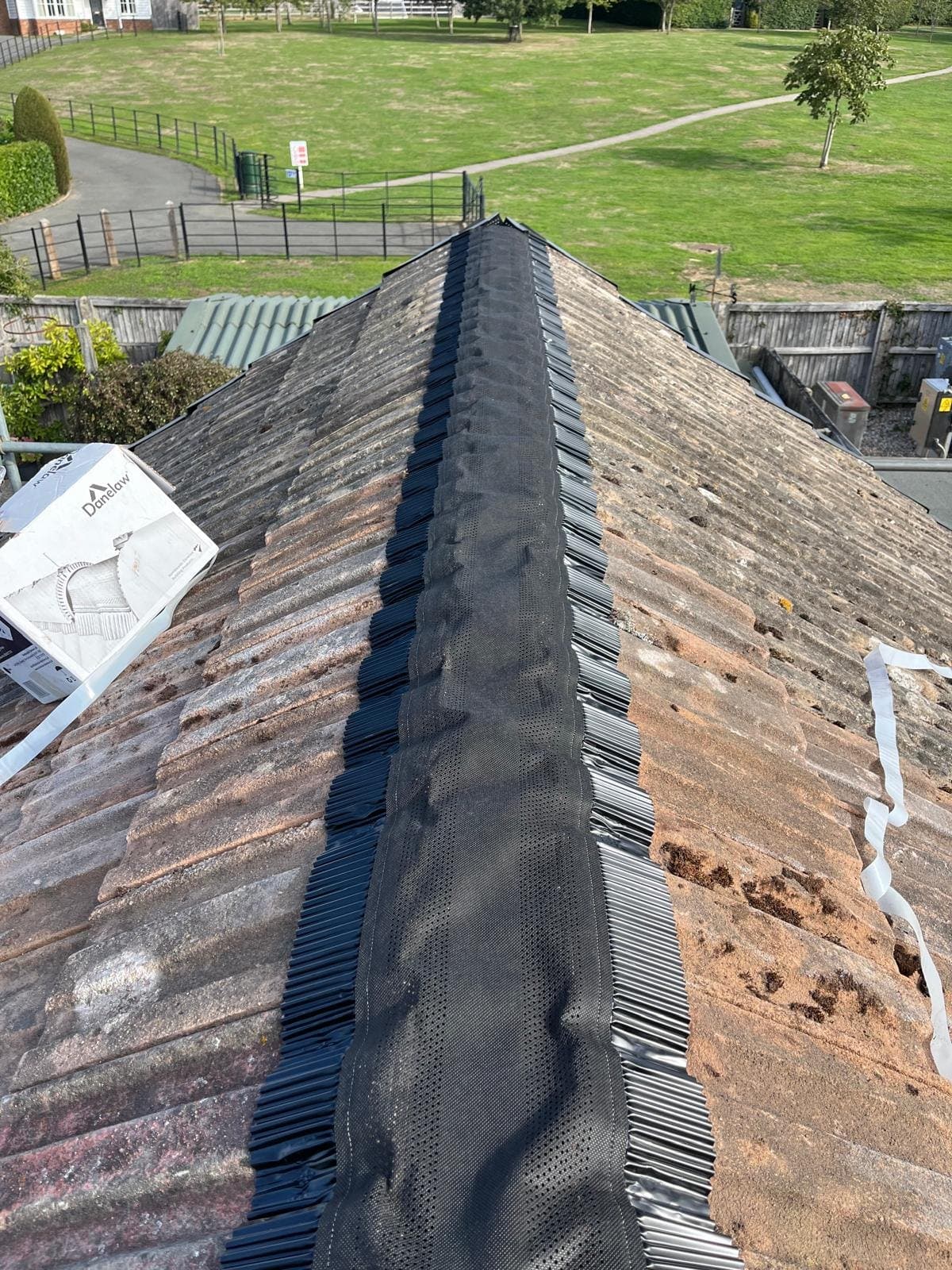
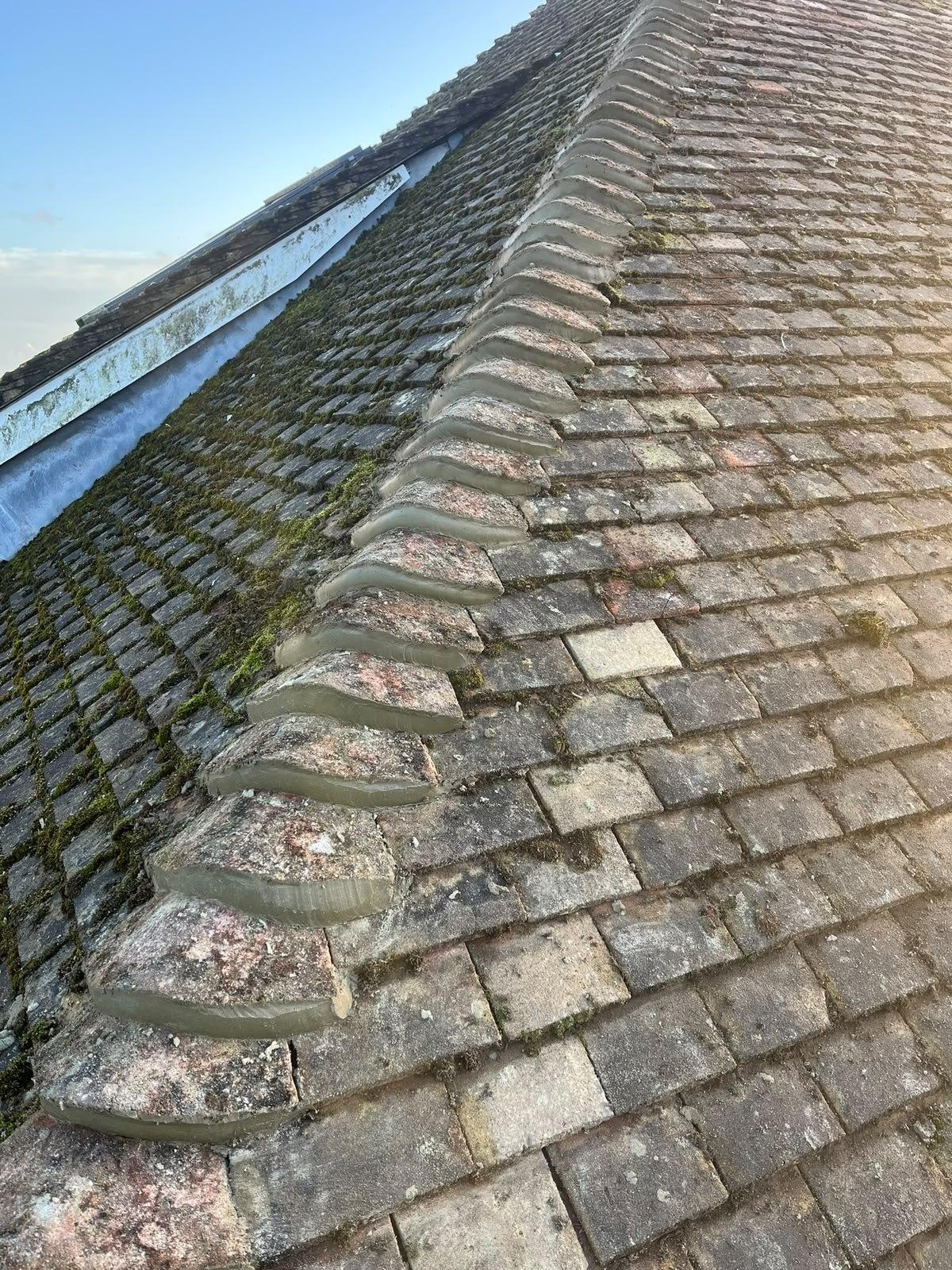
Mortar is the other fixing that cracks tiles. Ridge and verge tiles bedded only in mortar are held rigidly, and as the bed shrinks, weathers and moves, the tiles crack and loosen with it. That is a large part of why we replace more ridge tiles than almost anything else, and why the current British Standard expects ridges to be mechanically fixed. Our ridge tiles and repointing and dry ridge pages cover both repairs.
Does one cracked tile matter?
Usually yes, though not always urgently. Marley's own advice on cracked tiles is that even minor damage can let rain and wind into the roof structure. On a roof with sound felt or membrane underneath, a hairline crack may sit there for months without anything reaching the loft. On an older roof with perished felt, or none at all, the same crack sends water straight onto the battens and the timbers below.
It also tends to get worse. Water in a crack freezes, the crack opens, and a split tile eventually lets go and slides into the gutter, leaving a hole where it was. If a crack is already letting water in, what to do when your roof starts leaking covers the first few hours.
How a cracked tile is replaced
The fix for a cracked tile is to take it out and fit a sound one in its place. Sealant, mastic or tape over a crack is not a repair. As Marley puts it, temporary fixes like patches and sealant only delay necessary repairs, and on a pitched roof they often trap water rather than keep it out.
How the tile comes out depends on the type. Plain tiles can usually be eased out and a new one hung on the batten, while interlocking tiles have to be freed from the tiles around them and are often nailed or clipped. The tiles either side need lifting carefully, from a roof ladder or crawling boards, so that one repair does not crack three more.
Matching is the part that takes the time. Modern profiles are easy to get, discontinued concrete tiles often are not, and old clay is a job for reclaimed tiles of the right size and colour. That matters most in places like Tenterden and Rye, where clay tile is the dominant historic covering and a mismatched patch shows from the street. Greenough's article notes that specialist makers can produce tiles to match almost any profile and colour when reclaimed ones cannot be found.
When it is not a tile at all
Grey, flat, thin roof slates on a house built or refurbished before 2000 may be fibre cement rather than natural slate, and older fibre cement can contain asbestos. The Health and Safety Executive lists asbestos cement roof tiles and slates among the materials found in homes of that age. A cracked one should not be drilled, cut, broken further or pressure washed until somebody knows what it is.
Cracks in a ridge rather than the main slope are usually about the bedding or fixing rather than the tile, and are covered above. And a tile that has slipped rather than cracked has its own causes, mostly failed nails and rotten battens, explained in what causes roof tiles to slip.
Get cracked tiles looked at
If you can see cracked or broken tiles from the garden, Premier Roofing and Building Kent Ltd can come and look, tell you why they cracked and whether it is a two tile repair or a sign of something bigger, and photograph what we find so you can see it for yourself. Most cracked tile jobs sit with our roof repairs work.
We are a family run roofer from Shadoxhurst near Ashford, with over ten years in the trade, working across Ashford, Tenterden, Romney Marsh, Hythe, Rye and the coast. Quotes are free, itemised and carry no obligation, our workmanship has a one thousand pound guarantee, and our reviews are on our Checkatrade profile. See our finished work in our gallery, then call 01233 234554, email premier_roofing@hotmail.com or contact us.