When your roof starts leaking, deal with the inside of the house first and the roof second. Make the electrics safe if water is near a light or a socket, catch the water and move what it could ruin, keep out from under any ceiling that is bulging, then take photographs and call a roofer to make the roof watertight. The one thing not to do is climb up there yourself, in the rain, to look.
That order matters because most of the cost of a leak comes from where the water goes after it gets in, not from the hole that let it in. A slipped tile is a small repair. A ceiling that has soaked for two days, wet insulation and a light fitting full of water are not. Everything below is about stopping the second kind of damage while the first is sorted out properly.
Make the electrics safe before anything else
Water finds the easiest way down, and that is very often the hole in the ceiling made for a light fitting. If water is dripping from a light, running down a wall past a socket or pooling near anything electrical, turn that circuit off at the consumer unit, or the whole supply if you are not sure which circuit it is. The light switch on the wall is not enough, because the fitting can still be live with the switch off.
Do it only if you can reach the consumer unit without standing in water. Electrical Safety First's advice on water and electrics is plain about this. Switch off at the fuse box only where it is safe to, get professional advice if water has reached the fuse box itself, and call the fire service if you are in any doubt. Leave the circuit off until an electrician has checked the fitting, even after it seems to have dried out.
Catch the water and protect the room
With the electrics safe, put a bucket or a bowl under the drip and a towel in the bottom of it so the splashing does not spread the wet. Move furniture, rugs, electrical items and anything you would hate to lose out of the way, and lay old towels or sheets where the water is landing.
Look up at the ceiling around the drip. A spreading brown ring means water is lying on top of the plasterboard. A ceiling that has started to sag or bulge is holding a weight of water, and a soaked board can give way without much warning, so keep everyone out from underneath it. What the stains themselves can tell you is covered in the signs of a leaking roof, but on the day the priority is simply that nobody is standing under it.
Look in the loft if it is safe to
If you have a loft hatch and the loft has boards or joists you can stand on safely, take a torch up. You are looking for where the water is actually arriving, which is often not straight above the stain downstairs. Put a bucket or a tray on the boards or across the joists under the drip, never balanced on the bare plasterboard between them, and move anything stored nearby.
Note what you can see. Daylight through the roof, wet felt or membrane, a damp patch against the chimney breast, water tracking along a rafter, or a pipe or tank that is wet when the roof above it looks dry. Each of those points somewhere different, and a photograph of it will save the roofer time.
Stay off the roof
It is tempting to get a ladder out and look. Please don't. Wet tiles, moss and a gusting wind are exactly the conditions in which people fall, and the Health and Safety Executive's own figures show that almost one in five deaths in construction work involve roof work, and that is people who work on roofs for a living, with the right equipment.
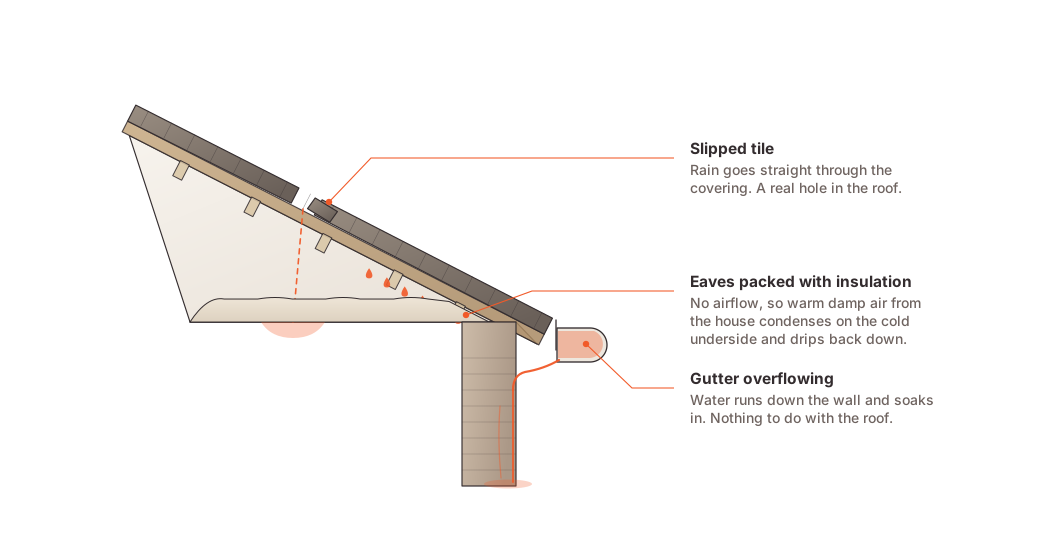
What you can do safely from the ground is look. Check whether a tile or a ridge has visibly moved, whether a gutter is overflowing down the wall, or whether the flashing where the roof meets the chimney has lifted. Binoculars help. If the gutters are spilling over in heavy rain, the water may be getting in behind the fascia rather than through the roof at all, and an overflowing gutter has its own causes and fixes.
Getting the roof made watertight
A leak in rain is usually dealt with in two stages. The first is to stop the water, which on the night might mean refixing or replacing a slipped tile, dressing a lifted flashing back down, or securing a temporary cover over the damaged area. The second is the proper repair once the weather allows, because some jobs, such as bedding mortar or bonding a flat roof membrane, need dry conditions to be done well. Our post on whether a roof can be repaired in the rain explains which parts can go ahead in wet weather and which have to wait.
With storm damage, the sooner a roof is made watertight the smaller the eventual bill, which is why our emergency roof repairs run around the clock. Not every leak needs that, though. A slow drip into a bucket in the loft can usually wait for a daytime visit, while water coming through a ceiling, near electrics or across a large area cannot. If you are unsure which yours is, what counts as a roofing emergency is a good way to decide.
Photographs, your insurer and keeping records
Before anything is moved or cleaned up, photograph the ceiling, the floor, any damaged belongings, the loft and the outside of the roof from the ground. Note the date and roughly when the leak started, and keep any receipts for emergency work or for things you had to replace.
If you plan to claim, tell your insurer early and ask what they need before permanent work starts. Many policies cover sudden storm damage but exclude gradual wear and tear, and the difference between the two is often where claims are argued. When a refused storm claim reaches the Financial Ombudsman, it asks three questions about the storm and the damage, namely whether there was a storm on that date, whether the damage looks like storm damage, and whether the storm was the main cause. Good photographs, a weather record for the day and a roofer's written report all help answer them. We undertake insurance work, and we will get up on the roof and photograph what we find rather than give you a verdict from the pavement.
When the leak is not the roof at all
Some leaks that look like roof leaks are not. If water appears when it has not been raining, the cause is far more likely to be plumbing, such as a cold water tank or a pipe in the loft, a shower, or a bath seal in the room above. Turn off the water at the stop tap and call a plumber, not a roofer.
A damp patch high on an outside wall that appears after heavy rain can be an overflowing gutter or a blocked downpipe. A brown stain on a chimney breast with no rain coming in may be the flue itself, which damp in a chimney breast explains. And widespread dripping on cold mornings, with wet nails and droplets on the underside of the felt, is usually condensation in the loft rather than rain getting in. Telling them apart first stops you paying for the wrong trade.
Fixing the cause properly
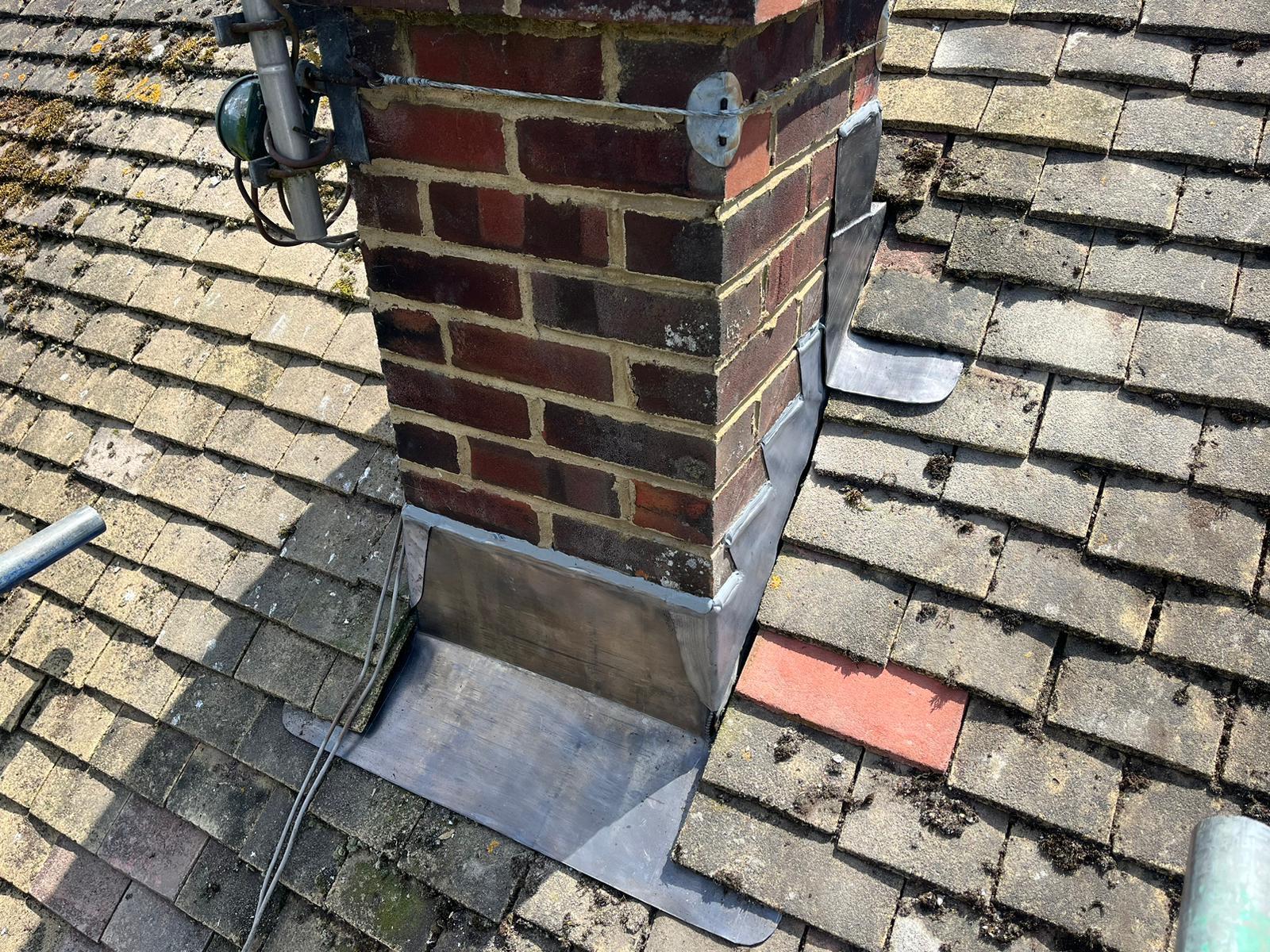
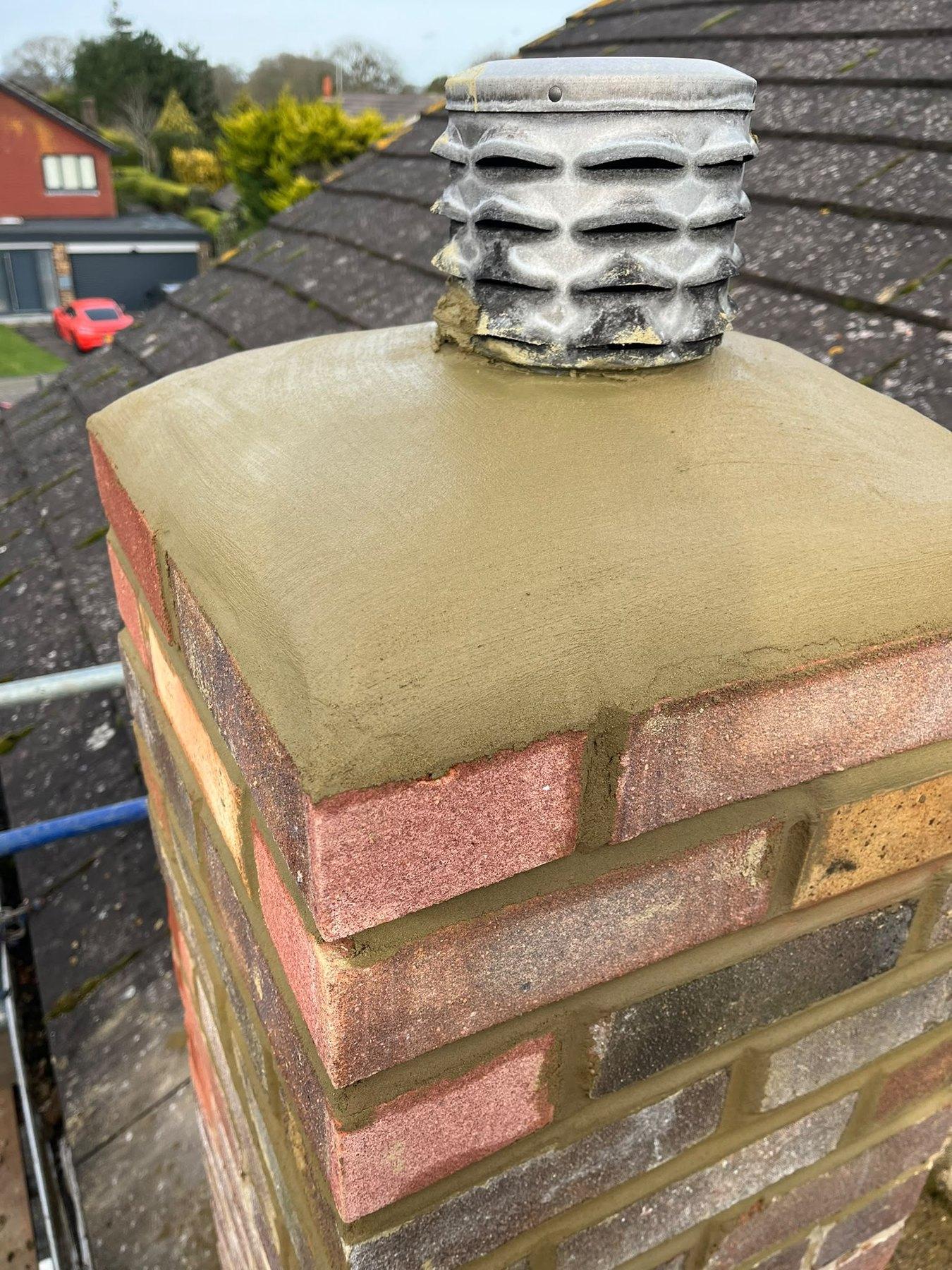
Once the water has stopped, the job is to find out why it got in. The usual culprits are slipped or cracked tiles, flashing that has lifted or cracked where the roof meets a wall or chimney, a failed valley, a broken ridge, or a flat roof membrane that has split or is holding water. The repair might sit with our roof repairs, leadwork and flashing, chimney repairs or flat roofing work, and your photographs from the day help pin it down.
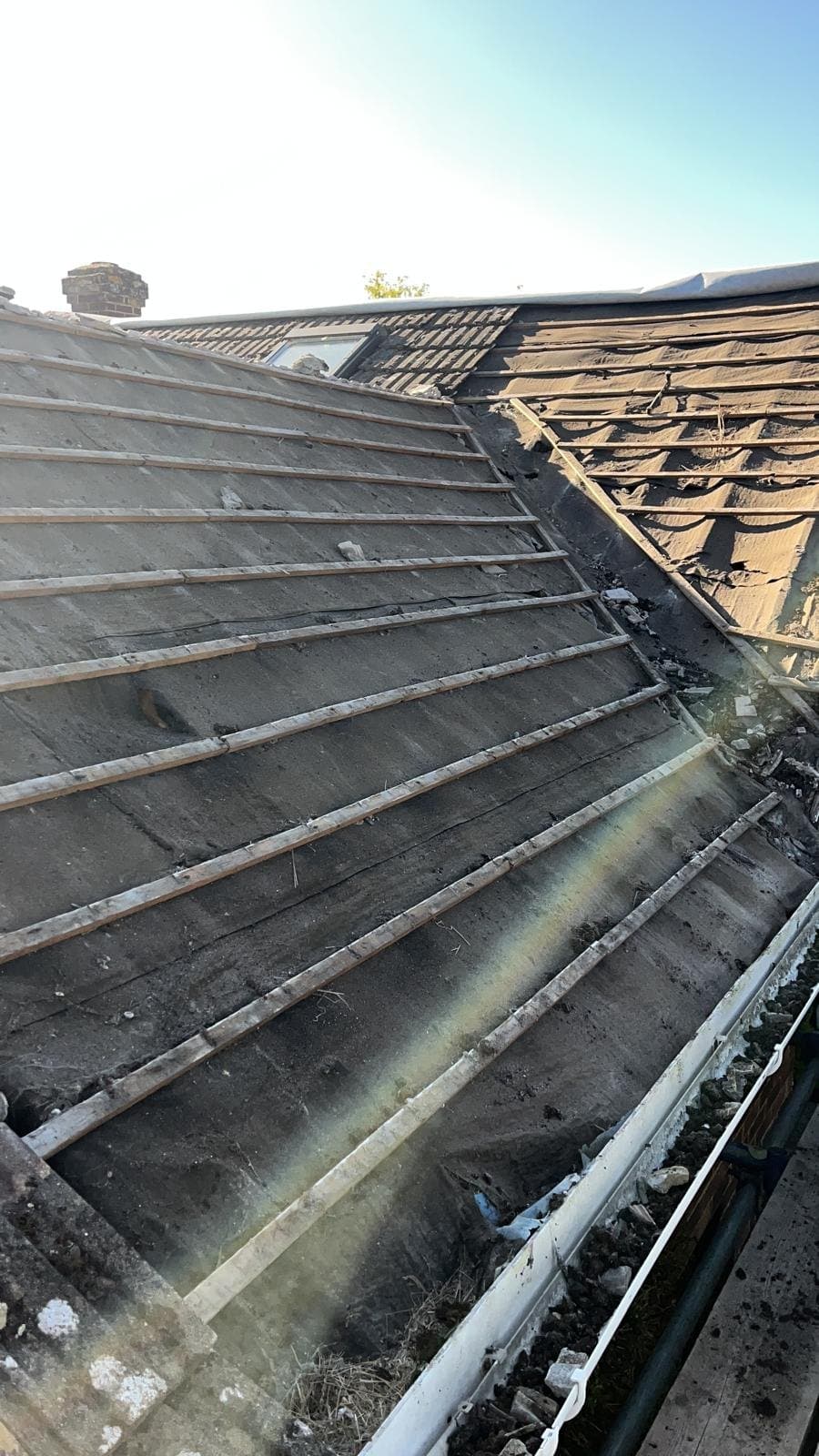
Sometimes one leak turns out to be a symptom of a covering or a felt layer that has reached the end of its life, like the perished bitumen felt in the photograph at the top of this page. When that is the case we will say so, explain what is wrong and show you, and leave the decision with you. From our base near Ashford we cover the town and out across Romney Marsh and the coast.
Call us when your roof starts leaking
If water is coming through your ceiling right now, make the electrics safe, catch what you can and call Premier Roofing and Building Kent Ltd on 01233 234554. We are a family run roofer from Shadoxhurst, and we will tell you honestly whether it needs someone tonight or can wait for the morning.
For a leak that has already stopped, email premier_roofing@hotmail.com or contact us to arrange a visit. Quotes for the permanent repair are free, itemised in writing and carry no obligation, our workmanship comes with a one thousand pound guarantee, and you can see our past jobs in our gallery and our verified reviews on our Checkatrade profile. We work across Ashford, Romney Marsh, Hythe, Tenterden, Rye and the coast.