Dry ridge or a mortar bedded ridge?
BS 5534 still allows a bedded ridge, provided every ridge tile is also mechanically fixed. The 2014 revision withdrew any reliance on the strength of the mortar to resist wind uplift, so mortar can stay on a ridge but it cannot be the only fixing.
In practice the two differ on weather and upkeep. Marley's technical support manager gives mortar a curing window of dry conditions between 5°C and 25°C, whereas a dry ridge can go on in most conditions that are safe to work in, and its parts need little maintenance once fitted. If you would rather keep the look of a bedded ridge, our ridge tiles and repointing page covers mortar work.
Fitting a dry ridge to an existing roof
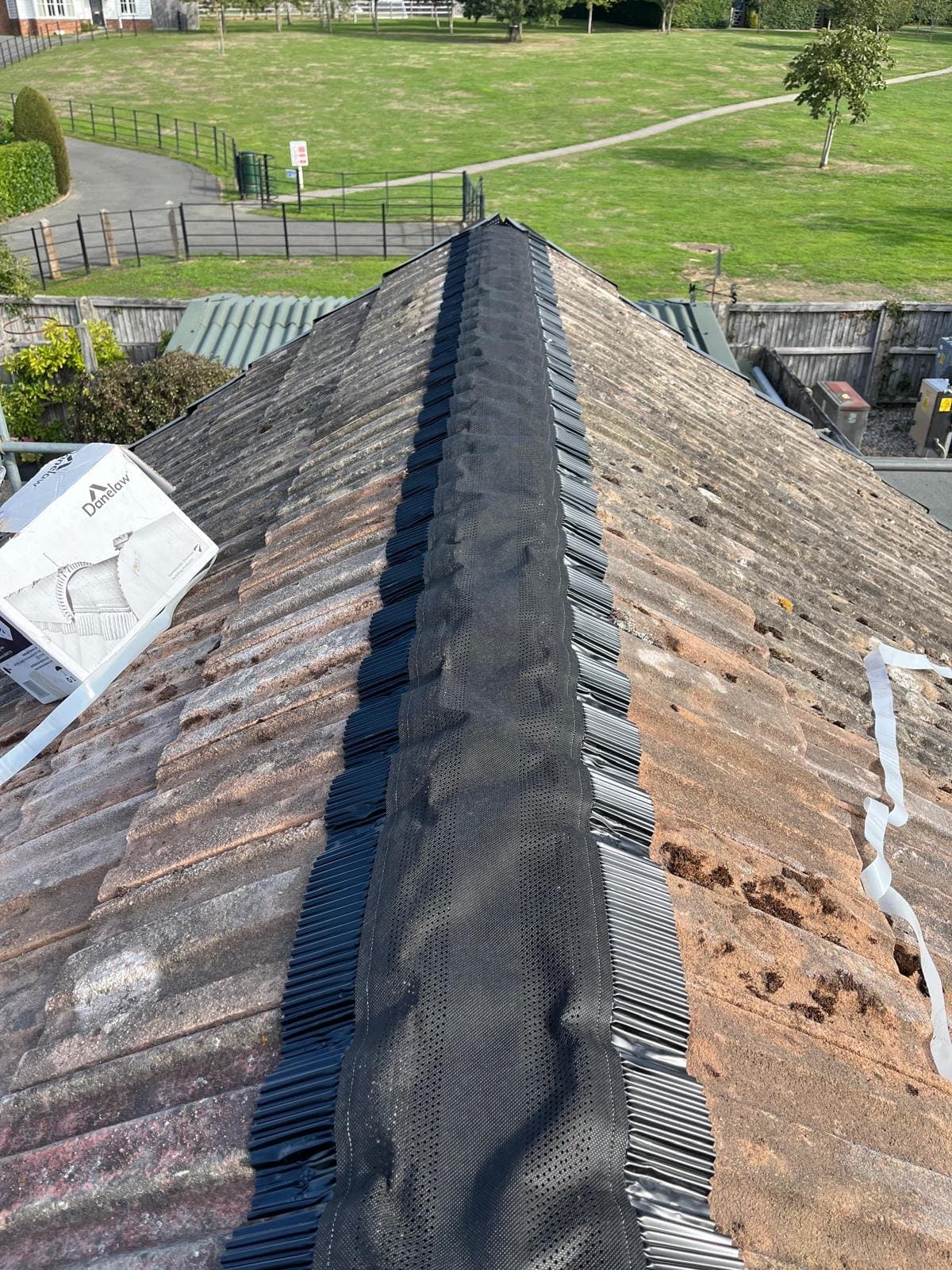
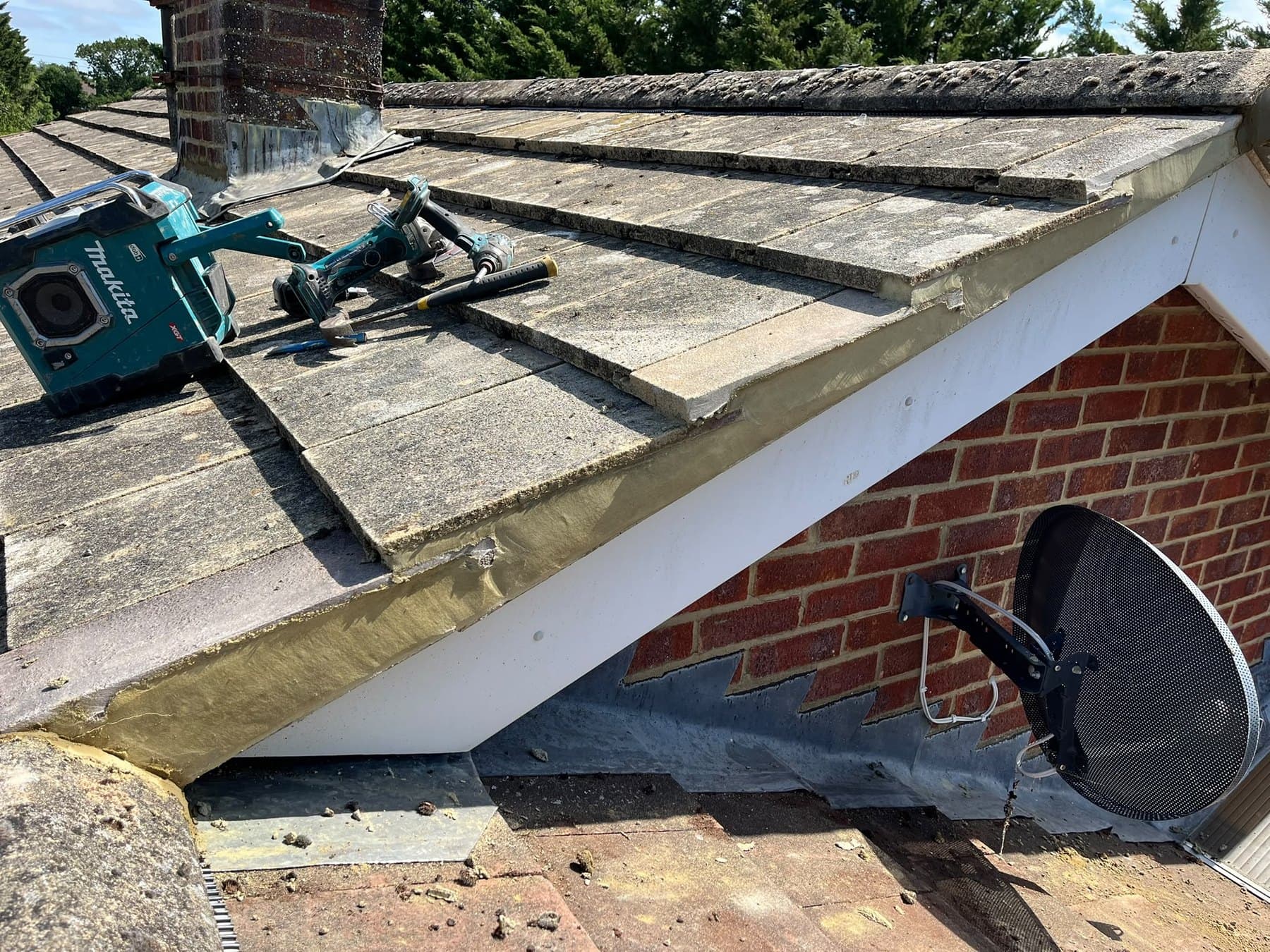
A dry ridge does not need a new roof. On an existing roof the ridge tiles come off, the old bedding is cleared from the top course, and the ridge batten and roll go on before the tiles are screwed back down. The photographs on this page include weathered ridge tiles refixed dry in exactly that way.
Sound ridge tiles can go back on if their profile suits the system. Marley's RidgeFast, for example, works with other makers' tiles but lists 75 degree plain angle, capped angle, roll top and hogsback ridges as unsuitable, so the shape of your ridge tiles decides whether they can be reused.
Does a dry ridge ventilate the roof?
Many systems do. Marley's fitting guide leaves a continuous gap of at least 5mm in the underlay at the apex, and its RidgeFast system gives 5mm of continuous ventilation along the ridge.
Marley says that ventilation helps avoid condensation in the roof void and helps a roof meet the guidance in BS 5250, the British Standard for managing moisture in buildings. If your loft already shows signs of damp, our post on how to identify roof ventilation problems covers what to look for.
Is a dry ridge a legal requirement?
Not by itself. BS 5534 is a code of practice rather than law, although it becomes binding wherever a contract refers to it.
What the standard now expects is that ridge and hip tiles are mechanically fixed, and that a dry fix system meets BS 8612. BSI published BS 8612 on 31 January 2018. It sets the tests a dry ridge, hip or verge system has to pass for how securely it is fixed, whether it keeps the weather out and how well it lasts, with guidance on ventilation.
When you compare quotes, ask which system is going on and whether its maker states that it meets BS 8612.
Listed buildings, conservation areas and Rye
BS 5534 says its recommendations may not always suit old roofs, particularly on historically or architecturally important buildings, and recommends speaking to the local planning authority or a conservation organisation. Marley's own guidance accepts that mortar can still be the right choice where a traditional look has to be kept.
A listed building needs listed building consent for any alteration that would affect its character, under section 7 of the Planning (Listed Buildings and Conservation Areas) Act 1990. In Rye, the conservation area's Article 4 direction removes permitted development for some alterations to a house roof, and our Rye page explains where that applies.