We explain this to homeowners across Kent after every period of strong winds or heavy rain. Storm damage on your roof is not always obvious from the ground, but even minor damage can quickly lead to leaks and structural problems. Acting early helps prevent water getting into your home and reduces repair costs.
Kent properties regularly face strong winds, driving rain, and sudden temperature changes. After a storm, it is important to know what to look for and when to arrange a proper inspection.
Why storm damage should never be ignored
Storms can loosen tiles, damage flashing, and block drainage systems. Even if your roof looks fine from a distance, wind uplift may have weakened fixings or shifted materials slightly out of place.
Small problems often worsen during the next spell of bad weather. What begins as minor storm damage can quickly turn into internal damp or ceiling stains if left untreated.
External signs of storm damage on your roof
Missing or slipped tiles
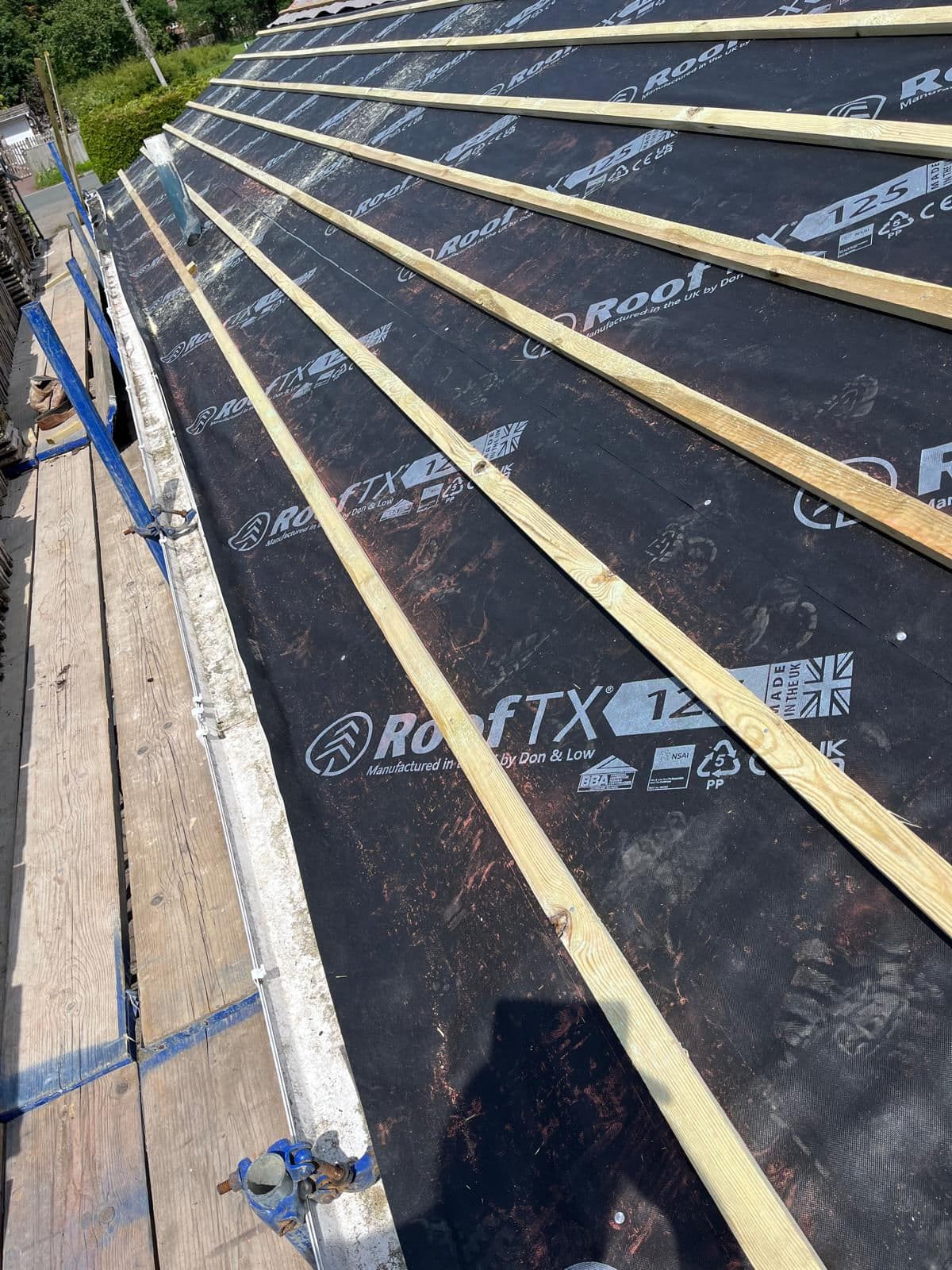
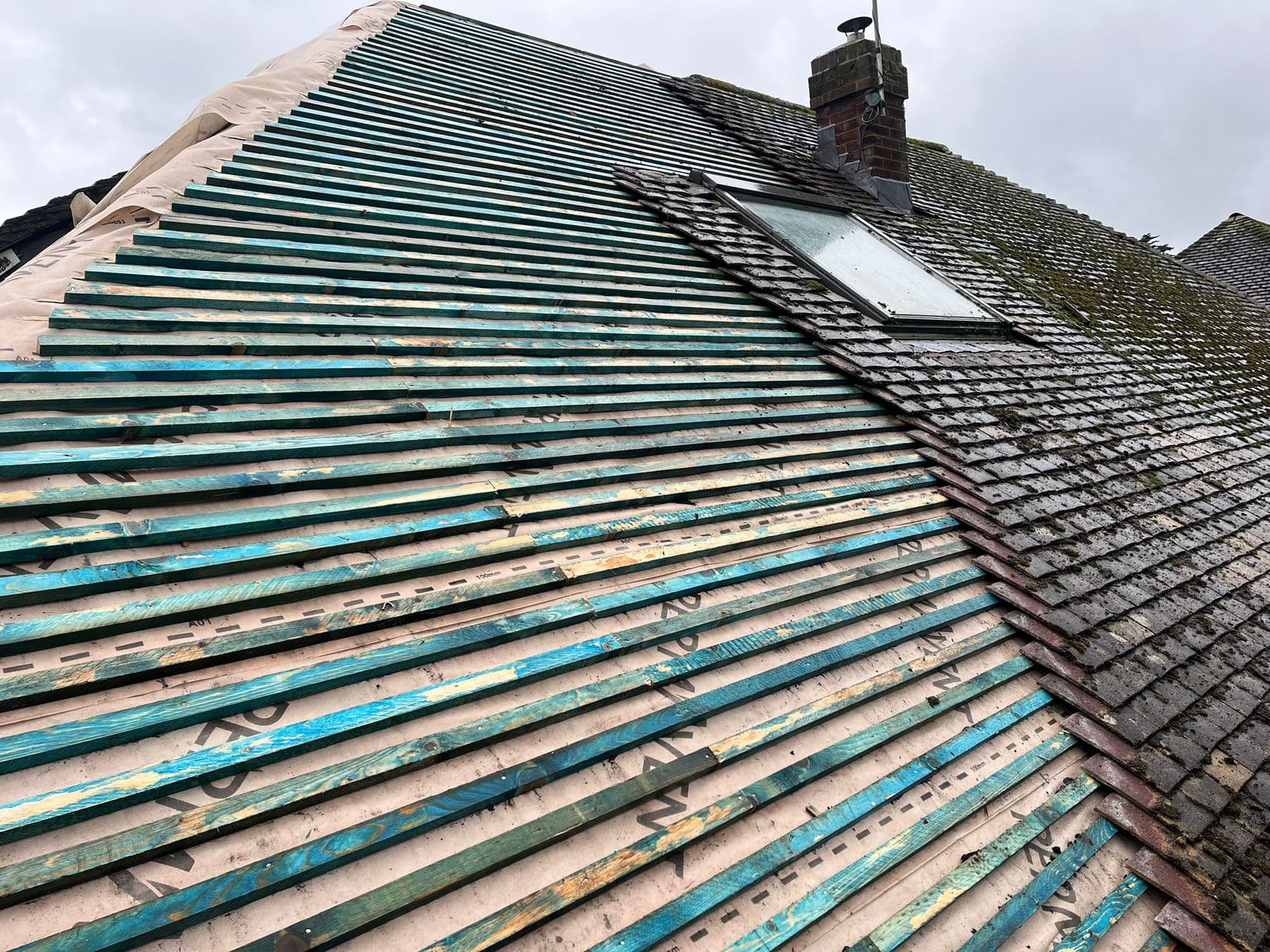
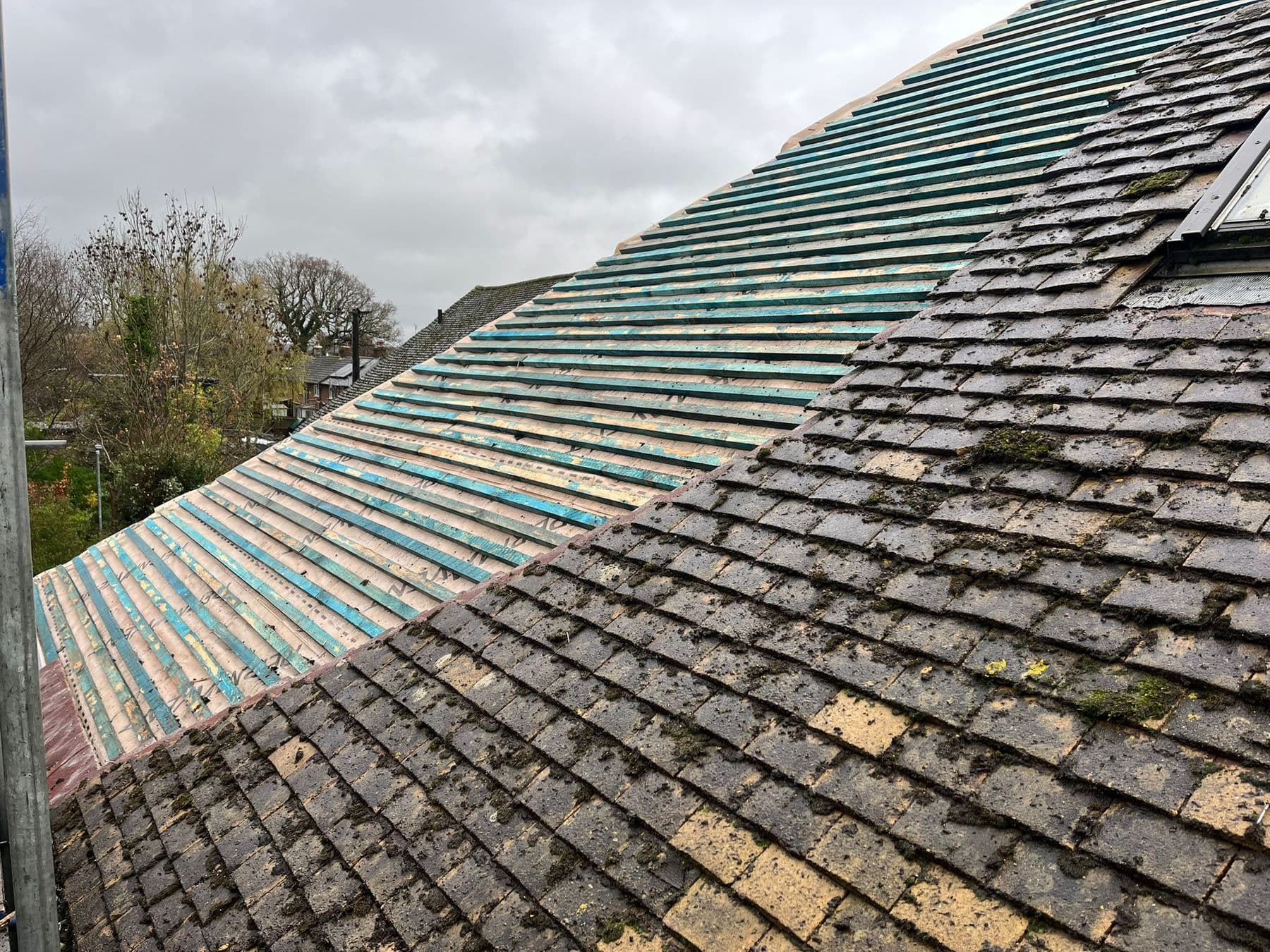
One of the most common signs of storm damage is missing or displaced tiles. Strong winds can lift tiles and break their fixings. Even a single slipped tile can allow rainwater to reach the underlay and battens beneath.
After a storm, look at your roofline from ground level for uneven sections or visible gaps.
Cracked or broken tiles
Flying debris can strike the roof during storms, cracking or breaking tiles. These cracks may not always be visible from a distance, but they weaken the tile and allow water to penetrate.
Damaged ridge tiles
Ridge tiles sit along the top of the roof and are exposed to high winds. Mortar bedding can crack or loosen during storms, causing ridge tiles to shift. If ridges appear uneven or loose, they should be inspected promptly.
Flashing and leadwork issues
Chimneys and roof joins rely on secure leadwork and flashing. High winds and heavy rain can lift flashing or cause it to separate from brickwork. This is a common entry point for water after storms.
Signs inside your home
Storm damage on your roof often shows internally within days or weeks.
Ceiling stains
Brown or yellow stains on ceilings are a clear warning sign. These may appear after heavy rain and grow larger over time.
Damp or mould smells
A musty smell in upstairs rooms or the loft can indicate trapped moisture caused by storm damage.
Drips during rainfall
If water begins dripping during rain following a storm, this suggests damage that needs urgent attention. Getting somebody out the same day still helps, because emergency work can be carried out in the wet even though the permanent repair has to wait for a dry roof.
Checking your loft after severe weather can help spot early signs such as damp insulation or daylight visible through the roof covering.
Guttering and drainage problems
Storms often fill gutters with debris. Leaves, moss, and broken tile fragments can block drainage systems, causing water to overflow. Damaged or displaced guttering, fascias, and soffits may allow water to run down walls and soak into the roof edge.
Blocked drainage increases the risk of leaks and structural damage if not cleared quickly.
Flat roofs and storm damage
Flat roofs can be particularly vulnerable to heavy rainfall. If drainage outlets are blocked, water may pool on the surface. Standing water adds weight and increases the risk of leaks.
After a storm, flat roofs should be checked for pooling water, splits in the surface, or lifted edges.
When to arrange professional roof repairs
If you notice any signs of storm damage on your roof, it is best to arrange an inspection promptly. Professional roof repairs can secure loose tiles, repair flashing, and address damaged sections before problems spread.
Quick action usually keeps repair costs lower and prevents internal damage.
When storm damage leads to replacement
In some cases, storms expose underlying weaknesses in older roofs. If tiles are brittle, battens are weakened, or widespread damage is found, replacement may be more reliable long term.
Where necessary, we discuss options such as new roof installations clearly and honestly, explaining the best solution for the property.
Safety when inspecting storm damage
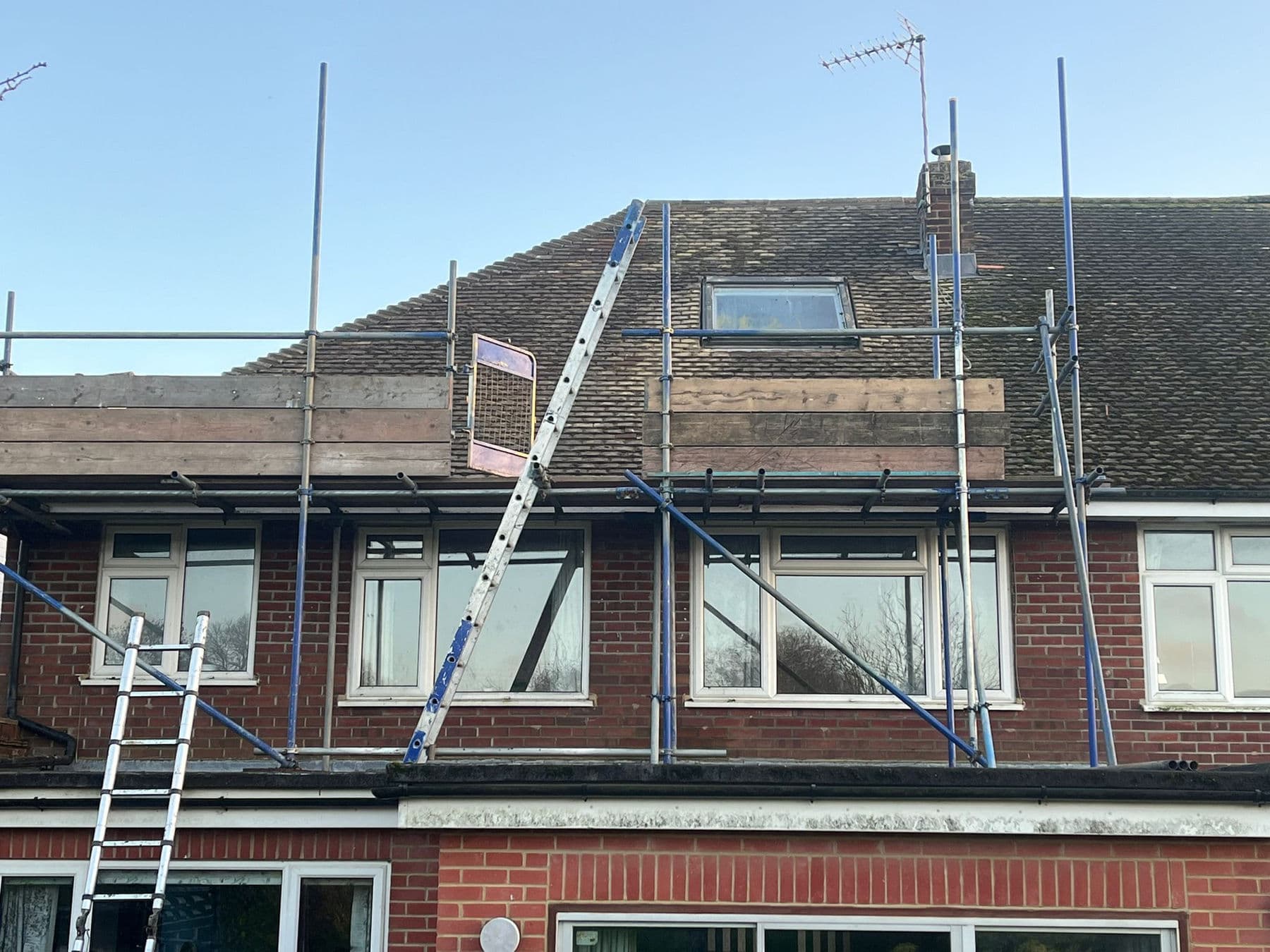
Roof inspections involve working at height and should always be carried out safely. All work must follow HSE working at height guidance. Climbing onto a damaged roof without proper equipment can be dangerous.
It is safer to inspect from ground level and contact professionals for a full assessment.
Planning permission and storm repairs
Most storm damage repairs are classed as maintenance and do not require approval. However, if structural changes are needed, it is sensible to check planning permission rules in England and Wales.
Guidance from the Planning Portal on roof work explains what falls under permitted development.
Building regulations and structural repairs
If storm damage affects structural elements, repairs must comply with GOV.UK building regulations. These regulations ensure the roof remains safe and weather resistant.
Compliance is overseen by Local Authority Building Control. In Kent, this is managed through Kent County Council planning and building control. Professional roofers ensure all work meets current standards.
Why local experience matters after storms
Local roofers understand how Kent weather affects different roof types. Coastal homes often suffer stronger wind damage, while inland properties may experience drainage problems caused by debris.
Local knowledge allows for faster diagnosis and effective repairs tailored to the property.
Homeowners across the county continue to trust Premier Roofing for reliable inspections and storm damage repairs.
How to reduce future storm damage
Regular inspections, prompt repairs, and keeping gutters clear all help reduce the risk of severe storm damage. Ensuring tiles and flashing are secure before winter also improves roof resilience.
Preventative maintenance often costs far less than emergency repairs.
Where storm damage starts here
On this stretch of coast storm damage is predictable enough to check in order. Wind pulls upwards on a roof and the suction is fiercest at the ridge, the verges and the eaves, so that is where to look before anything else. Dymchurch is about as exposed as Kent gets, and it is why we replace more ridge tiles than almost anything else.
Conclusion
Spotting storm damage on your roof early helps prevent leaks, damp, and structural issues. After severe weather, checking for visible signs and arranging a professional inspection can save time and money. If you suspect your roof has been affected by a storm or would like it checked for peace of mind, simply contact us and we will be happy to help.