You can usually spot a poorly installed roof without climbing onto it. The giveaways are ridge tiles held on by mortar alone on a roof laid since 2014, verges that streak the wall underneath them, courses that wander instead of running straight, membrane sagging or perishing in the loft, and joints sealed with mastic rather than dressed in lead. Any one of those tells you the roof was put on quickly rather than properly.
It is a more common problem than most people assume. Figures published by LABC, the body that represents council building control teams, show that poor installation of ordinary slate and tile roofs was one of the most common defects found in 2022. Most of it can be checked from the pavement and the loft hatch, which is exactly where to start before anybody climbs a ladder.
Start with the ridge and the verges
The ridge and the verges are where a rushed job shows first, because they are the edges the wind pulls hardest on and the parts that take longest to do properly.
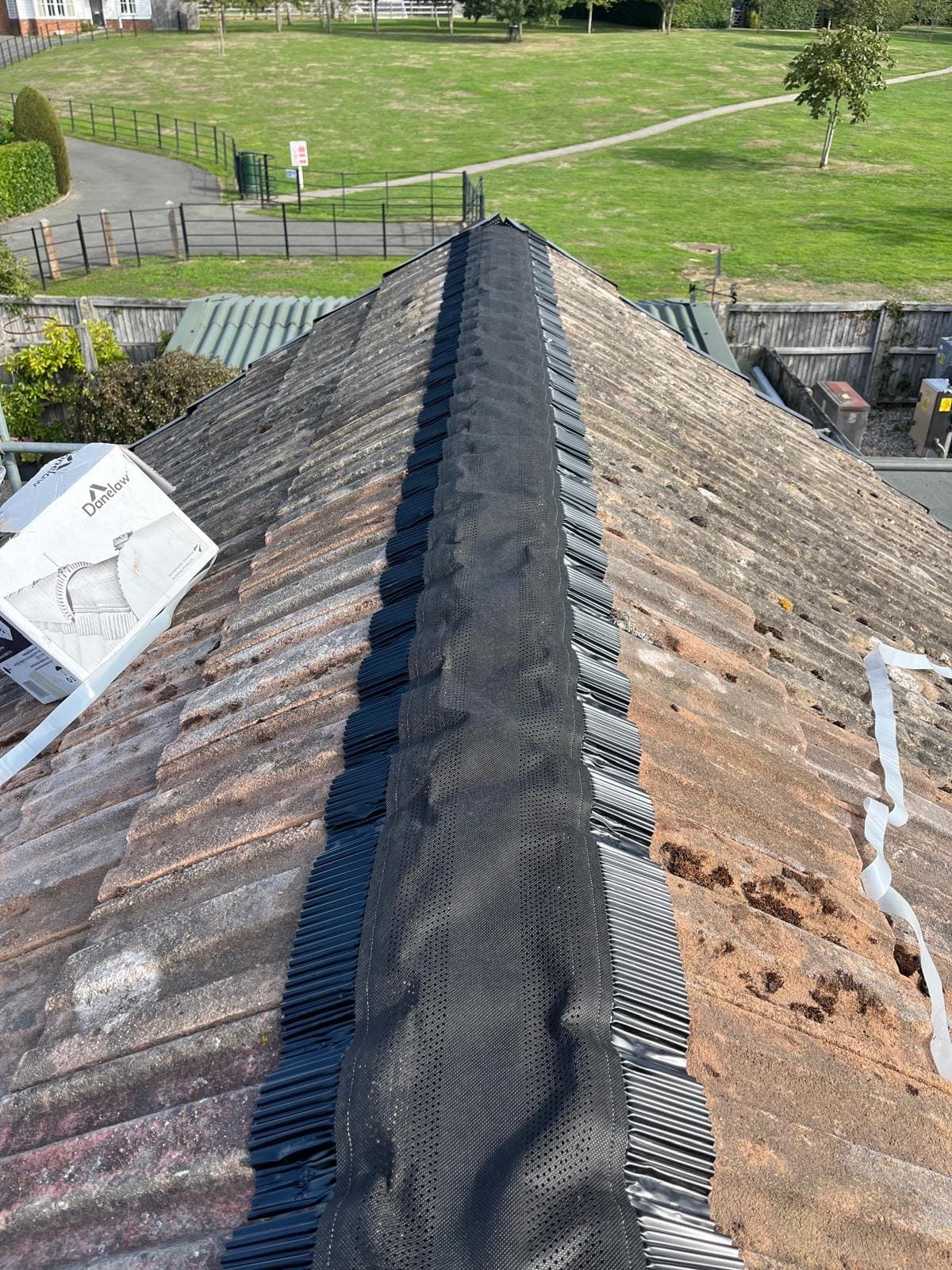
The British Standard for slating and tiling, BS 5534, changed in 2014. Since then mortar has not been relied on to hold anything down by itself, so ridge and hip tiles have to be mechanically fixed whether or not they are bedded, and tiles around the perimeter of the roof are fixed twice. A ridge on a roof laid since then that is held on by a bed of mortar and nothing else was not built to the standard of its day, however neat it looks.
That does not make every mortar ridge a fault. The standard is not retrospective, and a ridge bedded the old way in the 1980s was done correctly at the time. It simply means a roof sold to you as new should have either a dry fixed ridge system or mortar with clips or screws holding the tiles underneath it, and the roofer who fitted it should be able to tell you which. If they cannot, it is worth having the ridge tiles looked at before a winter gale does it for you.
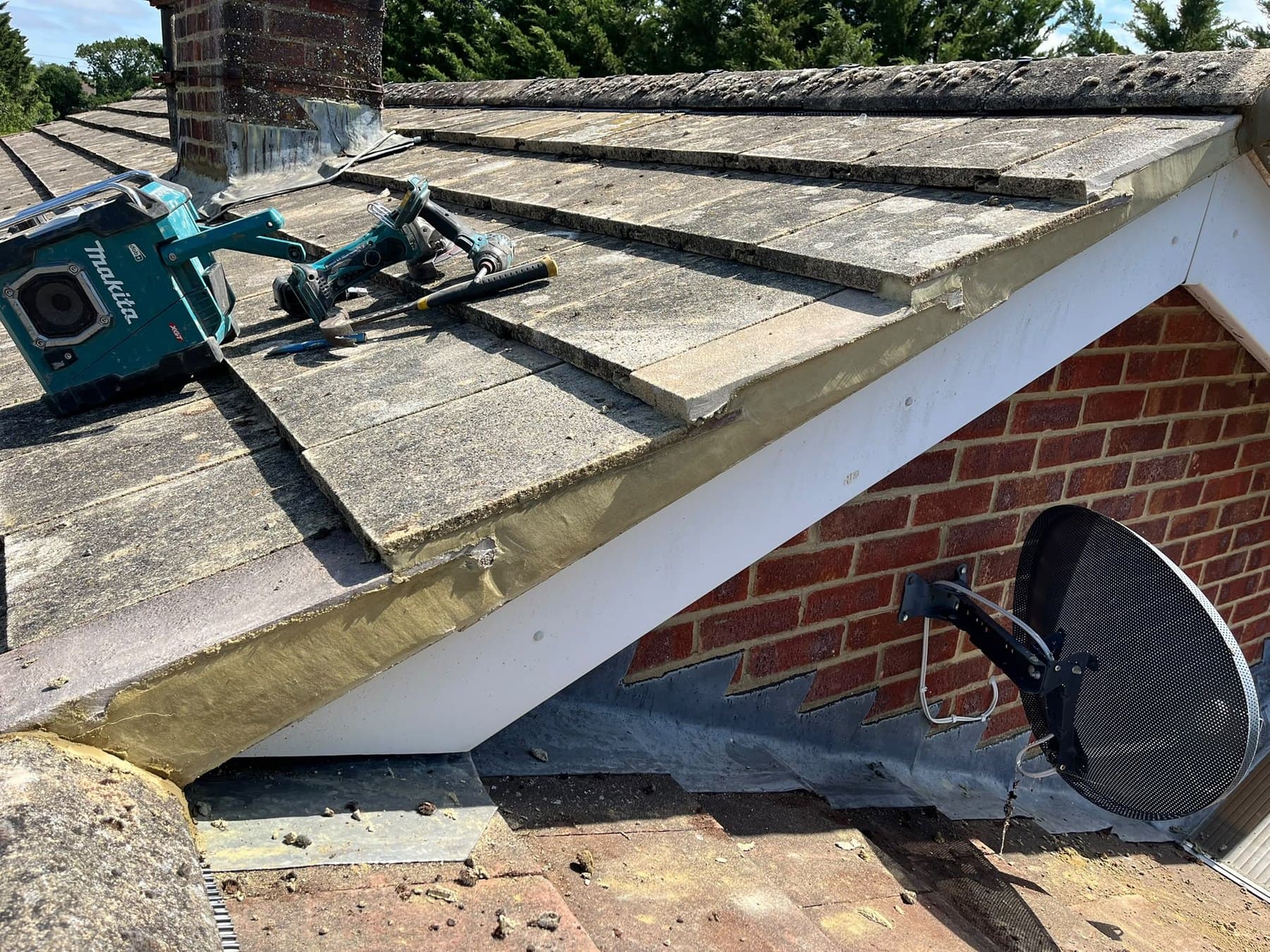
Verges deserve a second look from the garden. A 2018 amendment to the standard was partly prompted by dry verge systems that sent rainwater down the face of the gable rather than away from it, which left black streaks down a great many rendered walls. Dark staining running down a gable from the verge on a fairly new roof is one of the easiest faults to see, and one of the most common.
Lines that should be straight
A properly laid roof is a set of straight lines. The courses run level along the slope, the bottom edges of the tiles sit in a neat line, and the gaps between them repeat evenly all the way up. When the battens have been set at the wrong spacing, or tiles from two different batches have been mixed, the courses start to wander and some tiles kick up while others drop.
Looking at a roof from across the street works better than standing underneath it, because low sun throws a shadow under every tile that is not lying flat, and from directly below you cannot see the courses at all. A phone camera zoomed in from the far pavement shows more than most people expect.
Valleys and hips are the other place to look. Where tiles are cut to meet a valley, the cut pieces should be big enough to carry a fixing of their own. Small slivers wedged in at the edge of a valley are held by nothing, and they are usually the first thing to slide out in a storm, which is one of the commonest reasons tiles slip on roofs that are otherwise sound.
What the loft tells you
The inside of a roof is much harder to fake than the outside. Take a torch into the loft on a dry day and look at the underside of the covering.
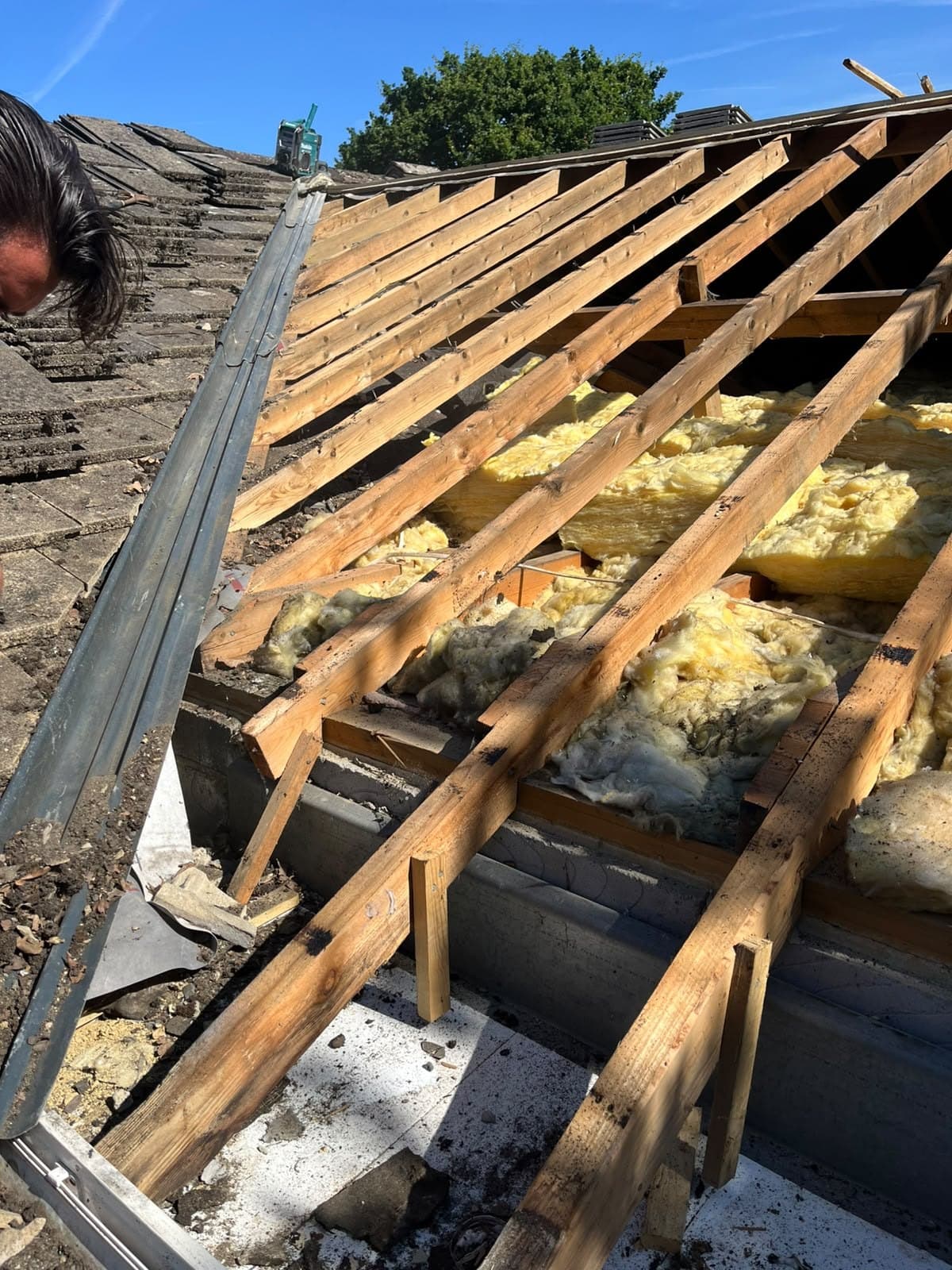
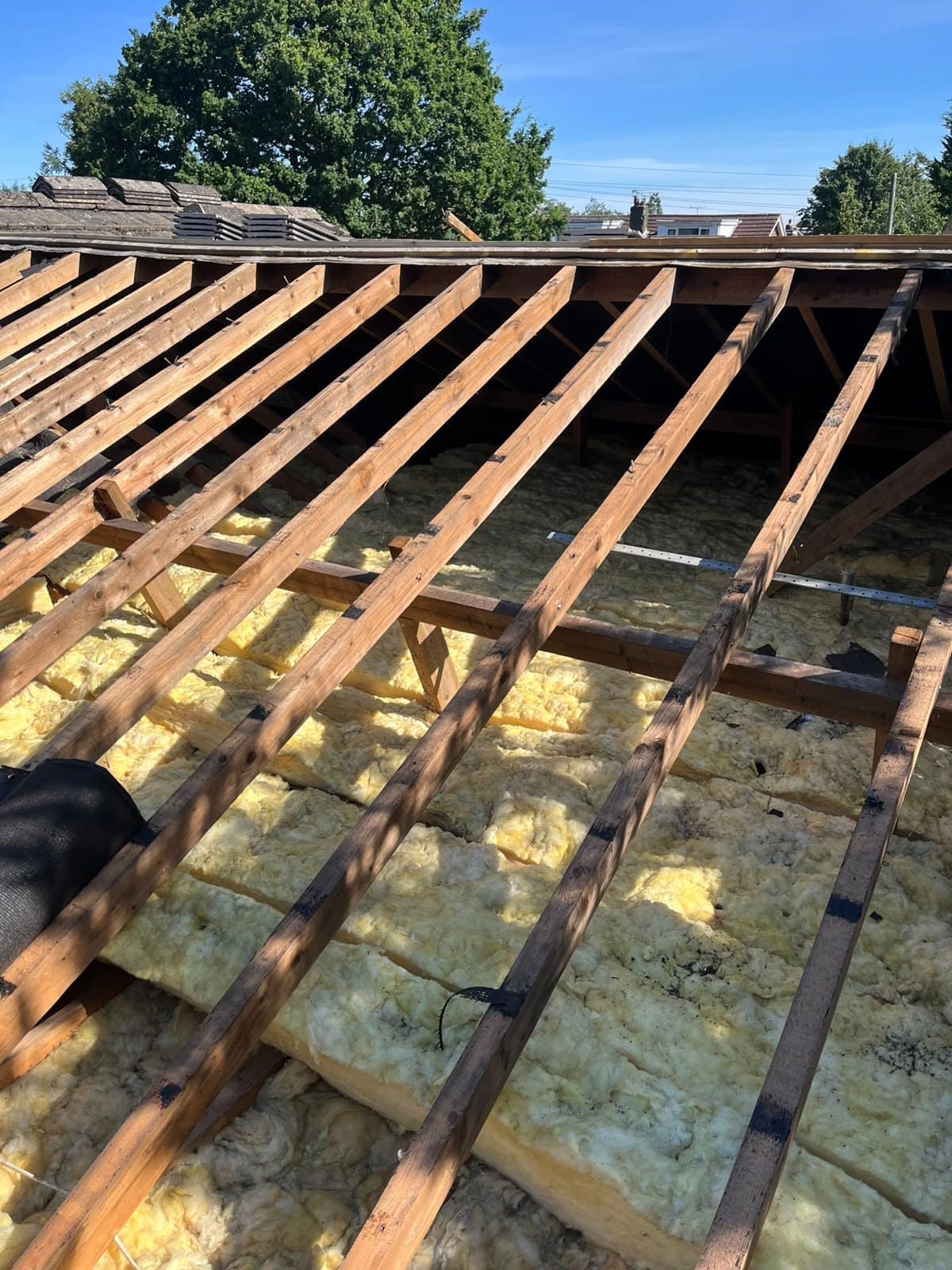
The membrane under the battens should be lapped so that each upper run overlaps the one below, the same way the tiles do, and it should sit with only a slight dip between the rafters. Since 2018 the standard has limited that dip to 15 millimetres where the membrane is unsupported. A membrane hanging in deep bellies, pulled tight as a drum, or torn along the rafters was not laid with any care. At the eaves it should be supported so that anything running down it drains into the gutter rather than collecting in a trough behind the fascia, and no part of it should be left open to daylight, which perishes it.
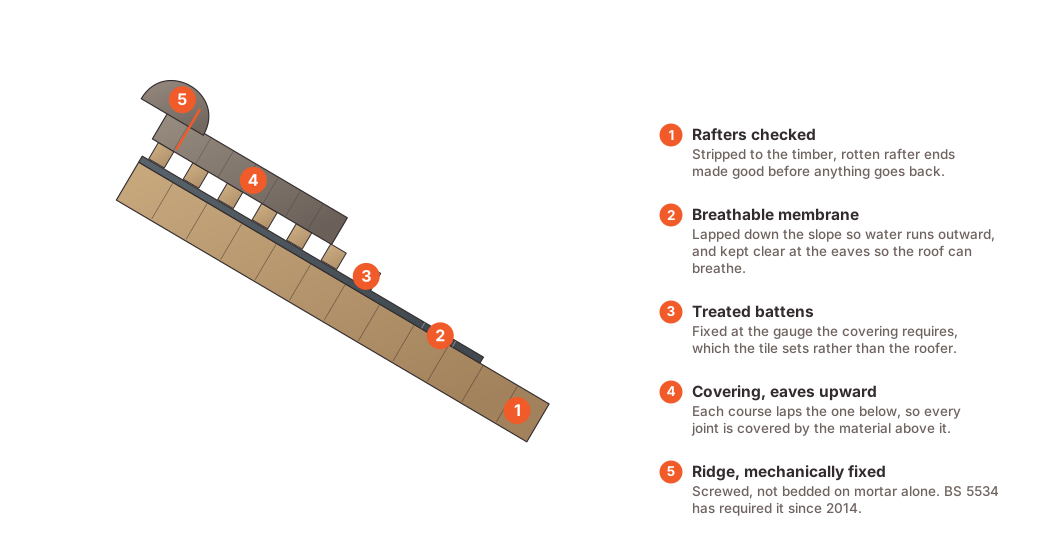
Look at the timber as well. Dark tide marks running down the rafters mean water has been getting past the covering. Black mould on the boards or the underside of the membrane usually means condensation rather than a leak, which points at the ventilation rather than the tiles. One cause is insulation packed into the eaves so that it closes off the airflow, which is how poor insulation can spoil an otherwise decent roof.
If what you find up there suggests the layers under the tiles were skimped, the answer is usually a felt and batten strip out rather than a repair to the tiles on top, because the tiles were never the problem.
Flashings and the joints between things
Anywhere a roof meets a wall, a chimney or a dormer, the joint should be weathered with lead tucked into the masonry and dressed down over the tiles. A thick bead of mastic along an abutment, or lead stuck to the face of a wall rather than set into a mortar joint, will open up within a couple of winters, because sealant is holding together two surfaces that move against each other in heat and frost. That is why flashing that relies on it fails so quickly, while properly dressed leadwork works by its shape and lasts decades.
The wrong specification for where the house stands
Some poor installations are not untidy at all. They are neat roofs fitted with the wrong materials for the place they are in.
Out on the Marsh, the clearest example is fixings. Galvanised nails that are perfectly sound on a sheltered roof in Ashford give up years earlier in the salt air at Dymchurch or Romney. We have taken sound tiles off roofs after nothing worse than a breezy week, because the nails holding them had gone. That is a specification failure rather than a tile failure, and it is why we quote stainless fixings on exposed coastal work as standard rather than as an extra.
The paperwork is part of the installation
A full re-roof is building regulations work. The Planning Portal's guidance on work to an existing roof says approval is needed once the work goes beyond a quarter of the building's whole external envelope or beyond half of the roof, or where a new covering adds 15 per cent or more to its weight. At that point the insulation may need bringing up to standard as well.
That sign off comes either from a building control body or from a roofer registered with a competent person scheme, and either way you should end up with a certificate. A whole new roof with no certificate is a gap in the installation however good the tiling, and it tends to surface when you come to sell. We raise sign off at the quote stage, so it is never a surprise.
Getting a second opinion
Do not go up to look. Photograph what you can see from the ground and the loft, and if the roof is still under guarantee, go back to the firm that fitted it first. If that goes nowhere, get an independent look from somebody who is not trying to sell you a new roof on the spot, who will tell you which faults let water in and which only shorten the roof's life, and price the repairs before anyone mentions a new roof.
Premier Roofing and Building Kent Ltd will look at the whole roof, the loft included, and tell you plainly what was done wrong and what actually matters. We are a family run firm based at Shadoxhurst, just outside Ashford, with over ten years in the trade, working across Ashford, Romney Marsh and the coast from Hythe to Lydd. Two of the reviews on our Checkatrade profile are for this sort of job, a ridge tile replacement and tiles that had come off, with a free quote in hand within 24 hours, and every review there scores ten out of ten. Finished roofs are in our gallery.
Quotes are free, itemised in writing and carry no obligation, and our workmanship is backed by a one thousand pound guarantee. Call 01233 234554, email premier_roofing@hotmail.com or contact us to arrange a visit.