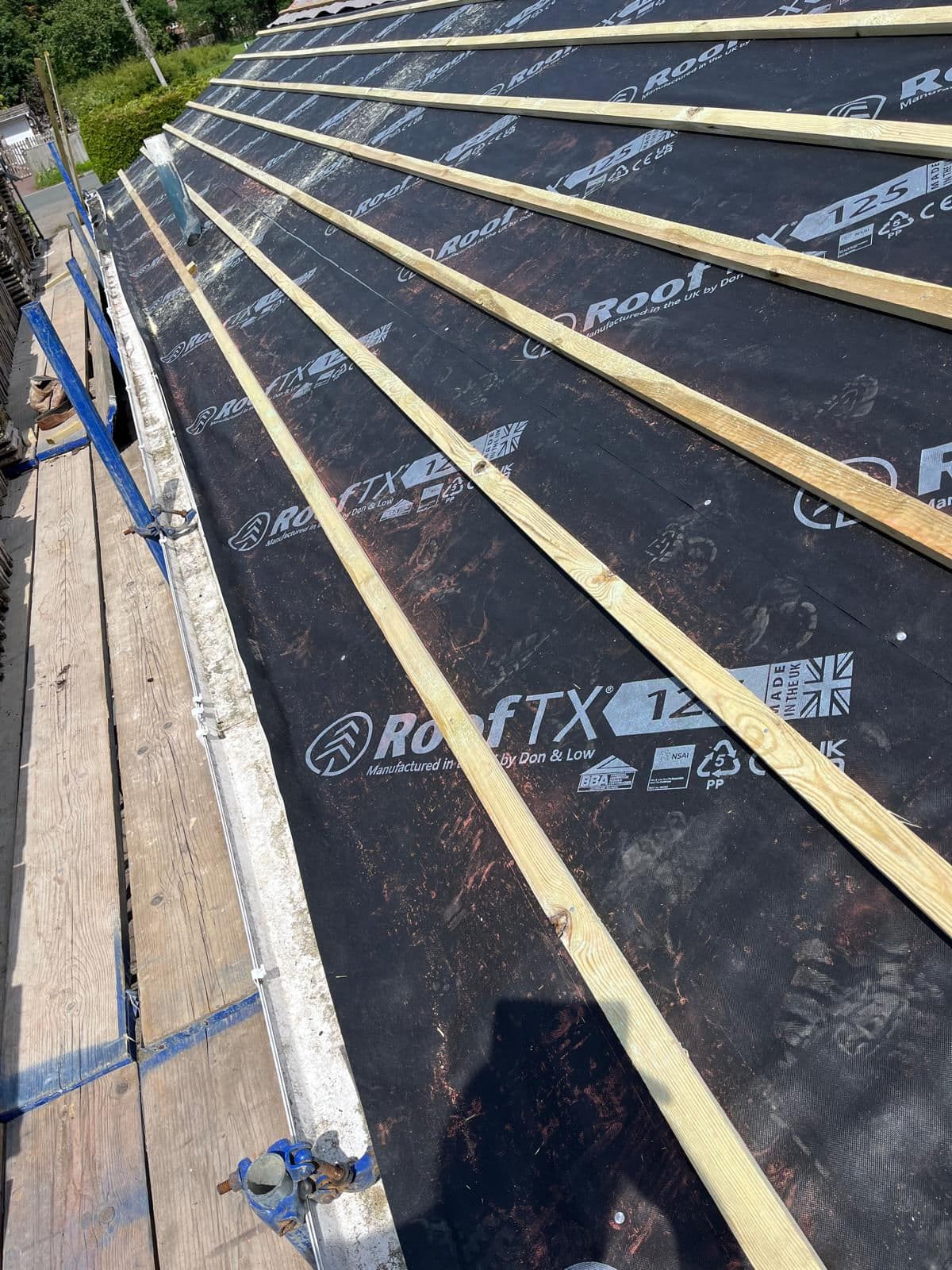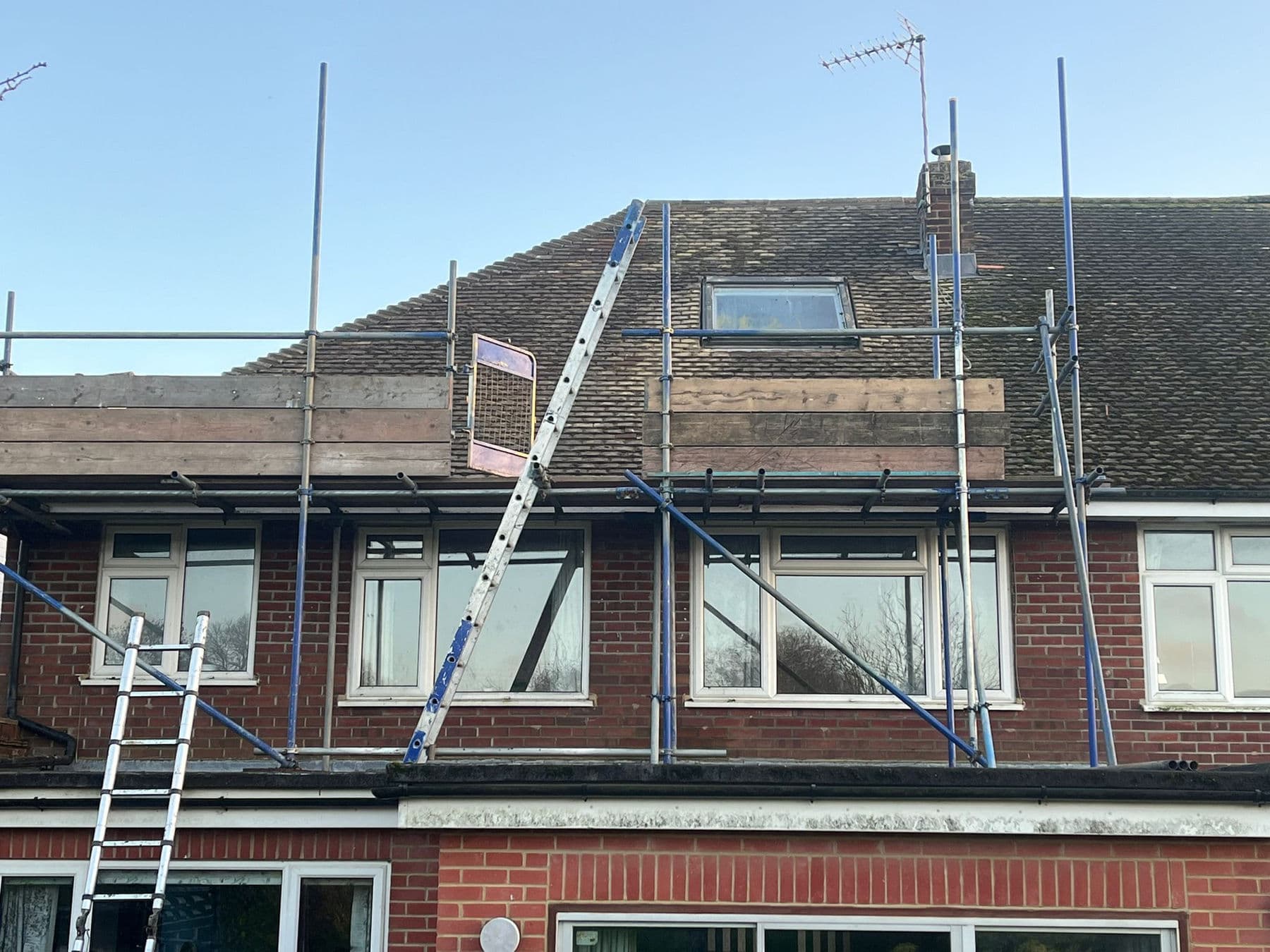
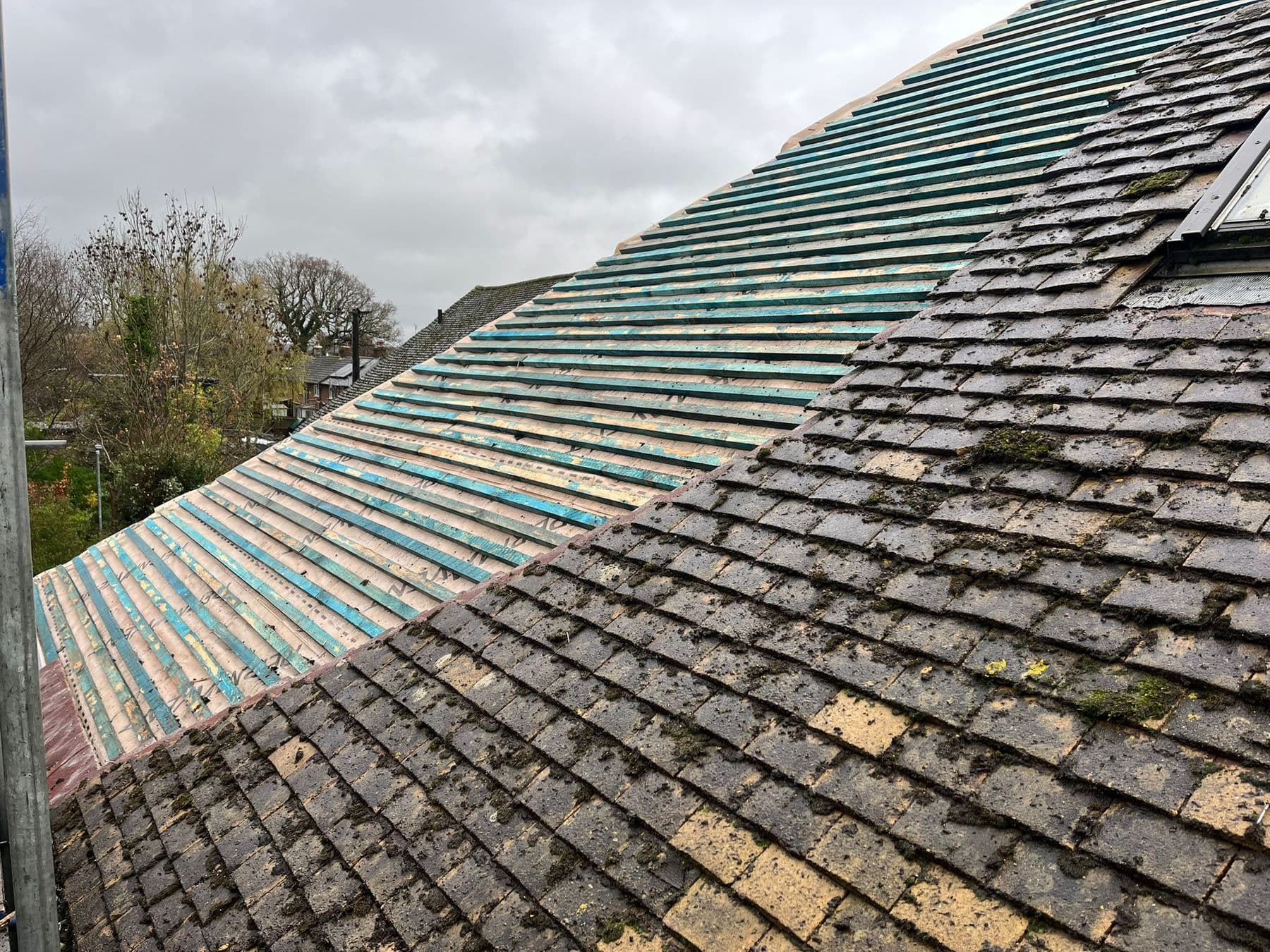
We explain this to homeowners across Kent very often. When roof tiles slip, it is usually a sign that something beneath the surface is no longer working as it should. Slipped tiles are not just a cosmetic issue. They can allow water into the roof structure and lead to leaks, damp, and further damage if left untreated. Understanding why tiles slip helps you deal with the problem early and avoid bigger repairs later.
Why slipped roof tiles should not be ignored
Roof tiles form the first layer of protection against the weather. When tiles move out of place, rain can reach the felt, battens, and timbers underneath. Over time, this leads to rot, damp insulation, and staining inside the home.
In Kent, strong winds, heavy rain, and temperature changes all contribute to tile movement. Even a single slipped tile can cause problems, especially during prolonged wet weather.
Common reasons roof tiles slip
Age and wear over time
As roofs age, the materials that hold tiles in place naturally weaken. Nail fixings can corrode, battens can rot, and the felt beneath the tiles can deteriorate. When this happens, tiles lose their secure fixing and begin to slip.
Older roofs are more likely to experience this issue, particularly if maintenance has been limited.
Failed or rotting roof battens
Roof battens are the horizontal strips of timber that tiles are fixed to. If battens rot due to moisture or age, they can no longer support the weight of the tiles. This is a common reason roof tiles slip, especially on older properties.
Rotten battens are often hidden beneath the tiles, which is why slipped tiles should always be investigated properly rather than simply pushed back into place.
Poor original installation
Incorrect installation is another common cause. If tiles were not fixed properly when the roof was installed, they may rely too heavily on their own weight rather than secure fixings. Over time, wind and movement cause them to slide.
This is often seen on roofs where shortcuts were taken during installation.
Strong winds and storms
High winds are one of the most common triggers for slipped tiles. Gusts can lift tiles slightly and dislodge them from their fixings. Once a tile has moved, it is more likely to slip again during future bad weather.
Storm damage is especially common in exposed areas of Kent and along the coast.
Roof pitch and design
Roofs with a lower pitch are more prone to tile movement, particularly if drainage is poor. Water can sit under the tiles for longer, increasing moisture exposure and weakening fixings over time.
Complex roof designs with valleys and joins also create areas where tiles are more vulnerable.
Areas where roof tiles commonly slip
Slipped tiles often appear in specific locations.
Ridge lines, roof edges, valleys, and areas around chimneys are common problem spots. These sections experience more movement and weather exposure. Poor detailing or worn components in these areas can lead to repeated tile movement.
Problems around chimneys and joints are often linked to failing leadwork and flashing, which allows water in and weakens surrounding materials.
The role of guttering and drainage
Drainage plays a bigger role than many homeowners realise. Blocked or damaged guttering, fascias, and soffits can cause water to overflow onto the roof edge and soak into battens and felt.
Over time, this moisture causes rot and leads to tile movement. Keeping drainage clear helps protect the entire roof structure.
What happens if slipped tiles are left unfixed?
Leaving slipped tiles can lead to a chain reaction of damage. Water enters the roof, felt breaks down, battens rot further, and more tiles begin to move. Inside the home, this often shows as damp patches, mould, or ceiling stains.
What starts as a small issue can quickly turn into a much larger repair.
Can slipped roof tiles be repaired?
In many cases, yes. If the underlying structure is still sound, professional roof repairs can secure the tiles properly and address the root cause of the movement.
This may involve replacing battens, renewing fixings, or repairing felt. Simply repositioning the tile without fixing the cause is rarely a long term solution.
When slipped tiles point to bigger problems
If roof tiles slip repeatedly or across large areas, it may indicate that the roof is nearing the end of its lifespan. Widespread batten rot, failing felt, or multiple weak points suggest repairs may only be a short term fix.
In these cases, replacing the roof may be more cost effective long term. We explain options clearly, including new roof installations, so homeowners can make informed decisions.
Planning permission and slipped tile repairs
Most slipped tile repairs do not require approval, as they are classed as maintenance. However, if repairs lead to wider structural changes, it is sensible to check planning permission rules in England and Wales.
Guidance from the Planning Portal on roof work explains what is allowed under permitted development.
Building regulations and roof safety
Structural roof work must meet GOV.UK building regulations. These rules ensure safety, durability, and weather resistance.
Compliance is overseen by Local Authority Building Control. In Kent, this is handled through Kent County Council planning and building control. Any reputable roofer will ensure work meets these standards.
Safety when dealing with slipped roof tiles
Inspecting or fixing slipped tiles involves working at height and should never be attempted without the right equipment. All roof inspections and repairs should follow HSE working at height guidance to reduce risk.
Professional roofers have the training and access equipment needed to carry out repairs safely.
How to reduce the risk of roof tiles slipping
Regular inspections, prompt repairs, and keeping gutters clear all help reduce the risk. Checking the roof after storms and addressing small issues early prevents them from spreading.
Maintenance is far more cost effective than dealing with major damage later.
Homeowners across Kent continue to trust Premier Roofing for honest advice and reliable roofing work.
Why tiles slip faster near the sea
Around Romney the tile is rarely the thing that failed. Salt corrodes ferrous nails far faster than ordinary damp air, so the fixing goes and the tile simply follows. We have taken perfectly sound tiles off roofs here after nothing more than a breezy week. That is a specification failure rather than a tile failure, and refixing without changing the specification just restarts the clock.
Conclusion
When roof tiles slip, it is usually a sign of underlying issues that should not be ignored. Acting early helps prevent leaks, structural damage, and higher repair costs. If you have noticed slipped tiles or would like your roof checked for peace of mind, simply contact us and we will be happy to help.