The parts of a roof that lead keeps watertight
Lead goes wherever a roof meets something else, a wall, a chimney, a dormer or another slope, because those are the joints the tiles cannot seal on their own. Each detail has its own name, and knowing which one has failed is most of finding a leak.
Step flashing
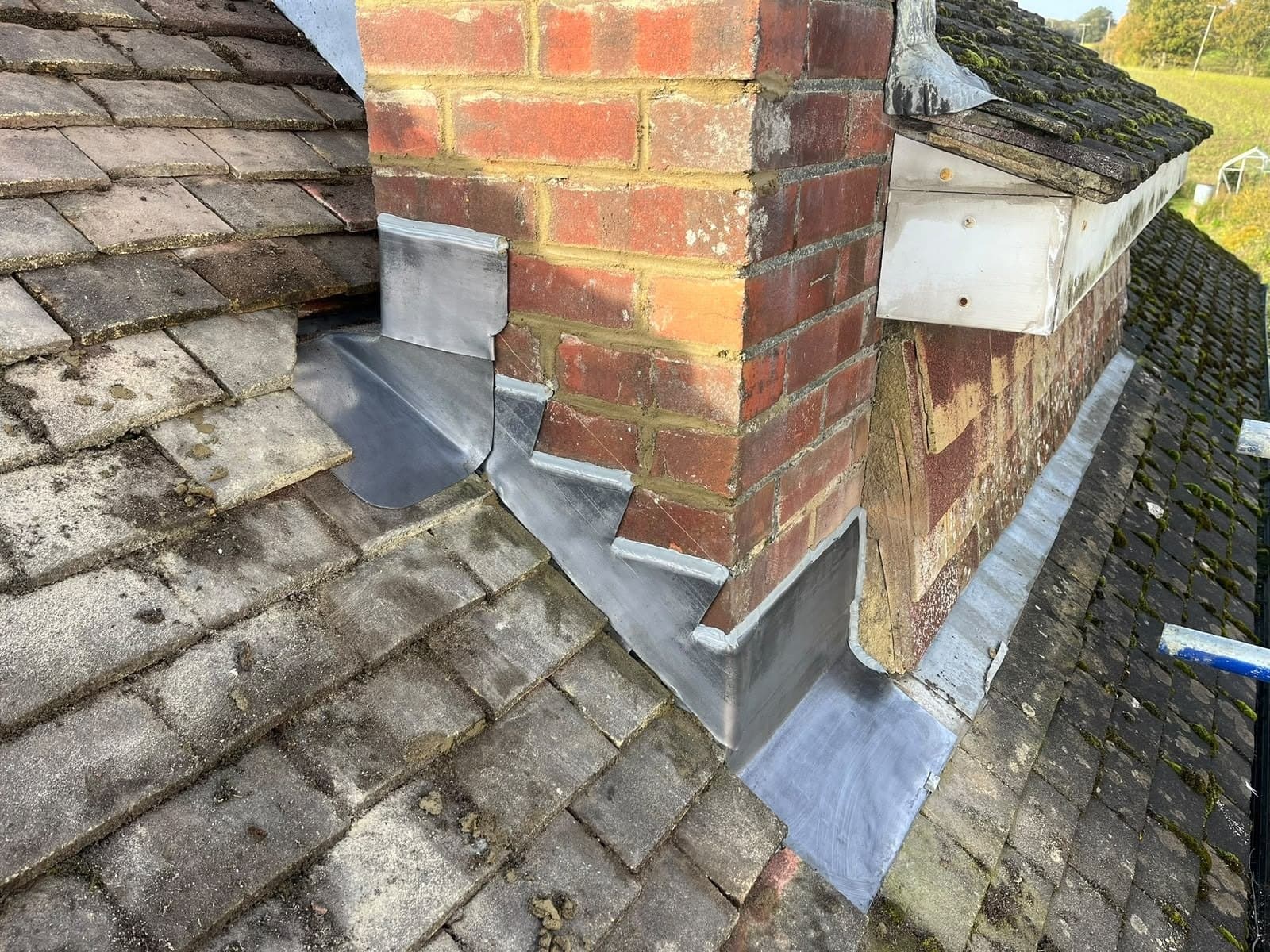
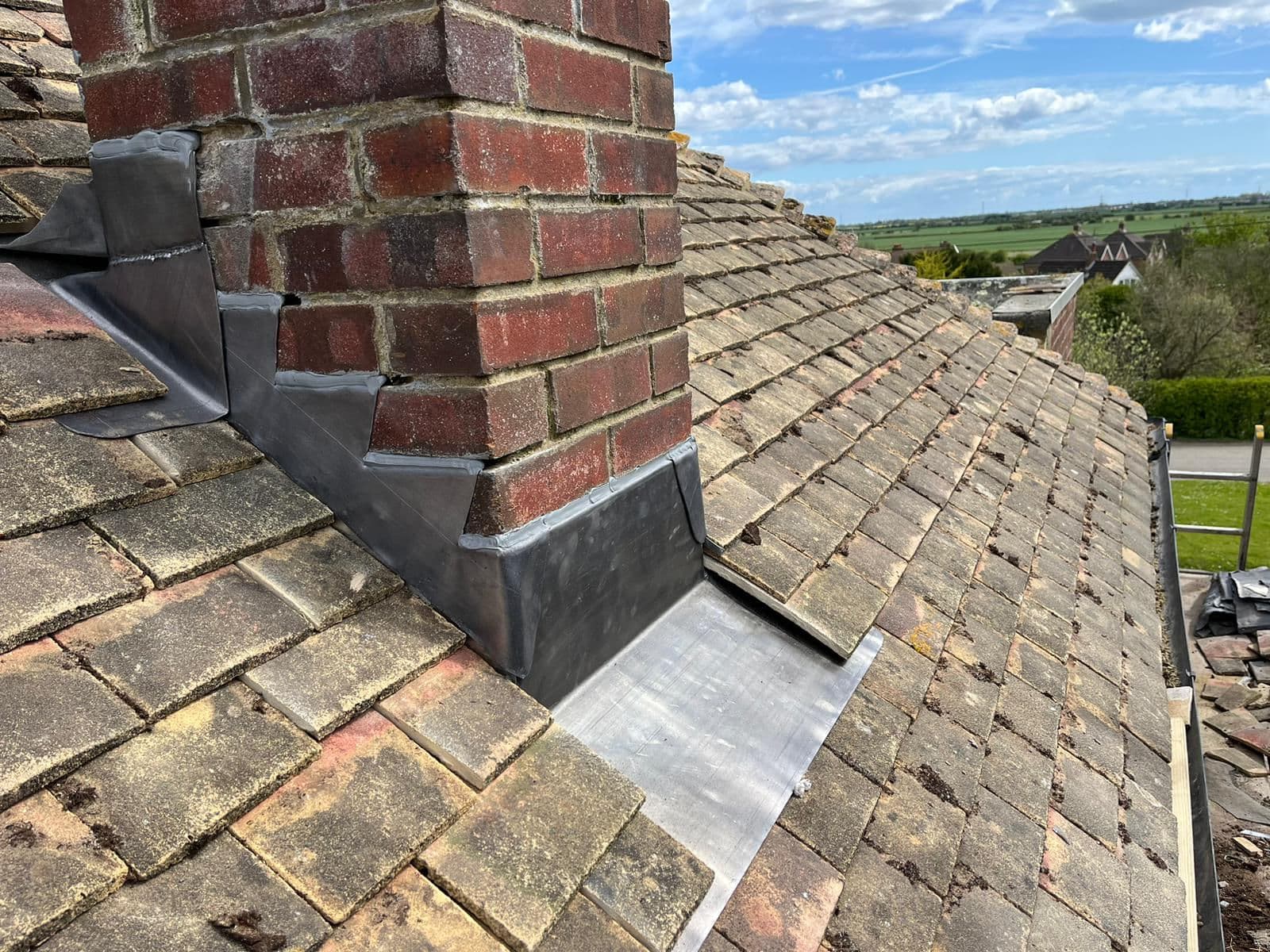
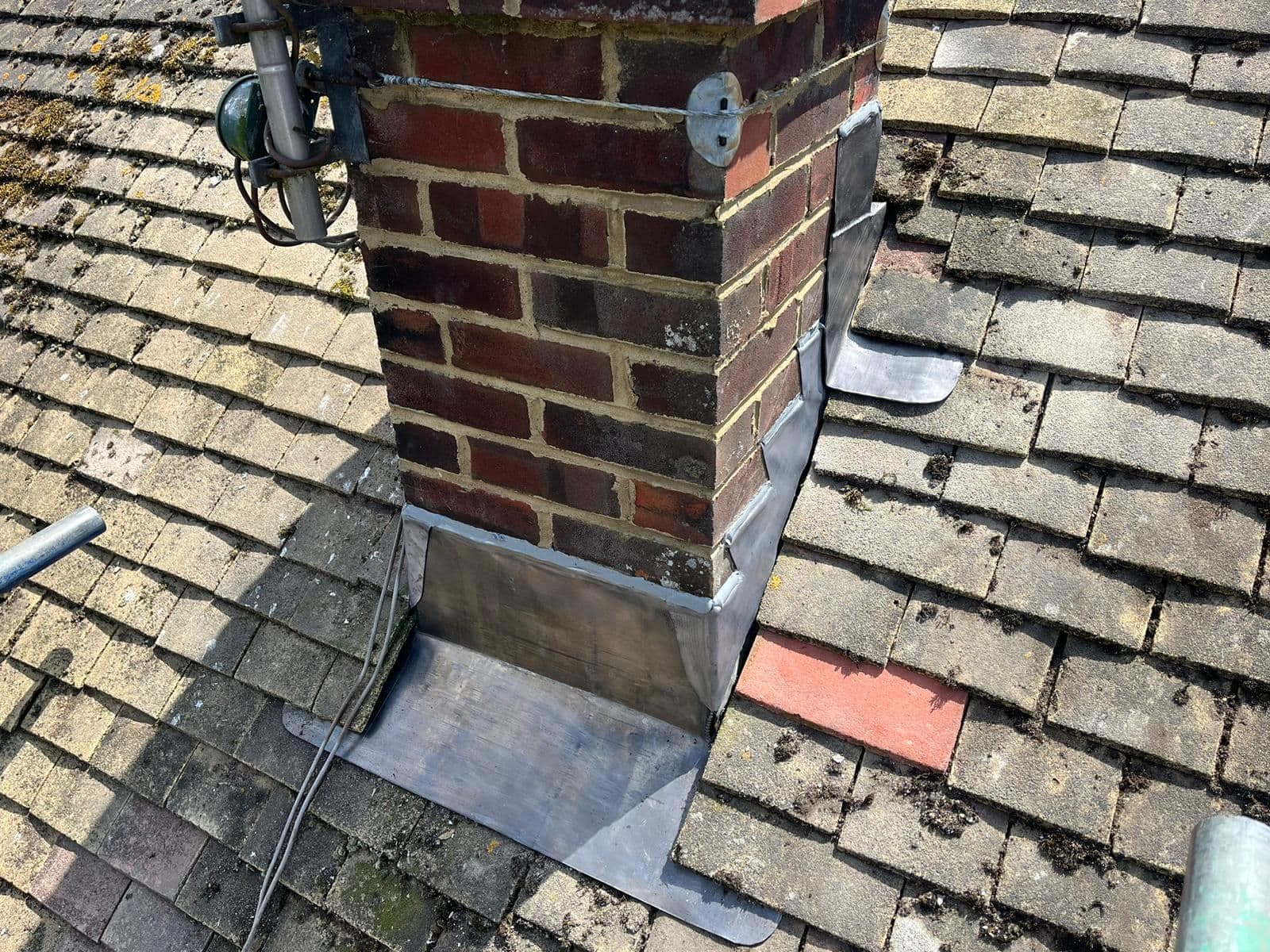
Where a slope runs up beside a wall, the flashing is cut into steps that follow the brick courses. Each step is tucked into a mortar joint and the lead is dressed down over the tiles. It is what runs up the side of most chimneys, and along the side of an extension where its roof meets the house.
Soakers
On slate and plain tile roofs, small pieces of lead called soakers go under each course where the roof meets the wall, turned up against the brickwork, with the step flashing covering their upstands. Water that gets past the slates runs down the soakers rather than into the wall.
Chimney aprons and back gutters
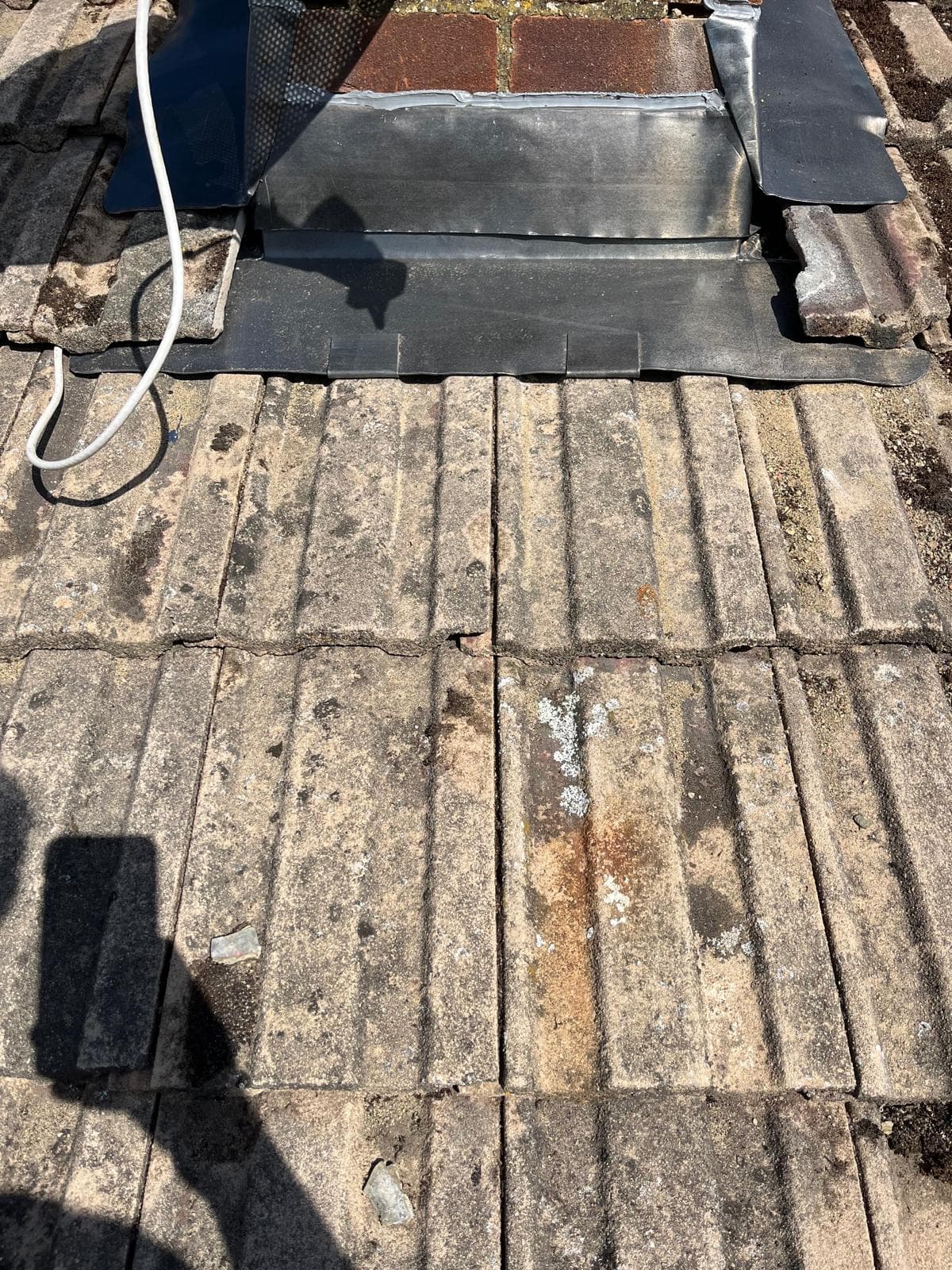
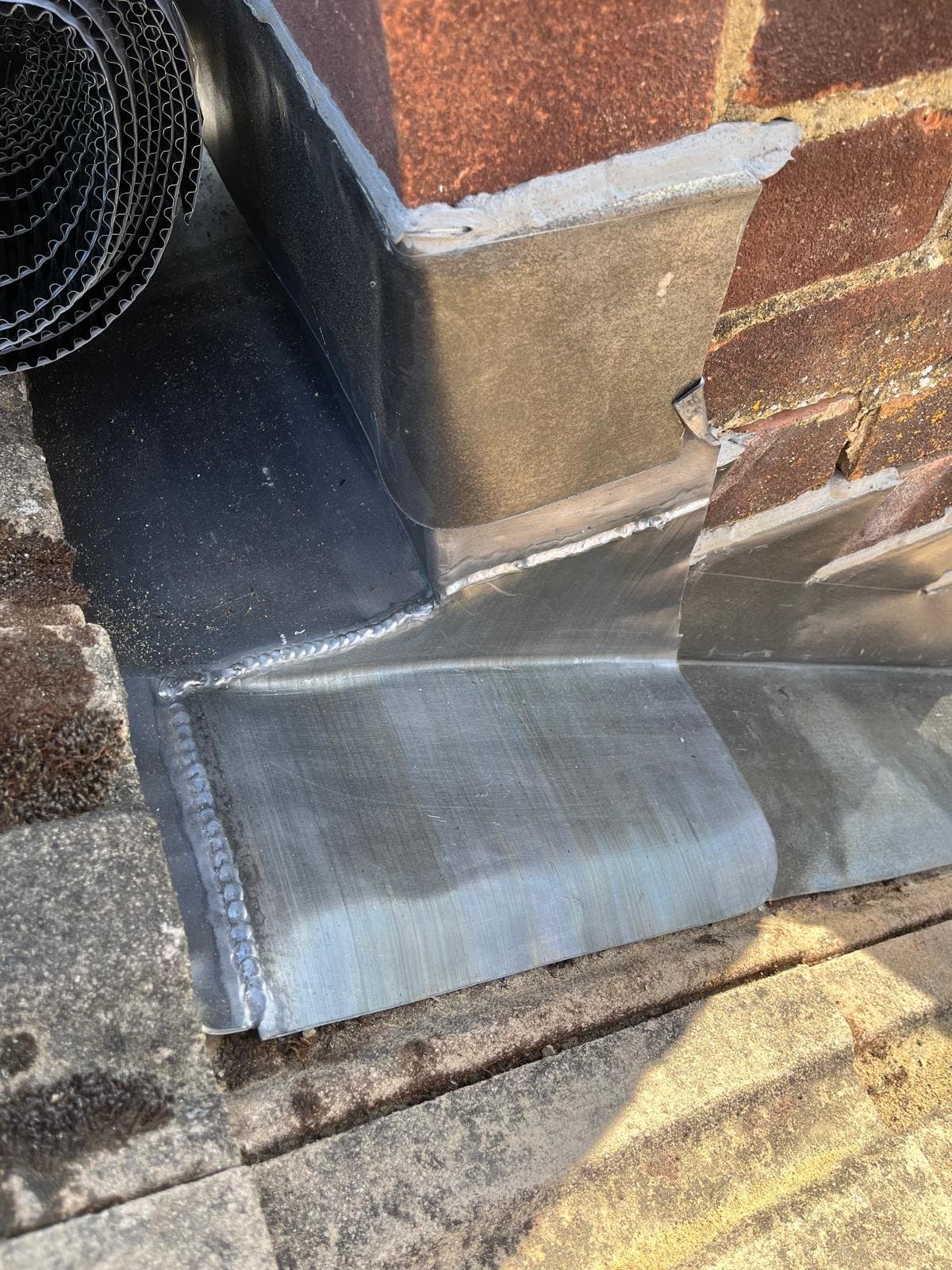
A chimney needs lead on all four sides. The front apron is dressed down over the tiles below the stack, the sides are stepped, and behind the stack a back gutter catches the water running down the slope and turns it round the chimney rather than into it. A back gutter that holds water instead of shedding it is a classic cause of damp in a chimney breast.
Lead valleys
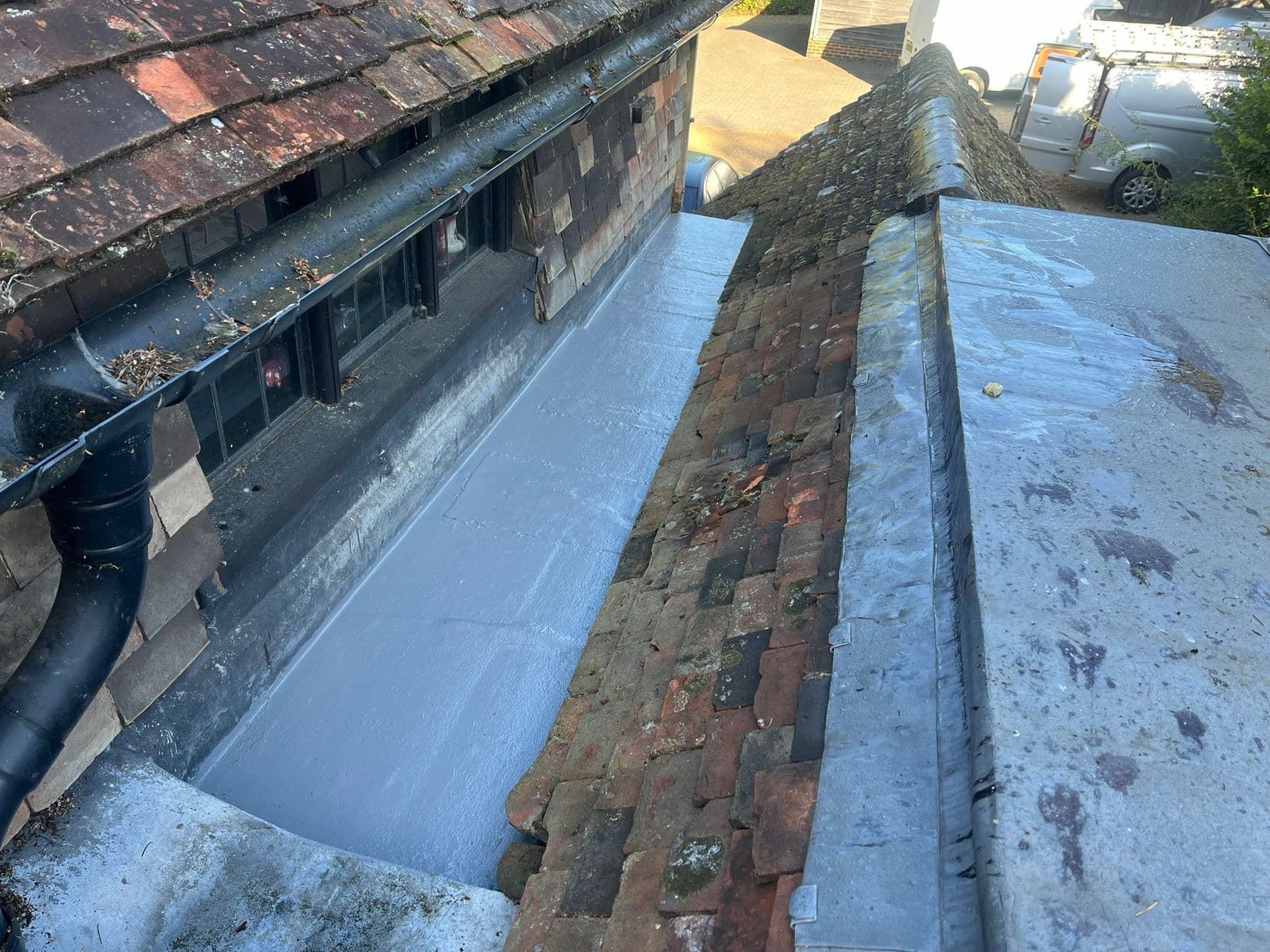
Where two slopes meet in an internal corner, a lead valley lines the joint and carries the water from both down to the gutter. A valley takes more water than any other part of the roof, so a split or a lifted lap shows up as a leak quickly.
Mastic or sealant over a failed flashing buys a season at best, which is why we replace worn lead rather than seal it. Our post on the role of flashing in roofing goes into why these joints fail.