Damp in a chimney breast comes from one of two places. Either rain is getting into the stack from outside, down an open pot, through cracked mortar at the top, through the brickwork itself or past the flashing where the stack meets the roof, or moisture is condensing inside a flue that has been blocked off with no air moving through it. The first gets worse in wet weather. The second gets worse in cold weather, and it is the one people most often blame on the roof.
Historic England's guidance on chimneys and flues names exactly those causes, water down open flues, water through the walls of the chimney, and condensation in blocked or partly blocked flues. Working out which one you have is most of the job, because each needs a different repair and only some of them are roofing.
Rain getting in at the top
A pot on a chimney that is no longer used is an open pipe pointing at the sky. Rain falls straight down it, wets the inside of the flue and soaks into the brickwork, and on a disused chimney there is no fire to dry it out again. Historic England is plain about it. A disused flue left uncapped can let water in, leading to damp and staining.
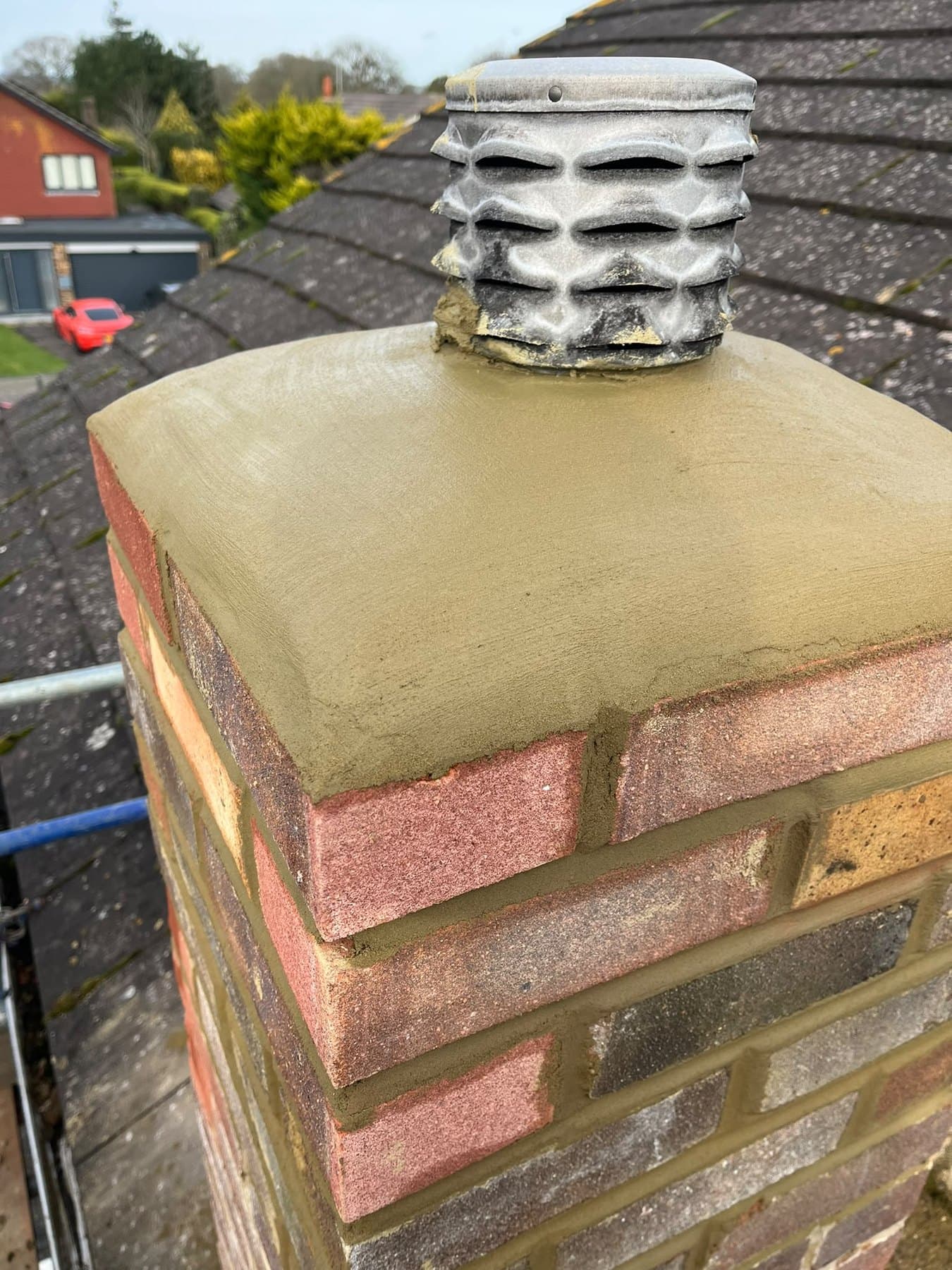
The other way in at the top is the flaunching, the sloped bed of mortar around the base of the pots that sheds water off the top of the stack. Flaunching takes the full force of the weather on a flat surface, and once it cracks, every shower runs into the top of the brickwork rather than off it. It is one of the first things to check on any chimney repair, and lack of effective flaunching is one of the faults Historic England lists by name.
Through the walls of the stack
Chimneys are thinner than people imagine. Many are a single brick thick, they stand proud of the roof on all four sides, and they are warmed from the inside while everything around them stays cold. Worn pointing, cracked bricks and faces that have started to flake all let driven rain in, and the worse the exposure, the faster it happens, which is most of the story behind why chimneys develop problems over time.
Chimney repairs and repointing make up a steady share of our work, and they matter in Hythe, where the older stock has plenty of stacks and the ones nearer the seafront take salt as well as rain. It is also why the material used to repoint matters. Historic England counts cement based pointing and render among the inappropriate materials that cause water penetration, because hard cement traps water in a soft old brick rather than letting it dry out through the joints.
Where the stack meets the roof
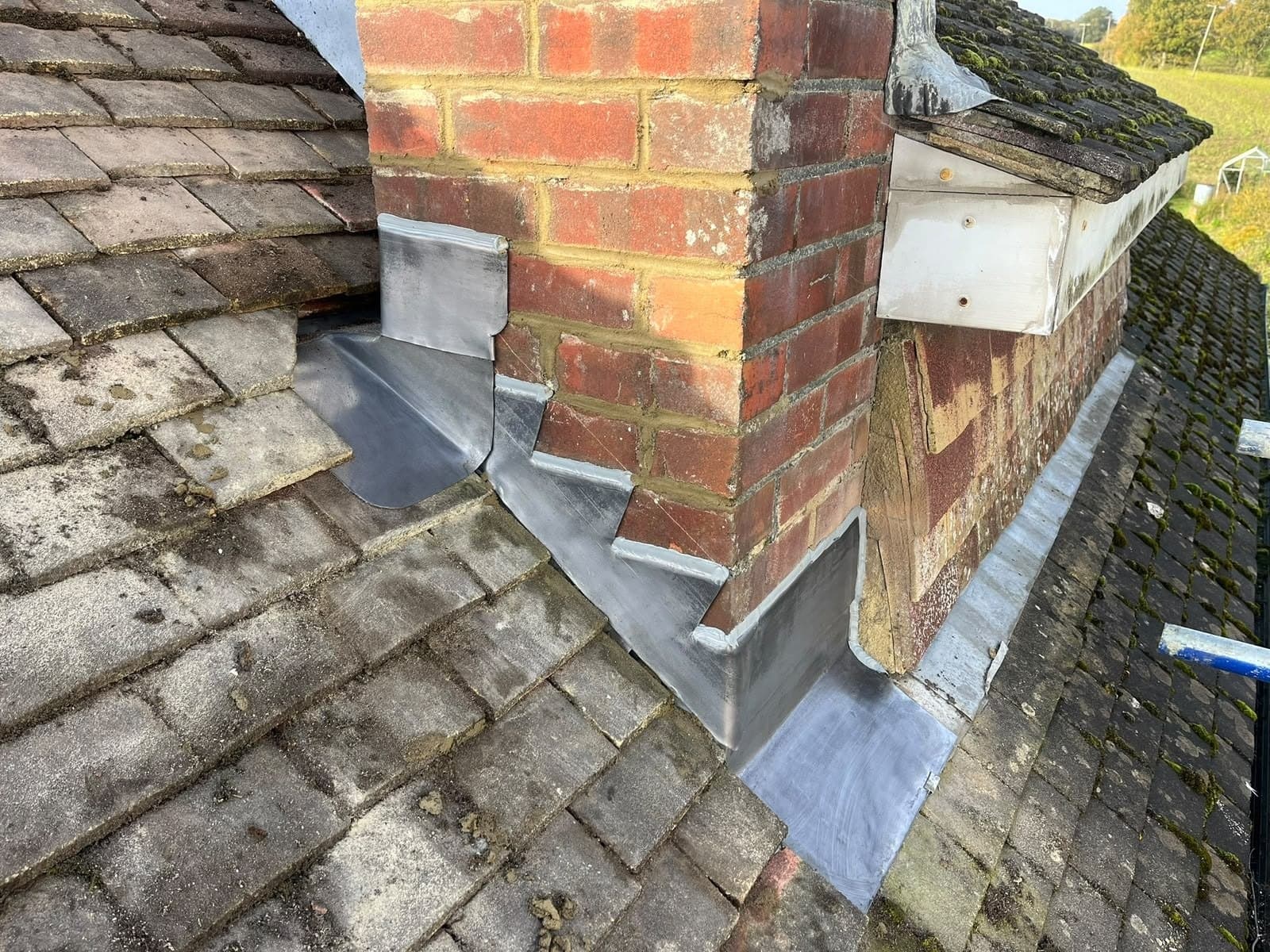
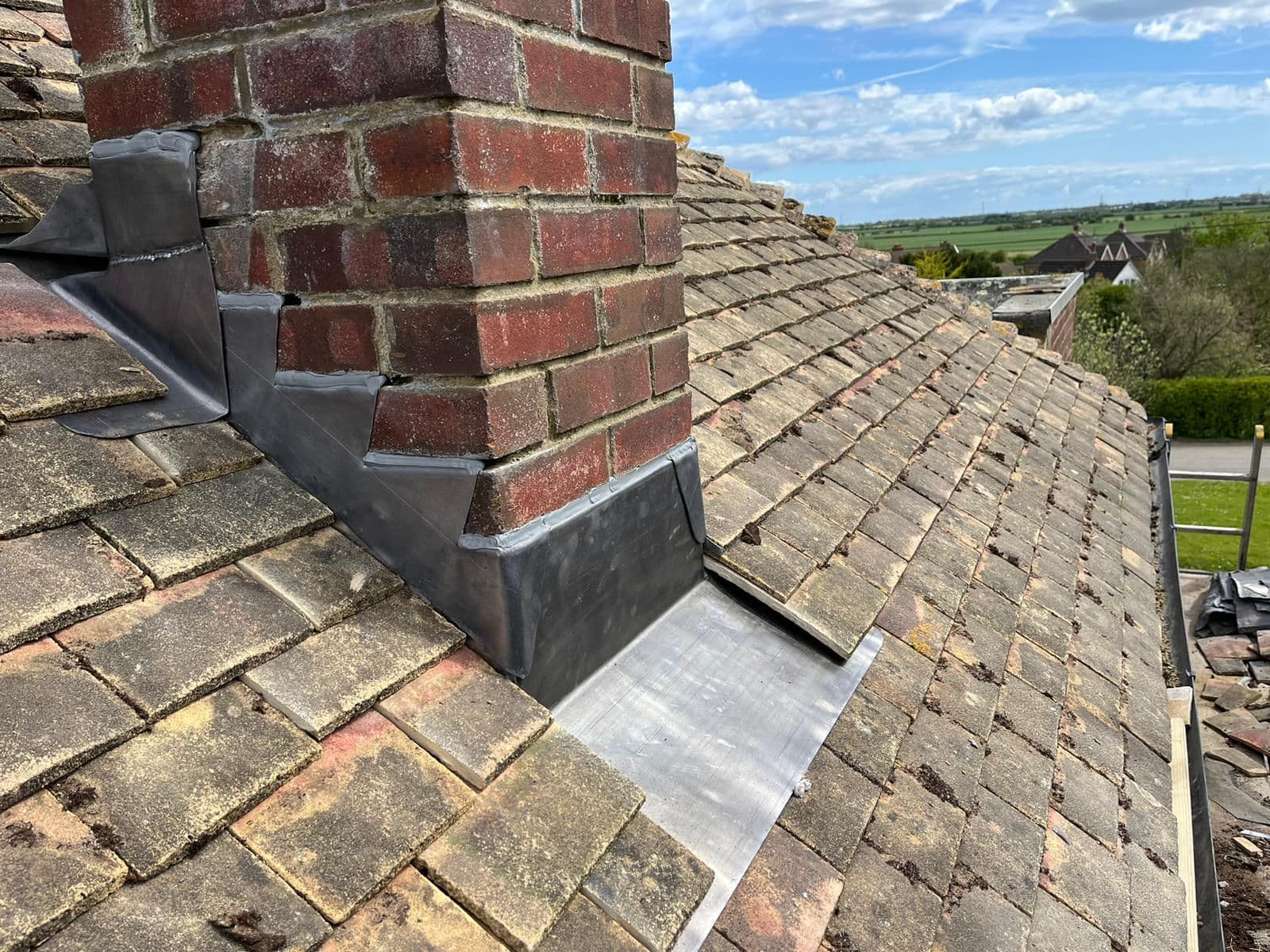
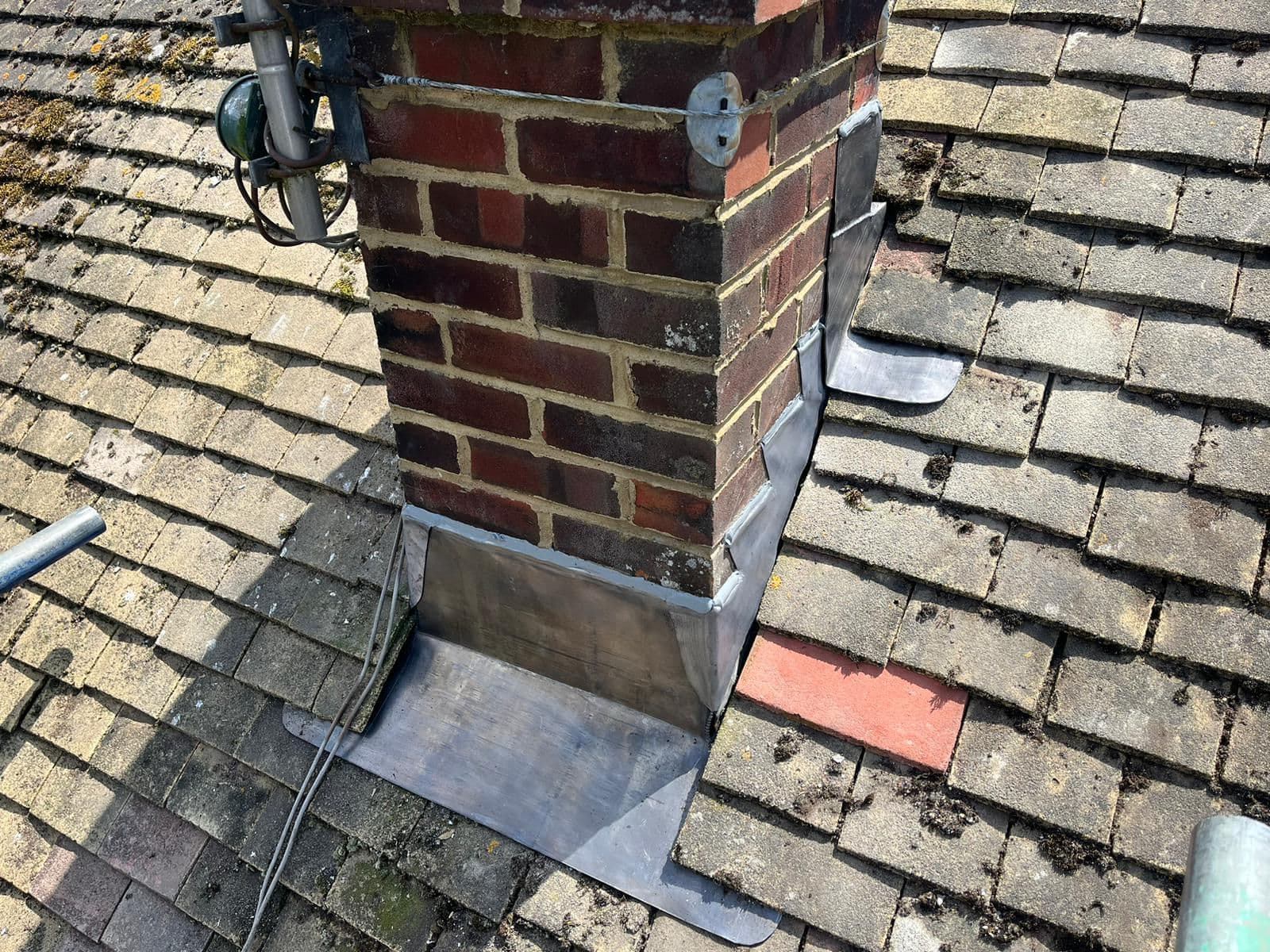
The joint between the chimney and the roof covering is a common place for leaks, and Historic England notes that chimneys are particularly prone to deteriorate at and just below roof level. Moisture in the exposed part of the stack is drawn down towards the drier section under the roof, where it evaporates and leaves salts behind, so this is the part worth inspecting regularly.
The lead flashings here have to cope with two things moving against each other, the masonry and the roof, which is why a joint patched with sealant opens up again so quickly. The before and after pair on our chimney repairs page is exactly this joint, an old flashing smothered in sealant, replaced with new milled lead welded at the corner. Lead works by its shape rather than by sticking, which is the whole of the role of flashing, and dressing it properly around a stack is part of our leadwork.
Condensation inside a disused flue
This is the cause that surprises people. Many disused fireplaces were blocked up at the bottom and the pot sealed at the top, which feels like the tidy thing to do. But a flue sealed at both ends is a cold, closed column of brick with no air moving through it. Warm, damp air from the house still finds its way in, meets the cold masonry and condenses.
Historic England describes the result precisely. Staining on the inside face of an old chimney is usually caused by condensation inside disused or rarely used flues that are not adequately ventilated, and the moisture carries sooty tar deposits through the masonry until they show on the plaster as a brown stain. Its advice is that a disused flue still needs some residual ventilation to keep it dry.
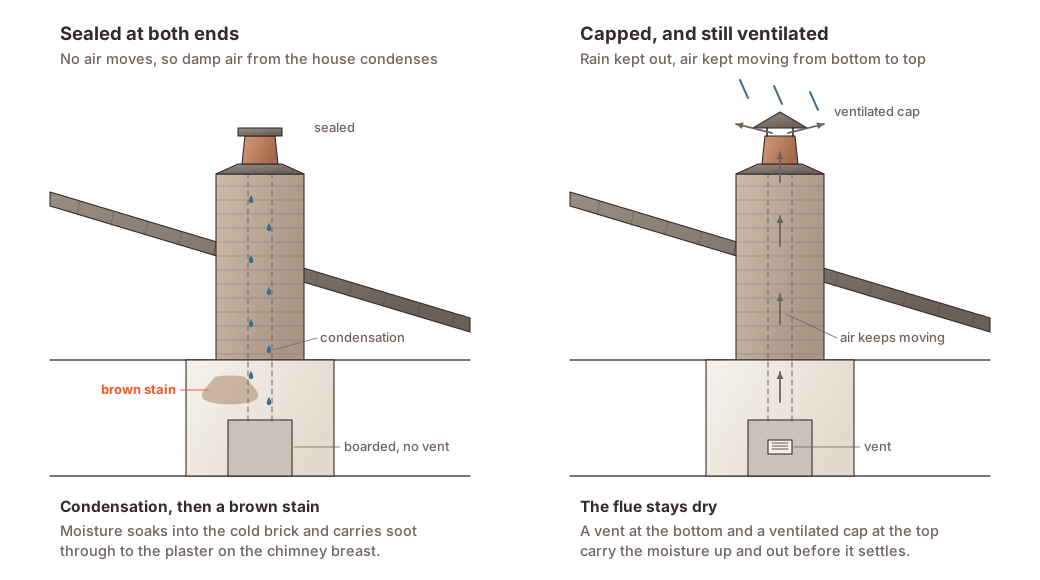
A cap that keeps the rain out but lets air through works better than sealing a disused chimney solid at the top, because a sealed flue has no way to lose the moisture that gets into it, and the brickwork ends up wetter than it was when the pot was open. A ventilated cap or cowl at the top and a small vent where the fireplace was blocked off keep air moving up the flue, which is usually all it takes.
Why the stain can come back after the fix
Years of fires leave deposits inside a flue, and some of those deposits draw water out of the air. Historic England notes that combustion by-products in the flue can take moisture from the atmosphere, dampening the fabric and staining the decoration. So a chimney breast can stay damp in humid weather even after the rain has been stopped and the flue ventilated, because the plaster itself is now holding on to salts.
That is a plastering job rather than a roofing one, and it is worth knowing before anybody tells you the roof is still leaking. Fix the source first, give the masonry time to dry, and only then deal with the plaster.
Telling which one you have
The pattern usually gives it away. Damp that appears during or just after heavy rain, worst near the top of the breast and the ceiling, points at water from outside. A brown, tarry stain that spreads in cold weather on a chimney nobody uses points at condensation. Damp that comes and goes with the humidity, whatever the rain is doing, points at salts in the plaster.
Then look in the loft. If the brickwork of the stack is wet where it passes through the roof, or the timbers beside it are stained, the flashing is the first suspect. If the stack is dry in the loft but the breast below is damp, the water is coming down the inside of the flue. The general signs of a leaking roof help here too, because a stain on the chimney breast is sometimes a roof leak that has simply tracked along a timber to the nearest wall.
Condensation is a ventilation problem, and it is the same physics found in lofts, where ventilation problems leave damp on timbers that no rain ever reached.
If you want to use the fireplace again
A flue that has been capped or sealed for years needs sweeping and checking before anything is lit in it. Fitting a new stove is building regulations work under Approved Document J, which covers flues and combustion appliances, so it is a job for a registered installer rather than a roofer. What we can do is make sure the stack, the flaunching, the pots and the flashing are sound before they start.
On a listed building the chimney is also the part most likely to need consent before it is touched, and in a town like Tenterden, with 197 entries on the National Heritage List in one parish, that covers a great many stacks. Changing pots or fitting a cap on a listed house is a conversation with Ashford Borough Council first.
Finding the source
A damp chimney breast is one of those problems where the wrong fix is easy to sell, a new flashing for a condensation stain or a cap for a cracked stack. Premier Roofing and Building Kent Ltd will look at the stack from the roof and from the loft and tell you which of these you actually have before quoting for anything.
We are a family run firm based at Shadoxhurst, just outside Ashford, with over ten years in the trade, and chimney repair is one of the jobs behind the ten out of ten reviews on our Checkatrade profile. We work across Ashford, Romney Marsh, Hythe and the coast down to Rye, and rebuilt stacks, new cowls and fresh leadwork are all in our gallery.
Quotes are free, itemised in writing and carry no obligation, and our workmanship carries a one thousand pound guarantee. Call 01233 234554, email premier_roofing@hotmail.com or get in touch here and we will find where the water is coming from.