Yes, but only the part that stops water getting in. Emergency work happens in the rain all the time, because that is exactly when a roof announces it has failed. Sheeting a damaged slope, covering a hole, refixing something that has lifted and clearing a blocked outlet are all jobs that can be done wet, and doing them the same day is usually the difference between a repair and a ceiling.
What cannot be done properly in the rain is the permanent fix. Mortar, adhesives, sealants, membranes and most bedding compounds all need a dry surface to bond, and a wet roof is genuinely dangerous to walk on. So the honest answer is that a good roofer will come out in the wet, make the roof watertight, show you what they found, and come back in dry weather to do the actual repair. Anyone offering a full permanent repair in driving rain is either cutting a corner or charging you twice.
What can genuinely be done while it is still raining
Making a roof watertight is a different job from repairing it, and it is the one that matters at two in the morning. In practice that means covering the damaged area with sheeting properly weighted and fixed rather than draped, securing anything loose before the wind takes more of it, clearing a blocked gutter or outlet that is causing the overflow, and getting into the loft to find where the water is actually tracking.
That last one is worth more than people expect. Water rarely comes in where the stain appears. It runs along a rafter or a felt lap and drops somewhere else entirely, so finding the real entry point while it is actively raining is far easier than guessing at it a week later in the dry. A wet roof is the only time you get to watch the fault happen.
We photograph what we find while we are up there, partly so you can see it without going up a ladder, and partly because if it turns out to be storm damage you will want that record for an insurance claim.
What has to wait for dry weather, and why
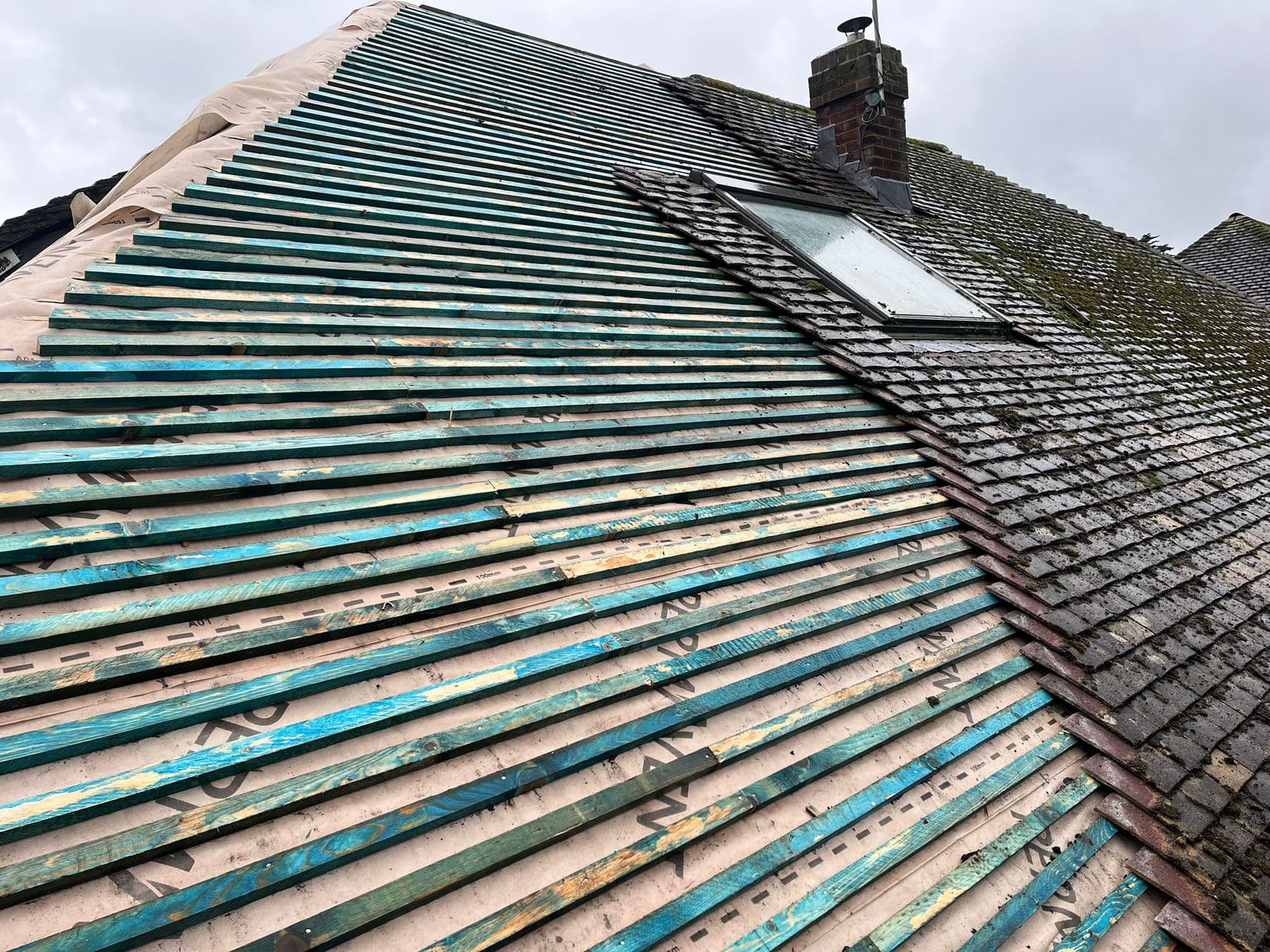
Almost everything else. New bedding mortar will not cure properly on a soaking ridge. Sealants and adhesives will not bond to a wet surface, so they fail within weeks. New felt and battens cannot go on over a saturated deck without trapping that moisture underneath, where it will rot the timber you have just paid to protect.
In our experience, sheeting a roof properly and returning in daylight works better than attempting a permanent repair in the wet, because anything bedded or bonded onto a soaking surface simply will not hold, so you pay for the same repair twice and the second one usually arrives with a ruined ceiling attached. It feels slower on the night. It is considerably faster over the month.
Safety is the other half of it. Wet tiles and slates are treacherous, and falls from height remain one of the most serious risks in this trade. The HSE guidance on working at height is worth a look before anyone considers going up themselves in bad weather, and the short version is that nobody should. If water is coming in, the useful things to do are all at ground level.
Half of what people report as a leak in heavy rain is not a hole
This is the single most useful thing on this page, and it is why we would rather look than quote over the phone.
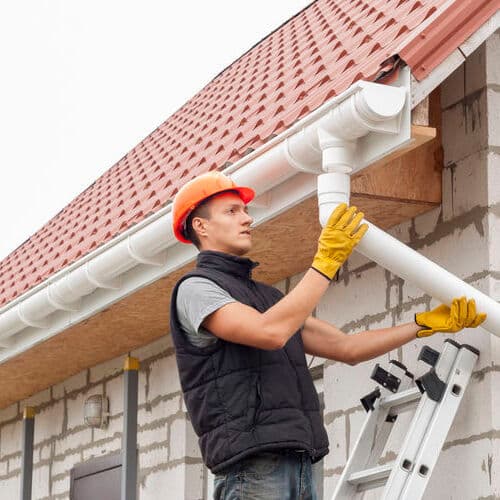
A large share of the leaks reported to us during heavy rain do not turn out to be a hole in the covering at all. They trace back to a gutter overflowing behind the fascia, or to condensation in the loft that heavy weather has simply made obvious. Both produce exactly the same symptom as a genuine leak, which is a wet patch on a bedroom ceiling.
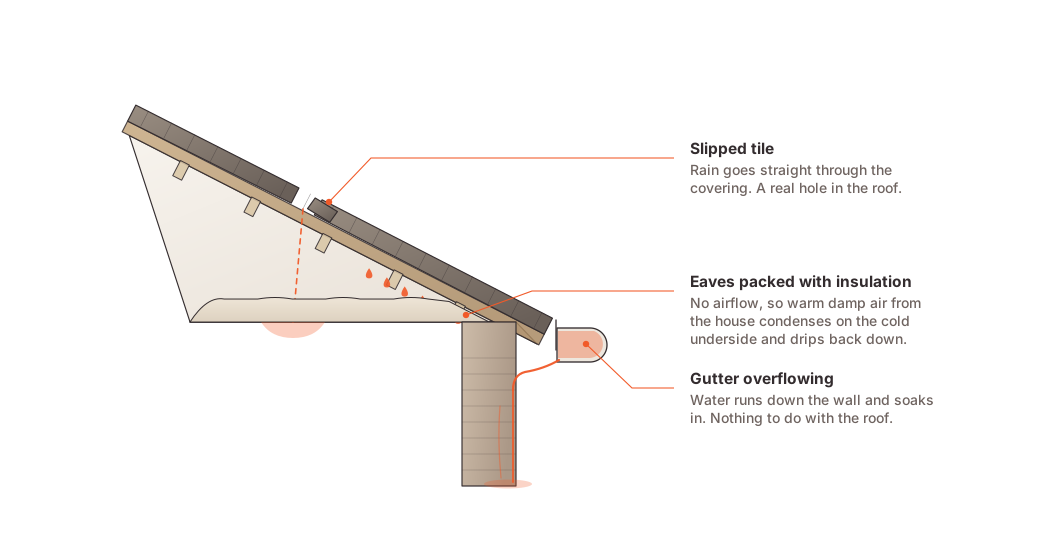
The distinction matters commercially as well as technically. If the cause is a gutter overflowing then clearing it is a cheap job and no roof work is needed at all. If it is condensation, more insulation is the wrong answer and better airflow at the eaves is the right one. Someone who sells you tiles for either has sold you a bill and left you with the damp still there. Knowing what the signs of a real leak look like is worth more during a wet week than at any other time.
Why the weather here does not wait
Our patch runs from sheltered inland Ashford out to the open coast at Dymchurch and Lydd, all within about twenty minutes of our yard at Shadoxhurst, and weather off the Channel does not arrive at a convenient hour.
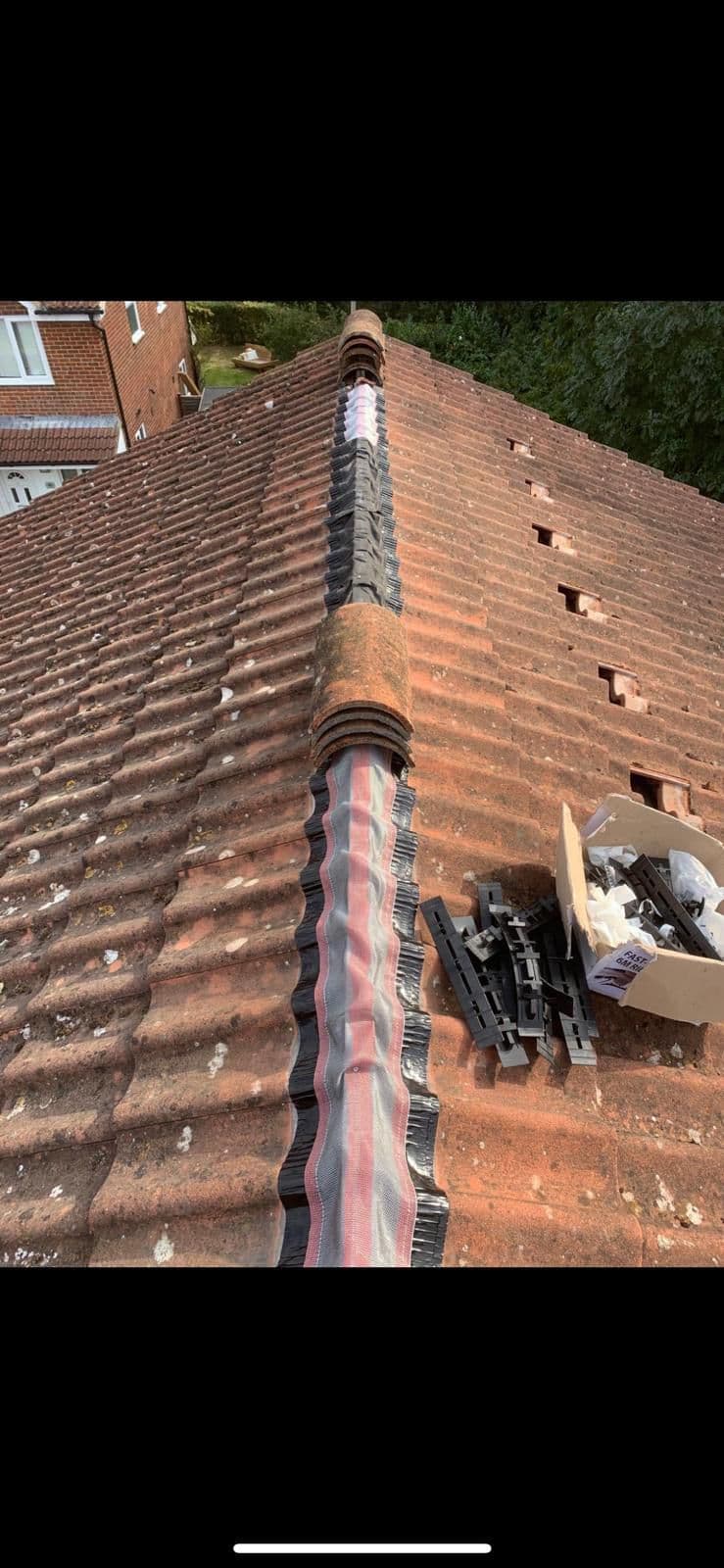
Two things about that geography matter when it is actually raining. Wind pulls upward on a roof rather than pressing down on it, and the suction is fiercest at the eaves, the verges, the corners and the ridge, so storm damage almost always starts at an edge. That is where to look first and where temporary work is usually needed. And salt air corrodes ferrous fixings far faster than inland air, so an edge detail that would have held for decades in Ashford can already be halfway gone on the Marsh, which is why the same gale takes tiles off one house and not its neighbour.
Being twenty minutes away is what makes a 24 hour call-out an actual promise rather than a phone number. Customers on our verified reviews have picked out fast call-outs within 24 hours more often than anything else, which tells you which part of the service people notice when it is raining.
What to do while you are waiting
Nothing on the roof. Everything else is worth doing.
Put a bucket under the drip and move furniture and electrics clear. If a ceiling is bulging, that is water pooling above it, and piercing it deliberately with a screwdriver in one controlled spot is far better than waiting for the whole thing to come down. Turn the power off to that part of the house if water is anywhere near a light fitting or a socket.
Take photographs, including the outside from the ground if you can see anything obviously displaced. Then call somebody. If the damage came from a storm it is very often covered by your policy, and we take on insurance work, so it is worth checking before you agree to pay for anything yourself. It also helps to know what actually counts as a roofing emergency, because not everything that is dripping needs somebody out at midnight, and knowing the difference saves money.
Getting somebody out
So, yes to emergency work in the rain and no to permanent repairs, and a roofer who explains that distinction rather than blurring it is telling you the truth about their trade.
Premier Roofing is family run, owned by Ken Perkins and working out of Shadoxhurst just outside Ashford, covering Romney, New Romney, Dymchurch, Lydd, Hythe and Ashford. Between us we have over ten years in the trade and list 44 separate roofing skills, we take on domestic and commercial work including insurance work, and we have held ten out of ten across every review on our Checkatrade profile since joining in September 2024, on jobs across TN25, TN26 and ME14.
Our 24 hour emergency call-out is a real one, quotes for the follow up roof repairs are free and carry no obligation, and our workmanship is backed by a one thousand pound guarantee. Work we have completed across the patch is in our gallery.
If water is coming in now, call 01233 234554. If it can wait until morning, email premier_roofing@hotmail.com or send us a message and we will come and take a proper look.