For most older homes the best roofing option is the one the house was built with, or the closest honest match to it. That means clay tile where the roof was clay, natural slate where it was slate, the old structure kept wherever it is sound, and any modern improvement made underneath the covering rather than by swapping it for something heavier or newer looking.
Historic England's advice on repairing or renewing the roof of an older home puts things in the right order. Keeping the rain out comes first, replacing an old covering is disruptive and expensive, so check whether it can be repaired before anything else. That order tends to save owners money as well as character, and the rest of the decision depends on knowing which kind of old roof you actually have.
Find out what the roof is before deciding what it becomes
Before the railways, roofs were covered in whatever was local, clay tiles, stone slates or thatch, and Welsh slate only spread across the country once it could be moved cheaply. The covering on an old house is often a clue to its age, and it is the starting point for any re-roof.
Our own patch shows it clearly. In Tenterden, clay tile is the dominant historic covering across the listed buildings and slate is rare. In Rye, the council's own appraisal describes handmade clay tile as the main historic covering, with slate belonging to particular later stock, the Victorian cottages, the Military Road terraces and the warehouses at Strand Quay. Put the wrong one back and it reads as wrong from the end of the street.
Tenterden has one more surprise. At least ten buildings there are faced in mathematical tiles, clay tiles hung to imitate brickwork, so on an old house in the town the front wall may turn out to be part of the tiling.
Repair first, because the roof may be older than it looks
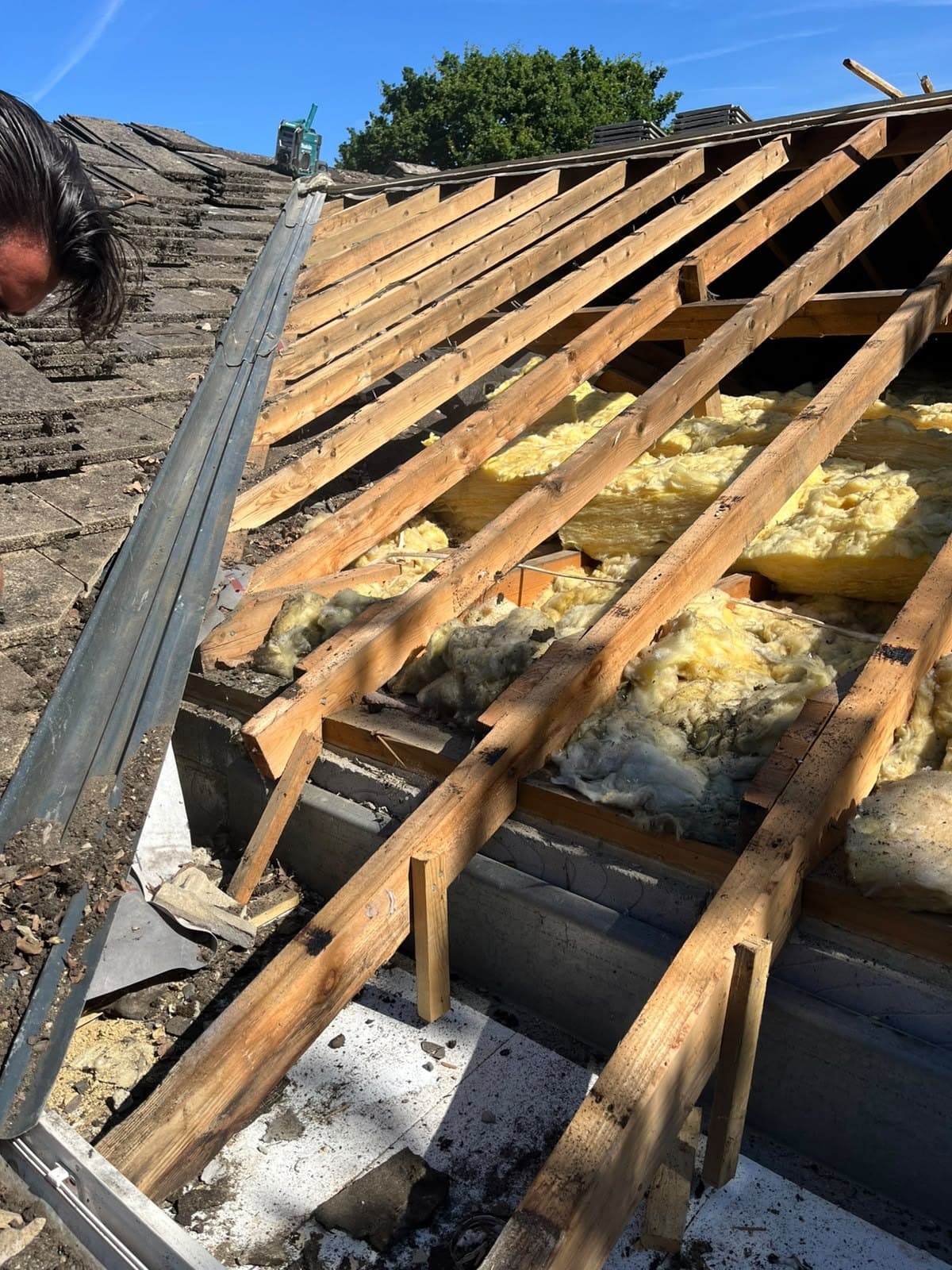
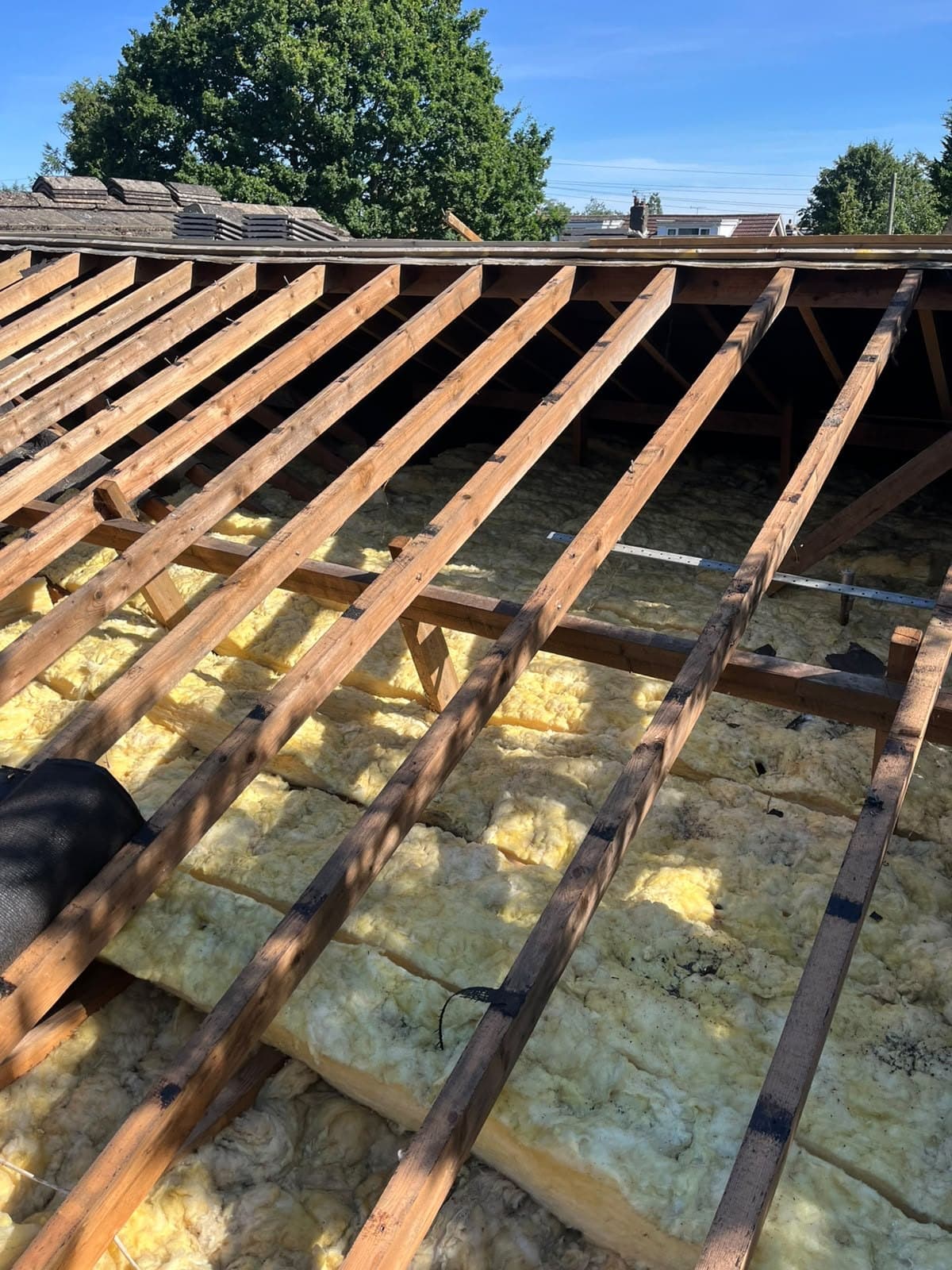
Many historic roof structures have lasted well over a century, and Historic England notes that it is not unusual for a Georgian looking house to still have medieval roof timbers. Those timbers are part of what the house is, and once they are gone they are gone.
A lot of what looks like a failing old roof turns out to be a repairable fault. Damp in an older house is often a leaking chimney, a tired lead flashing or a few slipped tiles, all of which are roof repairs rather than a reason to strip the whole thing. Where a roof genuinely is at the end of its life, the difference between re-roofing and repairs is usually settled by what is underneath, the battens, the fixings and the timber, rather than by the tiles you can see from the road.
Weight is the question most people never ask
An old roof structure was sized for the covering it was built with. Natural slate is one of the lighter traditional coverings, and a slate roof re-covered in heavier concrete tiles is carrying a load its rafters were never cut for. That swap was common through the later twentieth century, and it is one of the reasons old roofs end up with a dipping ridge and walls being pushed outwards, the pattern behind structural roof problems such as roof spread.
It is a building regulations matter too. The Planning Portal's guidance on work to an existing roof says approval is needed if a new covering increases the weight of the roof covering by 15 per cent or more, so building control will want to see that the structure can carry it before the heavier covering goes on.
Matching the original covering works better than upgrading an old roof to a heavier modern tile, because the timbers underneath were cut for the original, and whatever is saved on the tile can be spent again on strengthening the roof, or on the cracks that appear when nobody does.
Keeping an old roof breathing
Most old roofs were built with no underlay at all. Tiles and slates hung straight on the battens, and some were pointed up on the underside with lime, a practice known as torching. Air moved through the whole roof, so any moisture rising from the house simply dried out.
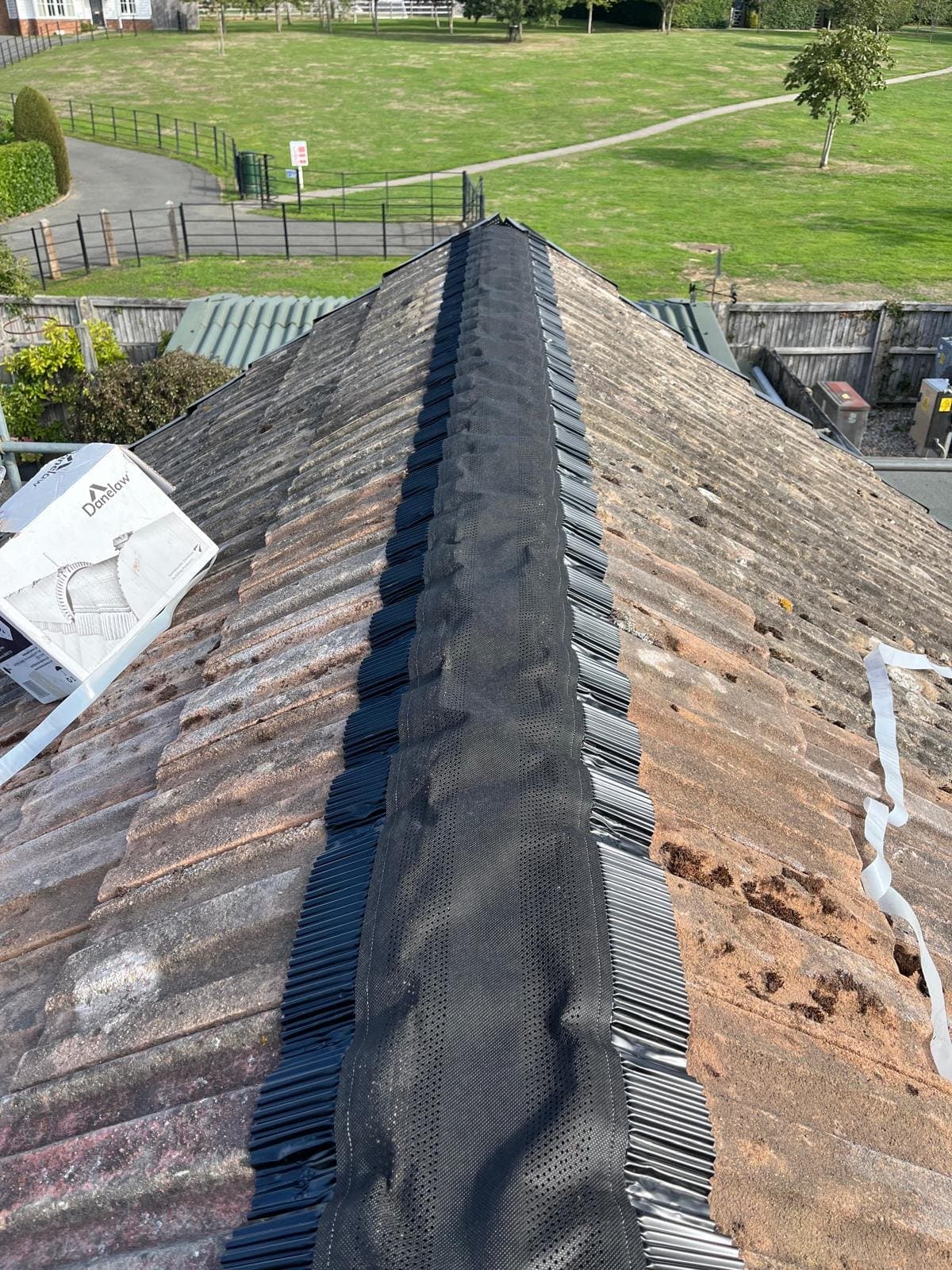
That changes the moment a re-roof adds an underlay and the loft gains insulation. Done carelessly, it seals the roof and traps moisture in timbers that have been dry for a century. Done properly, it uses a vapour permeable membrane that lets moisture out while keeping rain out, and leaves a clear path for air at the eaves and the ridge. It is the same physics behind what poor insulation does to a roof, and an old roof is less forgiving of it than a new one. The membrane, the battens and the ventilation are what a felt and batten job actually decides, even though nobody sees them again.
The details that make an old roof
Historic England's advice is to keep chimneys and pots even where they are no longer used, and to take original clay ridges and decorative finials off carefully during the work so they can be refixed afterwards. On an old roof those details carry a lot of the character, and they are very hard to buy new.
Tiles are the other half of it. Handmade clay tiles have a slight camber and an irregular face that machine made tiles do not, and a slope re-covered in crisp new tiles stands out on an old street for decades. Where there are not enough sound originals to go round, a common answer is to put the best of the old tiles back on the slopes people see, and use matching reclaimed or new tiles on the less visible side. Choosing between tile and slate is rarely an open question on an older house, because the house has usually answered it already.
Lead does most of the weathering on an old roof, at the valleys, the abutments and around the chimneys, and Historic England counts those junctions among the most vulnerable parts of any roof. Proper leadwork matters more on an old roof than a new one, and so does the mortar. Old stacks and ridges were bedded and pointed in lime, and repointing soft old brick in hard cement traps water in the brick around it.
Permission comes before materials
If a house is listed, consent is needed to change the roof's shape, height, pitch, internal structure or type of covering, or to add a rooflight, whatever the work is called. For an unlisted house in a conservation area the rules are narrower, but they are real, and they differ from town to town.
In Tenterden, for an unlisted house inside the conservation area, a dormer or any other roof enlargement is not permitted development and needs planning permission, and re-cladding a wall in tile is not permitted development either. There is no Article 4 direction anywhere in the town, whatever some planning websites say. The council to ask is Ashford Borough Council.
Rye goes further. It is in East Sussex, so the council is Rother District Council, and its 2007 Article 4 direction removes the permitted development right to alter a house roof, including changing the roofing materials or adding rooflights, where the work fronts a highway, waterway or open space. A like for like repair is the least likely thing to need permission there, but a change of covering can need it when it would not almost anywhere else.
All of that describes unlisted houses, and planning conditions can remove permitted development on newer estates, so check with the council before anything is ordered. Planning permission to replace a roof is rarely needed on an ordinary house, and that is exactly why it gets overlooked on an old one.
Talking to us about an older roof
An old roof rewards a roofer who looks properly before quoting. Premier Roofing and Building Kent Ltd will tell you whether yours wants repairing or renewing, what it was most likely covered in originally, and whether there is paperwork to sort out before any scaffold goes up.
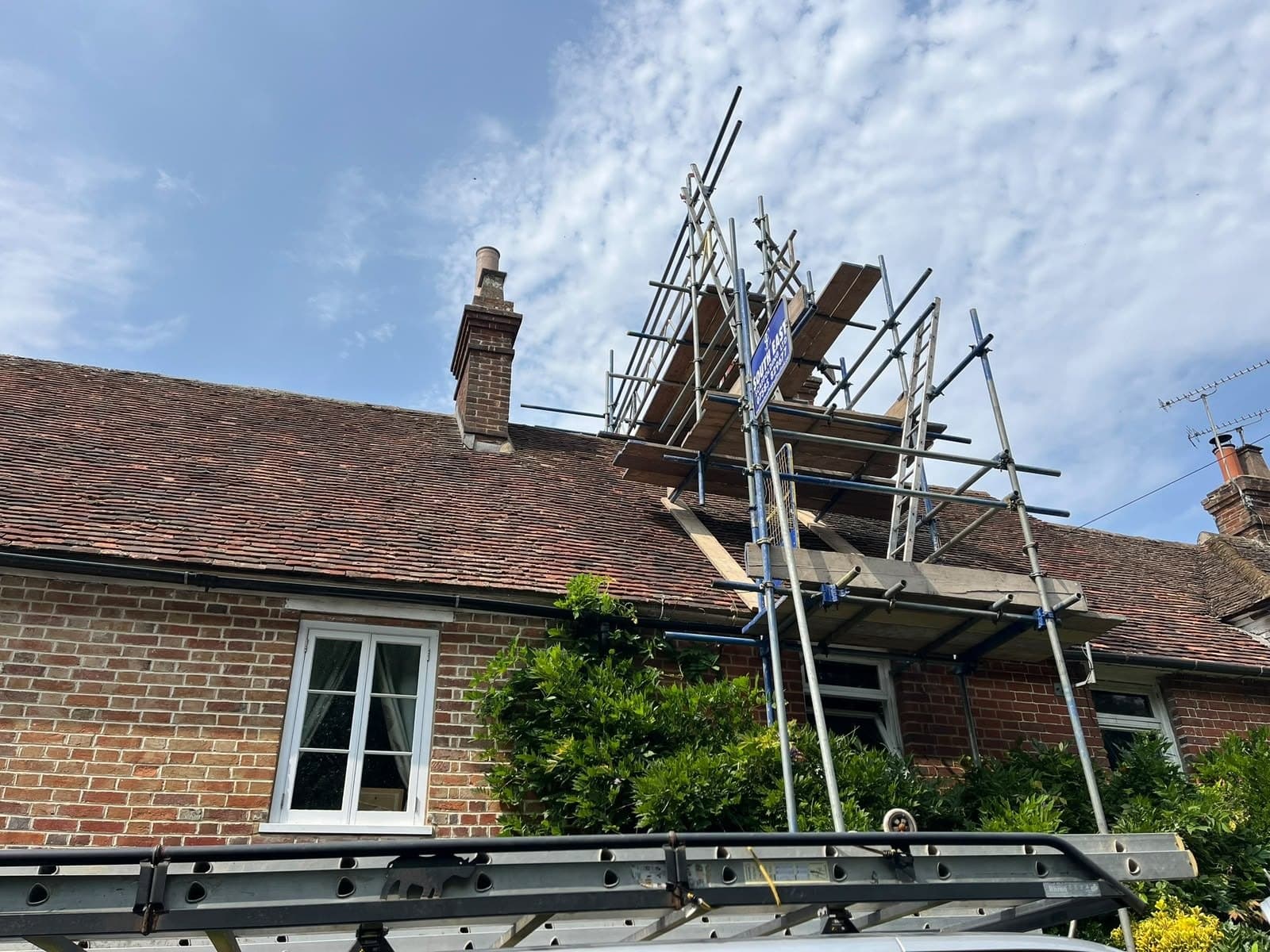
We are a family run firm from Shadoxhurst, just outside Ashford, with over ten years on roofs, covering Ashford, Romney Marsh, Tenterden, Rye and the coast. Every review on our Checkatrade profile scores ten out of ten, and a clay tiled cottage under scaffold, slate going on course by course and rebuilt chimneys are all in our gallery. When a re-roof is the right answer, our new roofs are quoted with building regulations sign off raised at the start.
Quotes are free, itemised in writing and carry no obligation, and our workmanship is backed by a one thousand pound guarantee. Call 01233 234554, email premier_roofing@hotmail.com or get in touch to arrange a look at your roof.