Structural roof problems show up in the shape of a roof rather than in its surface, and that is the useful thing to know. A slipped tile is a covering problem. A roof line that is no longer straight is a structural one, and the two need completely different work at completely different prices.
The signs worth acting on are a ridge that dips in the middle, a slope that is bowed or wavy rather than flat, the tops of the walls pushing outward under the eaves, cracks appearing where a wall meets a ceiling, and doors or windows in upstairs rooms that have started to stick. Inside the loft it is split or bowed rafters, timber that gives under a thumbnail, and any joint that has opened up. None of those get better on their own, but most of them are fixable if they are caught while they are still a shape rather than a failure.
Look at the roof line from across the road
The single most useful check needs no ladder and takes a minute. Stand far enough back to see the whole roof against the sky and look along the ridge.
A ridge should be dead straight. A dip in the middle, a sag toward one end, or a slope that bulges rather than lying flat all mean the timber underneath has moved. Sight along the eaves line too, because a wall pushing out at the top is one of the clearest signs there is and it is far easier to see from the pavement than from a ladder.
Photograph it, and photograph it again in six months from the same spot. Almost everything structural moves slowly, so a comparison tells you far more than a single look, and it is the evidence that turns "I think it looks a bit off" into something a roofer can act on.
Roof spread, and why it pushes your walls out
The commonest structural fault we see on older roofs has a specific cause, and once you understand it the symptoms make sense.
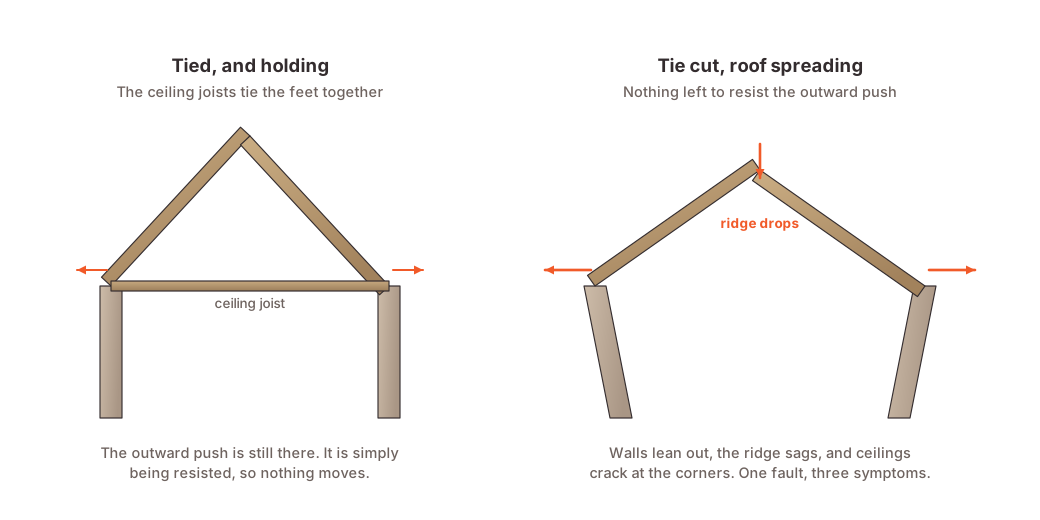
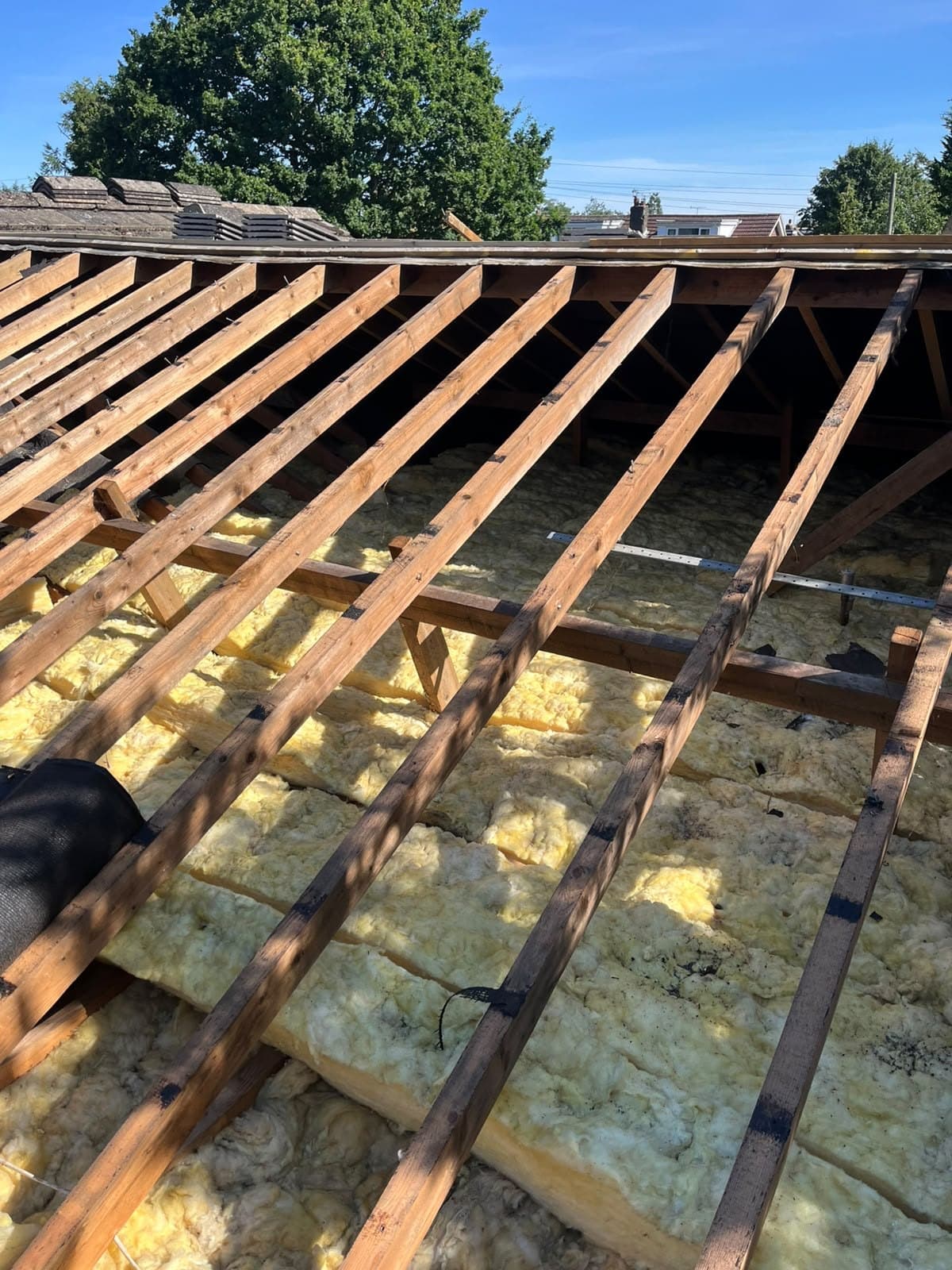
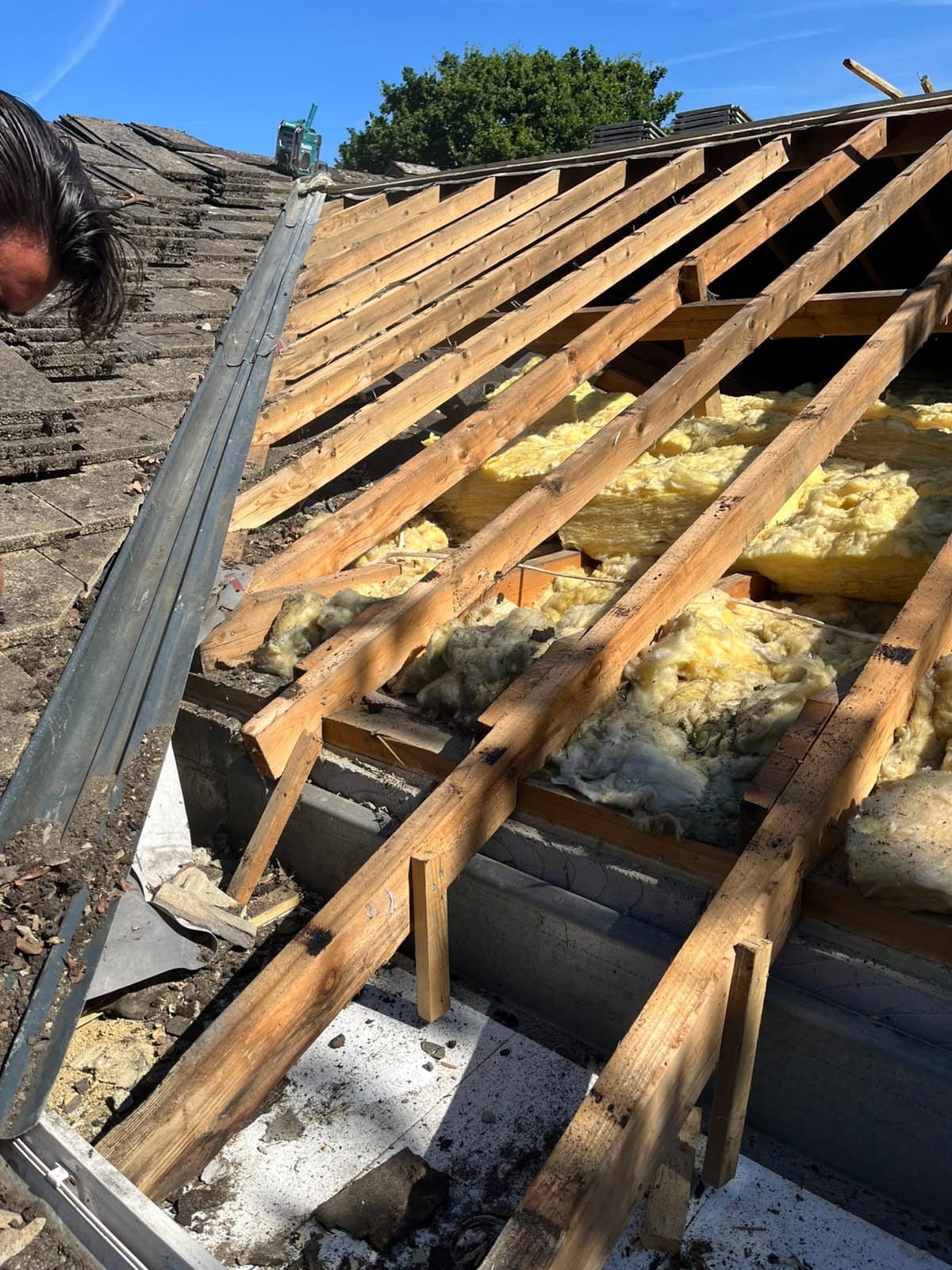
A pitched roof is two slopes leaning against each other. Their weight does not only press down, it pushes outward at the bottom, and something has to resist that. In a properly built roof that is the ceiling joists acting as ties across the bottom of the triangle. When those ties are missing, cut through or never properly connected, the feet of the rafters push the tops of the walls outward, the ridge drops as the triangle flattens, and the whole roof slowly spreads.
That is why the three symptoms travel together. The bulging wall, the sagging ridge and the cracked ceiling corners are one problem, not three, and treating them separately is how people spend money without fixing anything.
The most frequent trigger we find is a loft conversion or a loft "tidy up" where ceiling joists were cut to make room, sometimes decades ago and often without anyone realising what those timbers were doing.
The other causes worth knowing
Rot is the second one, and it usually starts at the ends of the rafters where they sit on the wall plate at the eaves. That is the coldest, wettest part of the roof and the part most likely to have had water running over it from a blocked gutter for years. The early signs of rot are worth knowing, because rafter ends are cheap to repair and a wall plate is not.
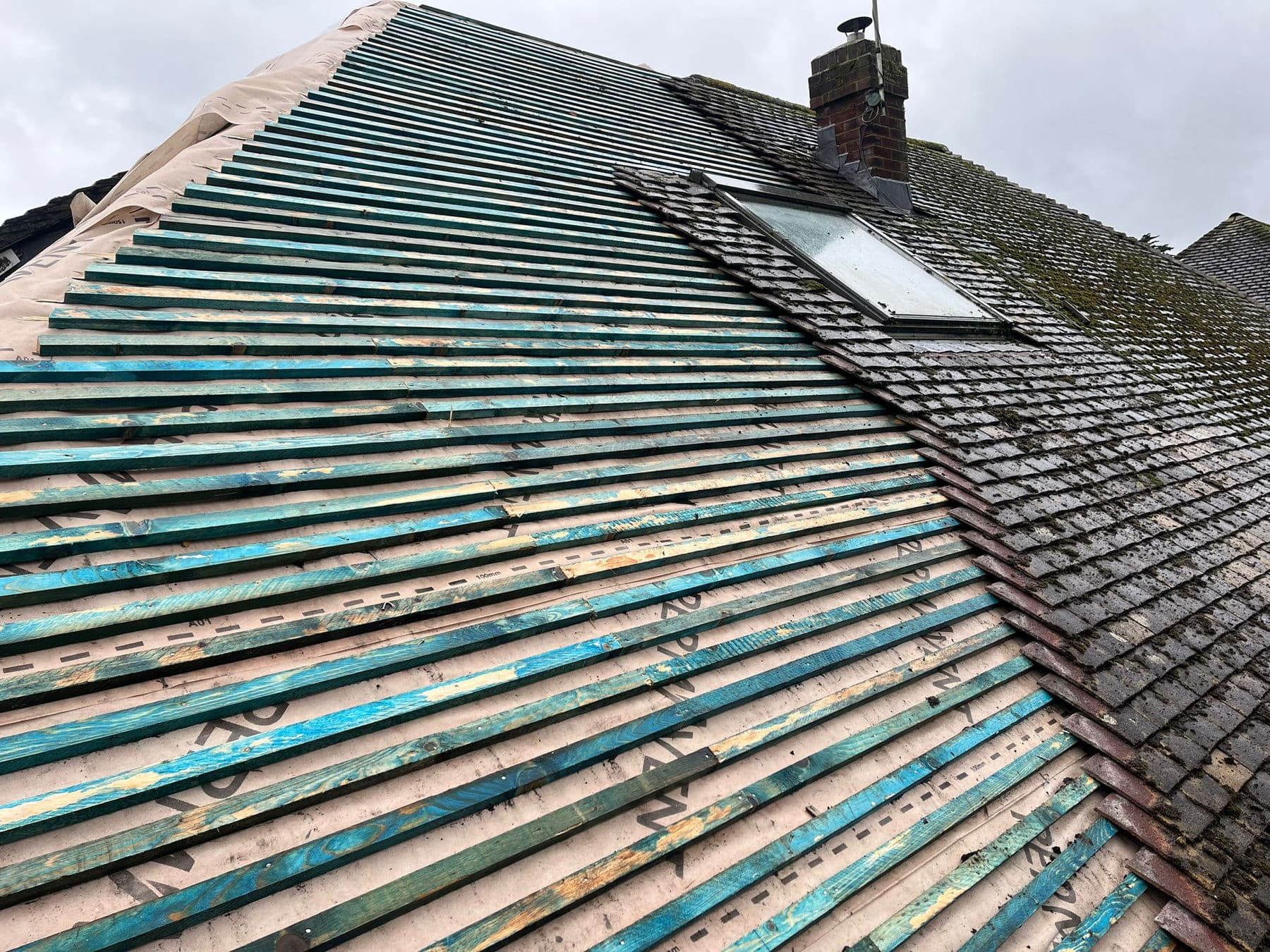
Overloading is the third. Putting heavy concrete tiles onto a roof designed for lightweight slate, without checking what the timbers will carry, quietly overloads a structure that was fine the day before. It is one of the reasons any honest quote for a covering change starts with a look inside the loft rather than a look at a brochure.
Water is the common thread in most of it. A roof that has been letting water in for years, whether through the covering or from an overflowing gutter, will have wet timber somewhere, and wet timber is what fails.
Why this comes up on our patch
Our area runs from sheltered inland Ashford out to the exposed coast at Dymchurch and Lydd, and Tenterden sits in among a great deal of genuinely old building stock, all within about twenty minutes of the yard at Shadoxhurst.
Older roofs here were built to carry what was originally on them, and a lot of them have been re-covered at least once since. Every one of those changes is a chance for the loading to have gone up without the structure being looked at. Add a century of loft conversions, water tanks and cut joists and you have the conditions for spread.
The coast contributes differently. Wind pulls upward on a roof rather than pressing down, and the suction is fiercest at the eaves, the verges and the ridge, so an exposed roof is being worked at its edges every winter. That does not usually cause spread on its own, but it finds a structure that is already weak far sooner than a sheltered position would.
What happens when we find something structural
Being straight about this matters, because it is the point at which a roofing job can become a building job.
Most of what we find is repairable and is not a rebuild. Rafter ends spliced, a wall plate replaced in sections, ties reinstated, a sagging purlin supported. That is roofing work and we do it. What we will not do is guess at it. Anything that involves the structure of the building rather than the covering deserves a proper assessment, and where the work is significant it falls under building regulations and needs signing off by building control, which is a district function handled by your local council rather than something a roofer decides alone. LABC explains how that process works.
If a structural engineer is needed we will say so rather than working around it. That is rarer than people fear, but it does happen, and you want to hear it from the person on the roof rather than find out later.
When to get it looked at
Now, rather than after the winter. Structural movement is progressive and every wet season adds to it, so the gap between "that ridge looks slightly off" and "the wall has moved" is measured in years of doing nothing, which is the one part of this where the cost of leaving a known problem is not a figure of speech.
A proper look means going into the loft with a torch as well as onto the roof, and it is worth having done alongside the ordinary checks rather than as an emergency. Roof inspections earn their keep on exactly this kind of fault, because it is invisible from the ground until it is not. If it turns out the structure is sound and the covering is simply worn, that is a much better conversation to be having, and knowing whether a roof needs replacing is a far cheaper problem than knowing whether it needs rebuilding.
Getting a straight answer
Premier Roofing is family run, owned by Ken Perkins and working out of Shadoxhurst just outside Ashford, covering Romney, New Romney, Dymchurch, Lydd, Hythe and Ashford. Between us we have over ten years in the trade and list 44 separate roofing skills, and we have held ten out of ten across every review on our Checkatrade profile since joining in September 2024, on jobs including roof replacement across TN25, TN26 and ME14.
We look in the loft, we photograph what we find, and we tell you plainly whether you are looking at repairs or at a full replacement. Quotes are free and carry no obligation, our workmanship is backed by a one thousand pound guarantee, and there is a 24 hour call-out for genuine emergencies. Work from across the patch is in our gallery.
If your roof line does not look straight, call 01233 234554, email premier_roofing@hotmail.com or send us a message and we will come and tell you what it actually is.