For most UK homes the answer is twice a year, once in late spring and once in late autumn after the leaves have finished falling. That schedule keeps an ordinary house out of trouble. If mature trees overhang the roof, or the property sits somewhere genuinely exposed, three or four clears a year is closer to what is actually needed. If the house is on an open plot with nothing above roof height near it, one thorough clear in November will usually hold on its own.
The reason twice a year has stuck as the standard is that a gutter does not fail gradually in a way you can watch. It carries water perfectly well right up until the point it does not, and that point is almost always the first sustained downpour after it has filled. From working with clients across Kent, we have found the calls arrive in bursts, once after the first proper rain of October and again after the first heavy spell of spring. In nearly every case the debris had been sitting up there for months without producing a single visible symptom.
Why twice a year is the sensible baseline
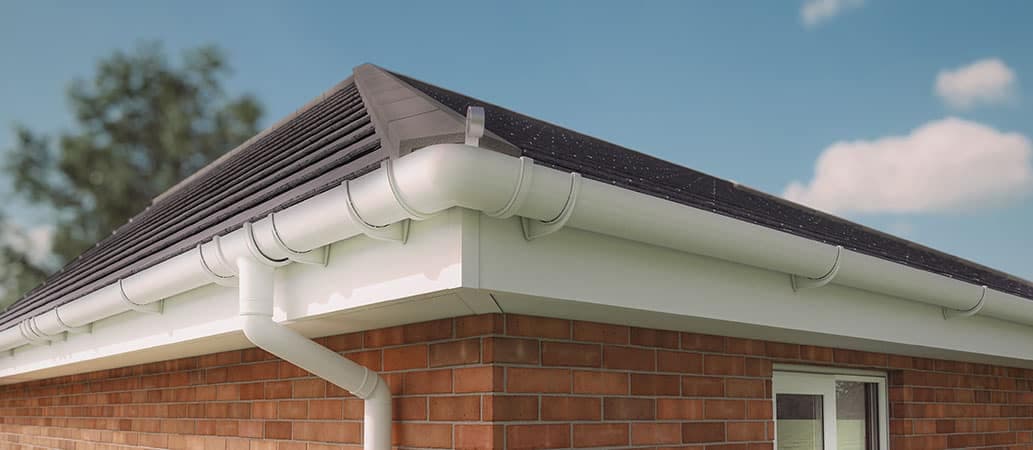
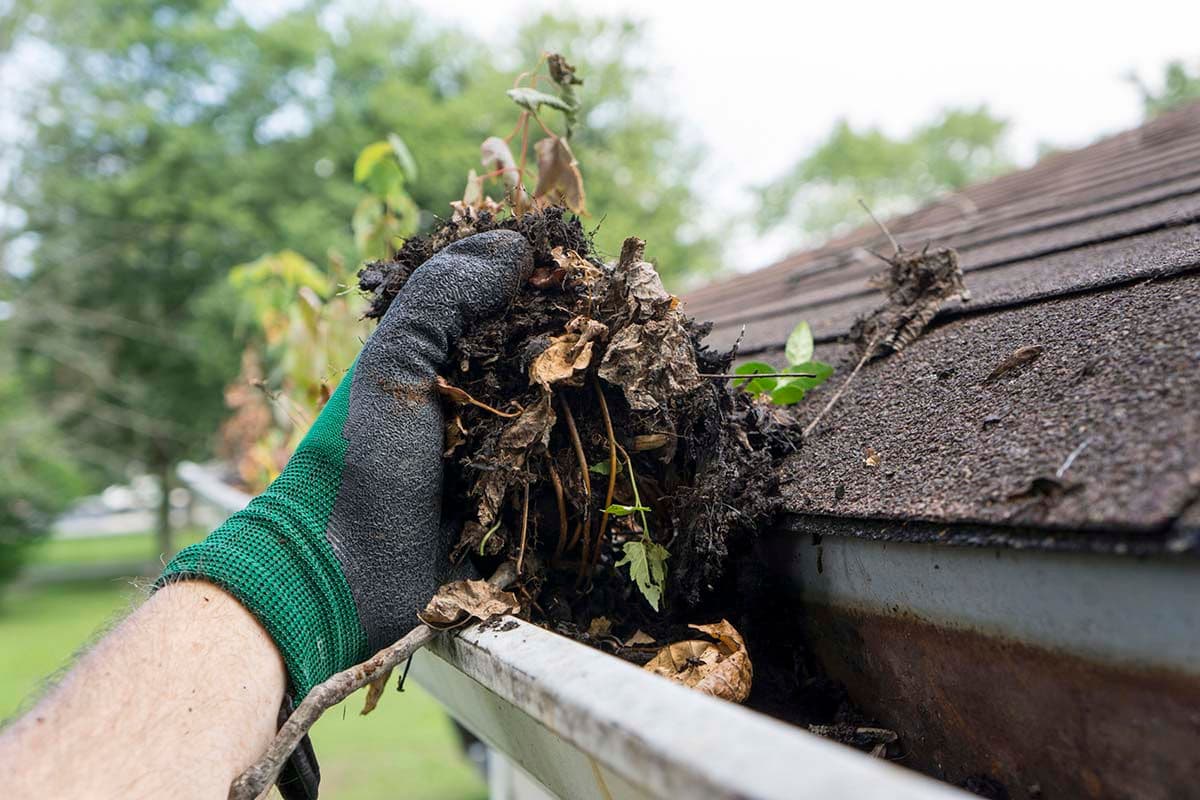
A gutter has two jobs. It catches everything that runs off the roof, and it moves that water away from the walls and the foundations. Both jobs are undone by the same thing, which is a few handfuls of wet material settling at the low end of a run or in the outlet.
The late autumn clear is the one to protect. It comes after leaf fall has finished but before the weather that puts the whole system under real load. Booking in early October, when half the leaves are still on the trees, means either doing the work twice or accepting a blocked gutter through the worst of the winter.
The spring clear does a different job. It takes out what blew in over the winter along with any moss that has washed down off the tiles, and it is the chance to spot a sagging bracket or a weeping joint while the weather is still mild enough to put it right. The warning signs of a blockage tend to surface in spring rather than in a storm, because a partial blockage backs water up quietly long before anything spills over the front edge.
The same house needs a different schedule in Ashford and on the Marsh
This is where a single national figure stops being much use. Our patch runs from sheltered, tree-heavy inland Ashford out to the open coast at Dymchurch and Lydd, and all of it sits within about twenty minutes of our yard at Shadoxhurst. The same house, built the same year to the same specification, ages very differently across those twenty minutes.
Inland, the problem is leaves, and the schedule follows the trees rather than the calendar. A house with a mature lime or a sycamore over it can fill a gutter in a fortnight in late October and will genuinely want three visits a year. Half a mile away on an open field boundary, one will do.
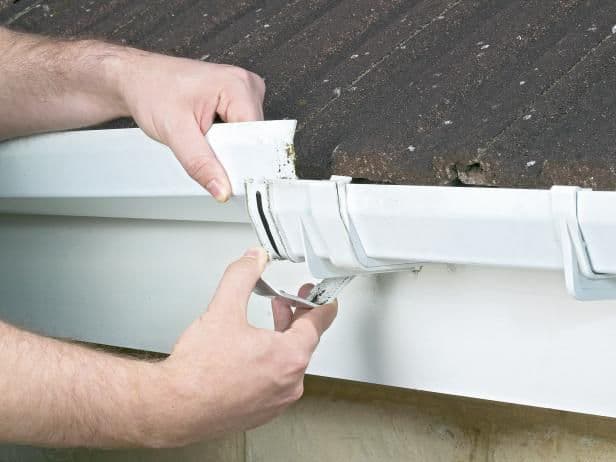
On the coast the problem is not leaves at all. It is moss coming down off the roof, wind-blown grit and sand, and the effect of salt. Salt air corrodes ferrous fixings far faster than inland air, so the brackets, screws and clips holding a gutter up on the Marsh give out years earlier than the identical parts do in Ashford. That is why we fit stainless as standard on exposed coastal work. Salt also breaks down mortar and surface coatings faster near the sea, which is part of the reason coastal roofs shed more moss and grit into the gutter in the first place. In practice a coastal property often needs the same two clears, but a much closer eye on the fixings, because the part that fails is rarely the gutter itself. It is whatever is holding it to the fascia board.
There is a second, less obvious reason the coast is harder on guttering. Wind pulls upward on a roof rather than pressing down on it, and the suction is fiercest at the eaves, the verges, the corners and the ridge. Gutters sit exactly on that line. Storm damage almost always starts at an edge rather than in the middle of a slope, which is why a gutter left heavy with wet debris through a run of gales is under far more strain than its own weight would suggest.
What a blocked gutter actually costs
The reason we push the schedule is not the gutter. A length of guttering is inexpensive. The damage sits either side of it.
A large share of the roof leaks reported to us do not turn out to be holes in a roof at all. They trace back to a gutter overflowing behind the fascia, or to winter condensation in the loft. Overflow soaks the fascia and the soffit, and once those go soft the rot travels along the run rather than staying in one spot. Water running down the same stretch of wall through several winters takes the pointing out and then shows up inside as damp. If you have already noticed water spilling over the front edge in heavy rain, the gutter has been full for a good while.
None of that is dramatic while it is happening, which is exactly the problem. It is why checking the roof to a routine is worth more than waiting for symptoms, and why two clears a year tend to pay for themselves several times over.
Doing it yourself, and where that stops being sensible
On a single-storey extension, with a solid level surface to stand a ladder on, clearing a gutter yourself is reasonable work. On a two-storey house it is not, and we would rather say that plainly than have someone take a chance. Falls from ladders remain one of the most common causes of serious injury in this kind of work, and the HSE guidance on using a ladder safely is worth ten minutes before anyone goes up.
The other issue with a DIY clear is that it usually only reaches what can be seen. In our experience, clearing gutters by hand at the roof edge and flushing the downpipes through afterwards works better than a vacuum pole used from the ground, because the pole lifts the loose debris out of the run but leaves the outlet and the swan neck packed solid, and the outlet is where the blockage that actually causes an overflow nearly always sits. A run that looks perfectly clear from the pavement can still back up in the first heavy shower.
The clear is worth more when someone looks at the roof at the same time
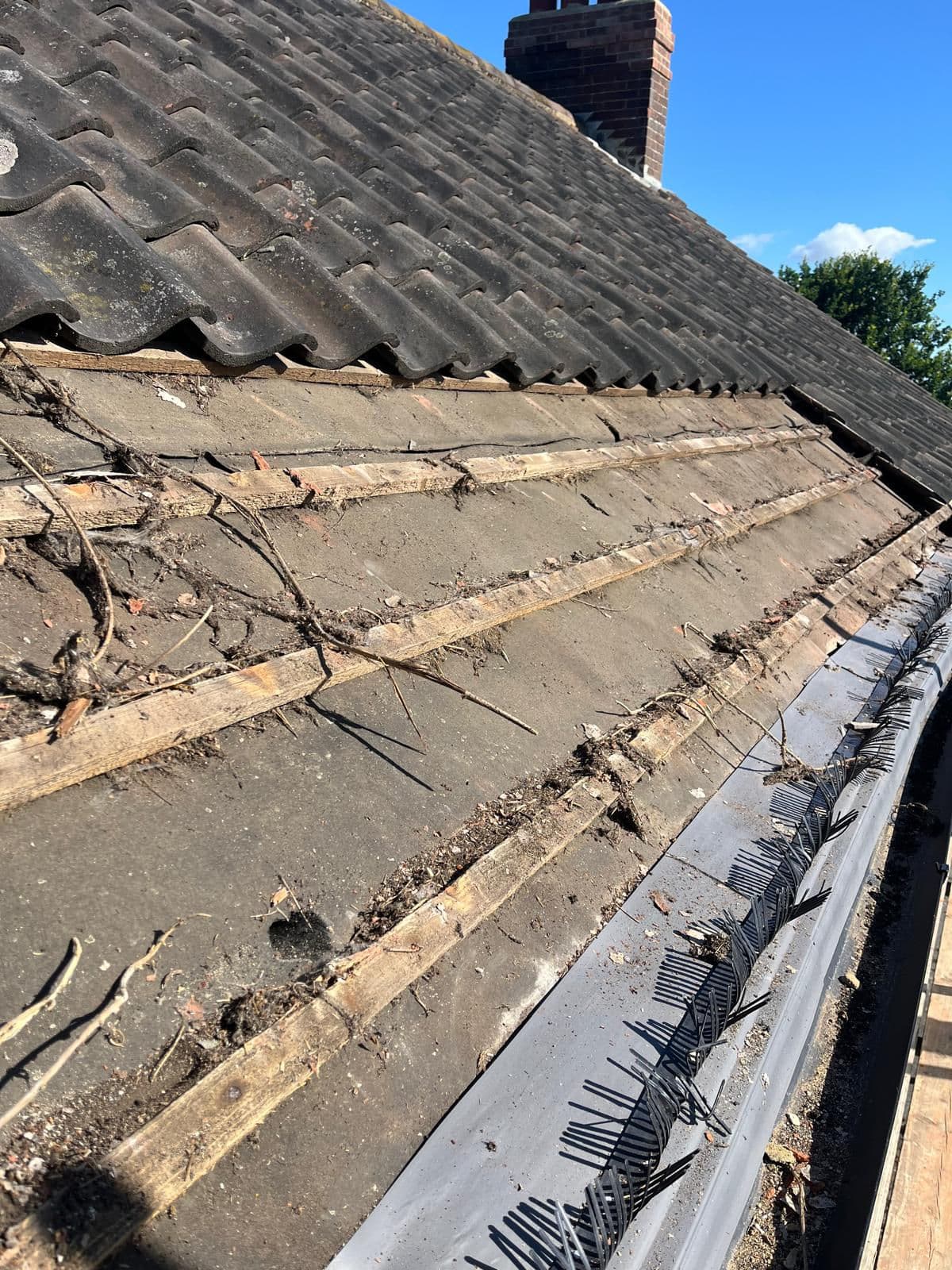
Anyone working at the eaves is already in the best position on the whole building to see how the roof is doing. While we are clearing, we are reading the state of the bedding mortar along the ridge, the flashing where the roof meets a chimney or a wall, and whether any tiles have slipped or lifted. On coastal jobs we are looking hard at the fixings too, because salt gets to those first.
That is why we treat clearing as part of the wider guttering, fascia and soffit work rather than as a job on its own, and why it so often runs alongside getting the moss off the tiles, given that the moss filling the gutter came off the roof directly above it.
Getting it booked
So, twice a year for most homes, three or four if you have trees over the roof, and a closer eye on the fixings if you are near the coast. Get the autumn clear done once the leaves are properly down and you have dealt with the bulk of the risk before the weather turns.
Premier Roofing is a family run business owned by Ken Perkins, working from Shadoxhurst just outside Ashford and covering Romney, New Romney, Dymchurch, Lydd, Hythe and Ashford. Between us we have over ten years in the trade and list 44 separate roofing skills, from guttering and leadwork through to chimney repairs and full re-roofs. We have been a Checkatrade member since September 2024 and hold ten out of ten from six verified reviews, with customers picking out fast call-outs within 24 hours, turning up when we said we would and leaving the job tidy. Our Checkatrade reviews are all there to read.
Every quote is free and comes with no obligation, our workmanship is backed by a one thousand pound guarantee, and we run a 24 hour emergency call-out for the times a gutter gives way in the middle of a storm. Recent work across the patch is in our gallery, including gutter repairs on houses where the boards behind had already gone soft.
To book a clear, or to get a free quote on anything else, call 01233 234554, email premier_roofing@hotmail.com or send us a message and we will come and take a look.