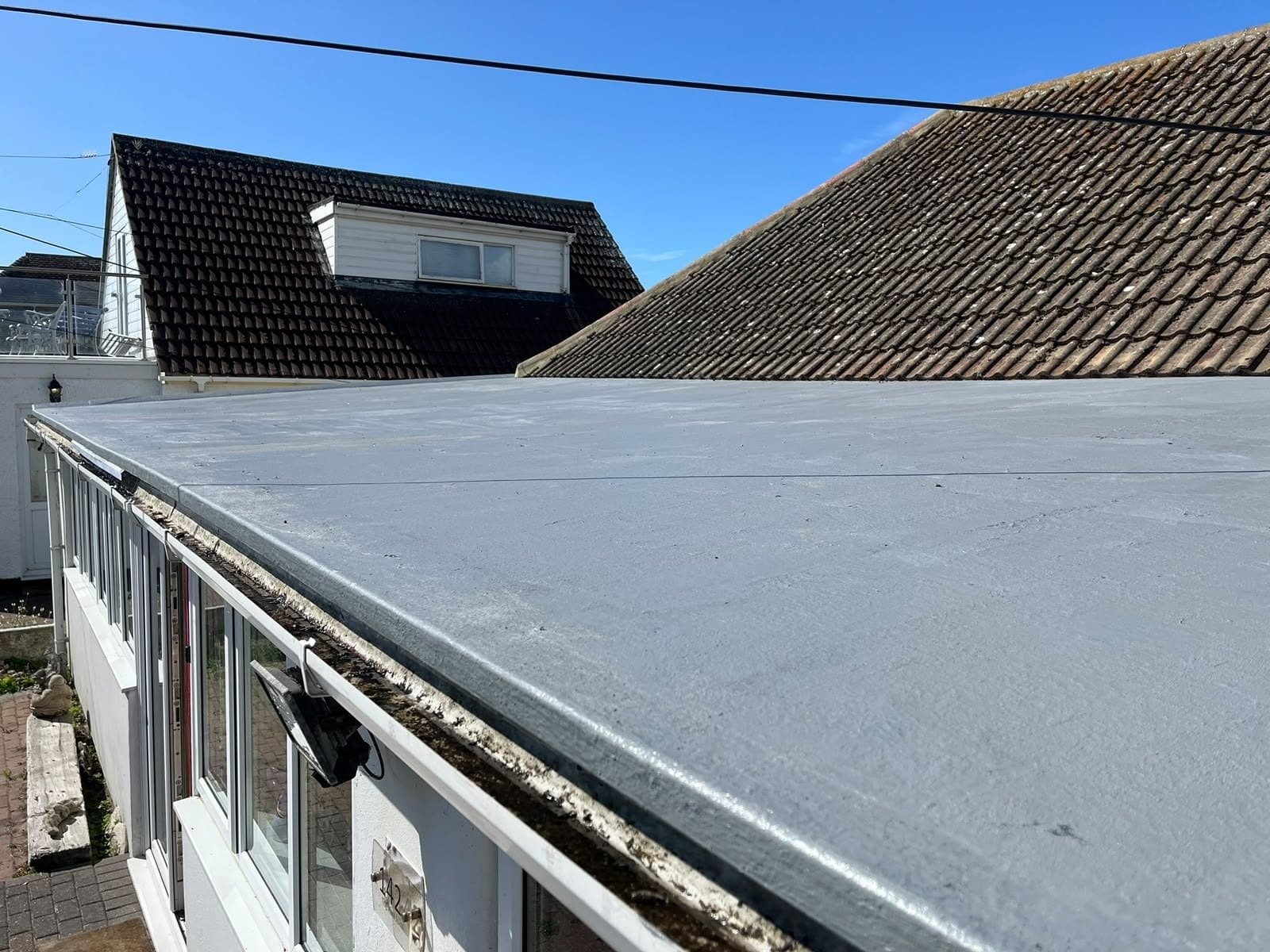
A full roof replacement runs in a fixed order. Scaffold goes up, the old covering comes off, the timber underneath is inspected and repaired, a breathable membrane and new battens go on, the new covering is laid from the eaves upward, the ridge and verges are mechanically fixed, then flashings, guttering and a clear site. On an ordinary semi or bungalow that is usually three to five working days once the scaffold is standing, and a fortnight from accepting a quote to finishing is a fair expectation in normal weather.
The part most people are not told is that the price and the scope are not genuinely settled until the old covering is off. Everything above the battens can be surveyed from a ladder or a drone. Everything below them is hidden until it is exposed. A good quote says what happens if the timber turns out to be worse than it looked, and a poor one leaves that conversation until you are already committed with a stripped roof. What follows is the sequence in full, and where the decisions actually sit.
Before anything goes up
The first visit should be a proper look rather than a number over the phone. We check the covering, the ridge, the verges, the flashings, the gutters and the roof timbers from inside the loft where there is access, because the loft tells you more about a roof than the outside does. Daylight through the felt, damp staining on rafter sides and crumbling batten ends all change what the job is.
That visit is also when the scope gets decided, and it is worth being clear about the difference between a re-roof and a repair, because they are not the same conversation. If the roof genuinely needs replacing the quote should be itemised in writing, naming the covering, the membrane, the batten size, the fixings and the ridge system. Quotes are free and carry no obligation, and one that will not name those things cannot be compared with one that does.
There is a regulatory point worth knowing at this stage too. Once you renew more than a quarter of a roof covering, the work generally has to bring that part of the roof up to current standards, which can mean insulation and structural work beyond a like for like swap. The Planning Portal's guidance on building regulations for an existing roof sets out where those thresholds fall. Competent roofers can self certify the work through the NFRC Competent Person Scheme rather than putting you through a separate building control application, which is quicker and cheaper for you.
Scaffold, and protecting what is underneath
Scaffold goes up first, and it is not optional on a full replacement. A roof cannot be stripped safely or laid properly from ladders, and the scaffold is what lets the work be done from the right position rather than the reachable one. Expect it to be up a day or two before work starts and to stay for a few days after.
Before anything comes off, the ground gets protected. Stripping a roof produces a startling amount of debris and dust, and the difference between a tidy job and a miserable one is almost entirely down to what was put down first. Customers on our verified reviews mention polite and tidy work as often as they mention the roof itself, which tells you how much it matters when you are living in the house.
Stripping the old roof
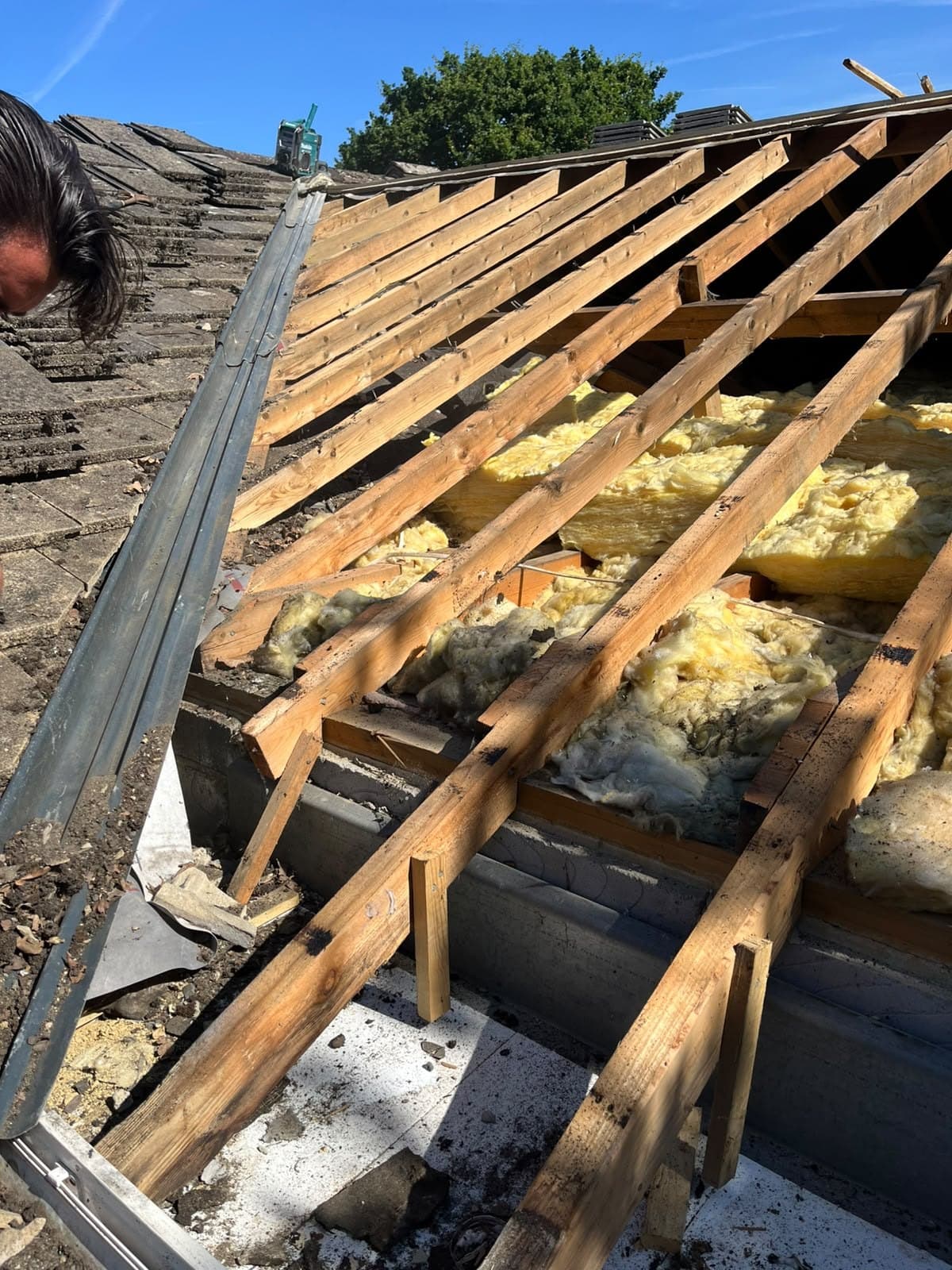
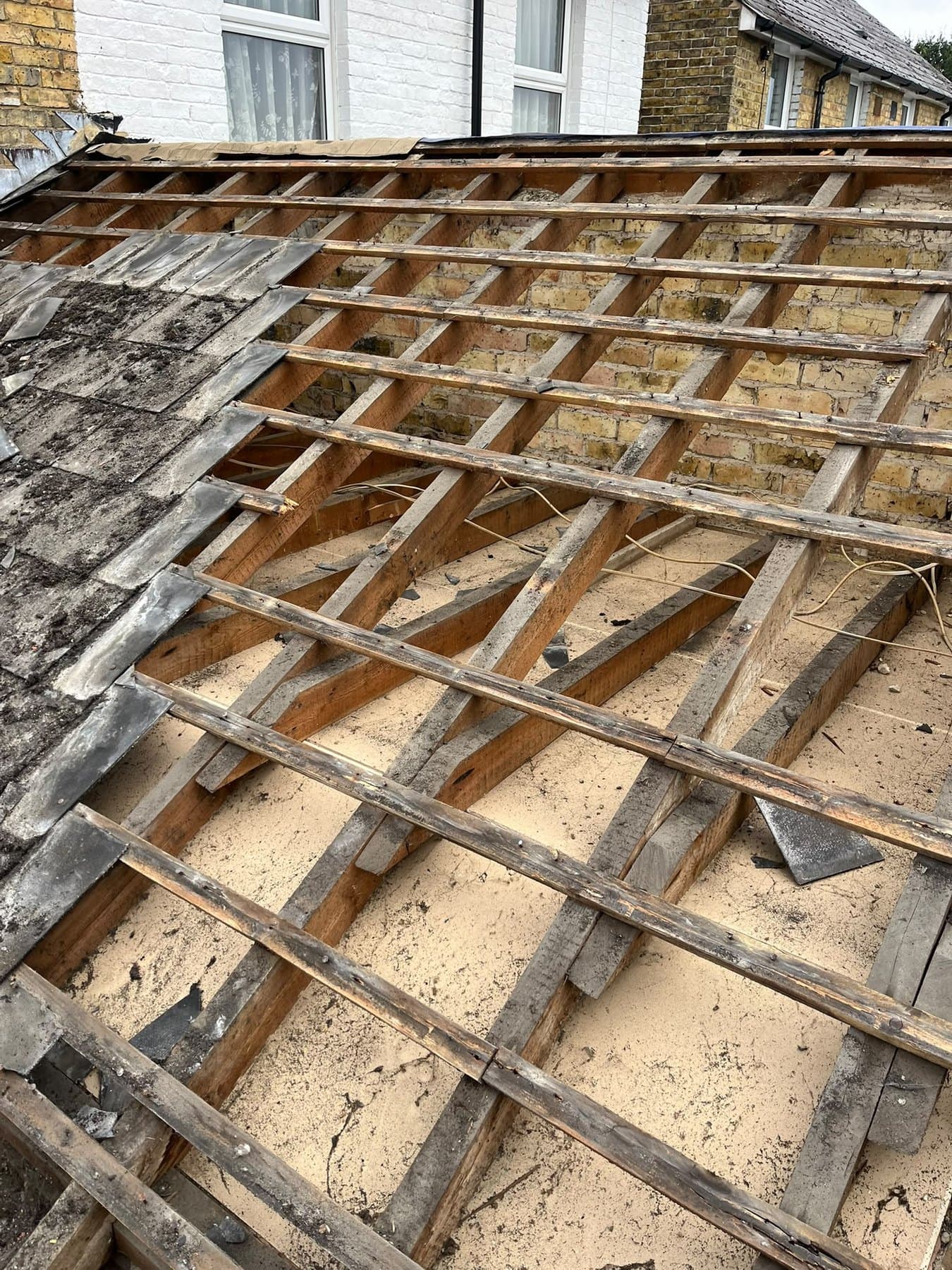
The old covering, battens and felt all come off, down to the rafters. This is the noisy, fast part, and it is also the moment of truth, because it is the first time anybody can see the actual condition of the structure.
In our experience, stripping a roof back to the rafters works better than laying a new covering over the old one because you cannot inspect what you have buried, the extra weight then sits on timber nobody has looked at, and whatever caused the original problem stays sealed in underneath where it carries on quietly. It costs more on the day and it is the only version of the job that is honestly a replacement.
The timber underneath
With the rafters exposed, the timber gets checked properly. Most roofs need nothing more than a few rafter ends made good where water has been getting in at the eaves for years. Some need more, and occasionally a wall plate or a section of rafter needs replacing.
This is where an honest firm earns its money, because you cannot see it and you have to be told. We would rather show you a photograph of a rotten rafter end and explain the extra cost than quietly batten over it, and any variation should be agreed before it is done rather than appearing on the final bill.
Membrane, battens and the new covering
Once the timber is sound the roof is built back up in layers, and the order is not negotiable.
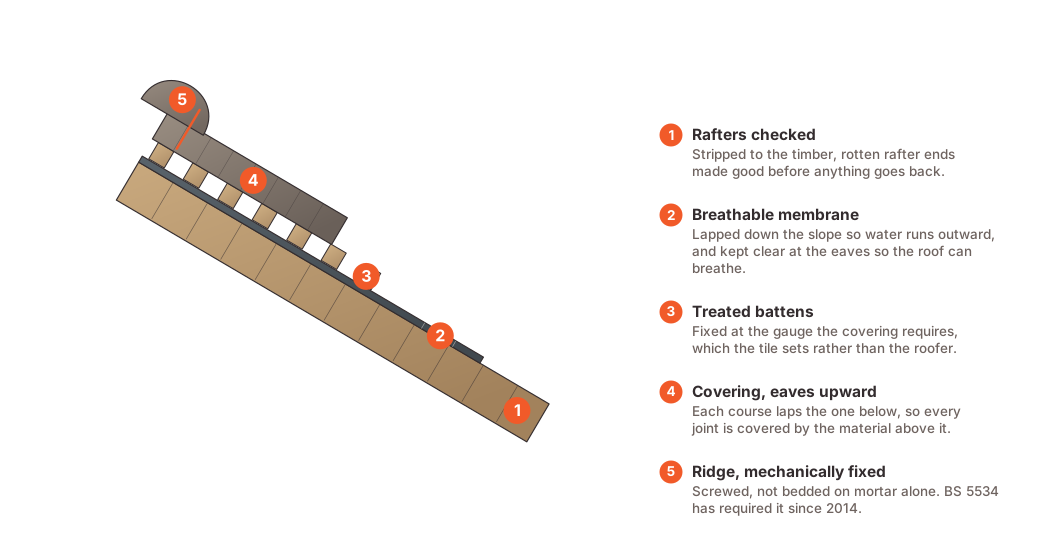
A breathable membrane goes over the rafters, lapped down the slope so water runs outward, and it must be kept clear at the eaves so the roof can ventilate. Blocking that gap is one of the most common causes of a roof that appears to leak in cold, dry weather when what is actually happening is condensation. Then treated battens are fixed at the gauge the covering requires, which is set by the tile or slate rather than chosen, and then the new felt and batten work is complete and the covering starts.
Tiles or slates are laid from the eaves upward, each course overlapping the one below, so every joint is covered by the material above it. That overlap is the entire waterproofing principle of a pitched roof, and it is why the order matters and why the choice of covering affects the pitch, the gauge and the weight the structure has to carry.
The edges, where a re-roof is won or lost
The middle of a slope is the easy part. Wind pulls upward on a roof rather than pressing down on it, and the suction is fiercest at the eaves, the verges, the corners and the ridge, which is why storm damage almost always starts at an edge. Those are the details worth paying attention to.
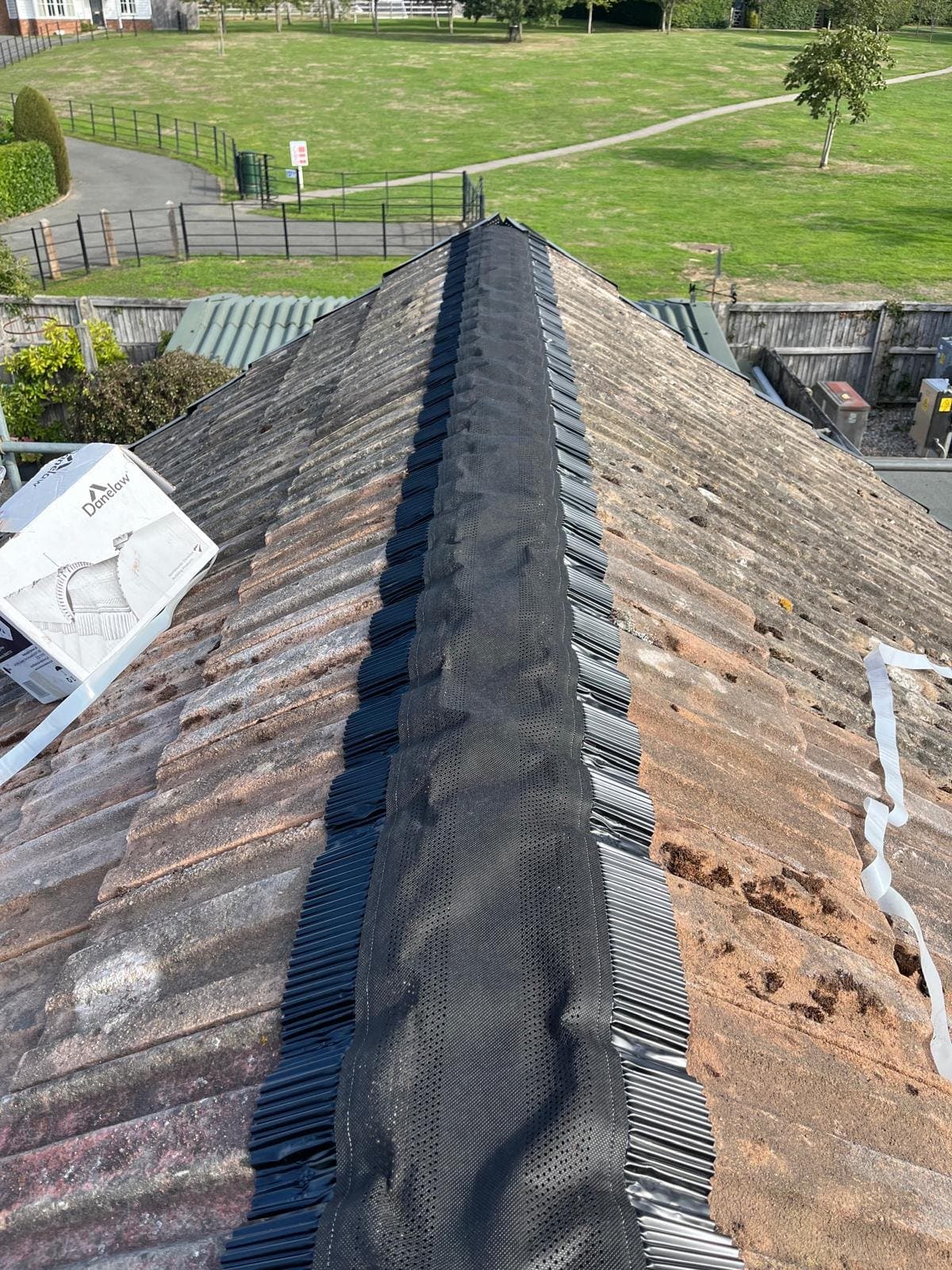
Ridge and hip tiles are mechanically fixed, not bedded on mortar alone. BS 5534 was revised in 2014 to require it, and a great many older roofs around here still rely on failing bedding mortar, which is why ridge work is one of the most frequent jobs we are called to. Verges get a dry system or proper mechanical fixing for the same reason. Then leadwork and flashings go in where the roof meets a chimney, a wall or a valley, because those junctions leak long before a slope does.
On exposed coastal work at Dymchurch and Lydd we fit stainless fixings as standard, because salt air corrodes ferrous fixings far faster than inland air and galvanised clips that would last decades in Ashford give out years earlier on the Marsh. That decision costs very little on the day and it is the difference between a roof that lasts its full life and one that starts lifting at the edges in a decade.
Finishing, and what you should have at the end
Guttering, fascias and soffits are dealt with while the scaffold is still up, because doing them later means paying for access twice. The site is cleared, the roof is checked over, and the scaffold comes down.
You should end up with an itemised record of what was fitted, a workmanship guarantee, and a roof whose edges and junctions were detailed properly rather than finished in a hurry on the last afternoon. Ours carries a one thousand pound workmanship guarantee. For a sense of the timings across different roof types and sizes, how long an installation takes covers it in more detail.
Talking to us
Premier Roofing and Building Kent Ltd is family run, owned by Ken Perkins and working out of Shadoxhurst just outside Ashford, covering Romney, New Romney, Dymchurch, Lydd, Hythe and Ashford. Between us we have over ten years in the trade and list 44 separate roofing skills, so a full roof replacement and everything around it is one firm rather than several trades. We work on domestic and commercial roofs, including insurance work, and we have held ten out of ten across every review on our Checkatrade profile since joining in September 2024, on jobs including roof replacement across TN25, TN26 and ME14.
Quotes are free and carry no obligation, and there is a 24 hour call-out if something goes wrong in the meantime. Re-roofs we have completed across the patch are in our gallery, including several photographed mid-strip so you can see what goes back on. To arrange a proper look and a written quote, call 01233 234554, email premier_roofing@hotmail.com or send us a message.