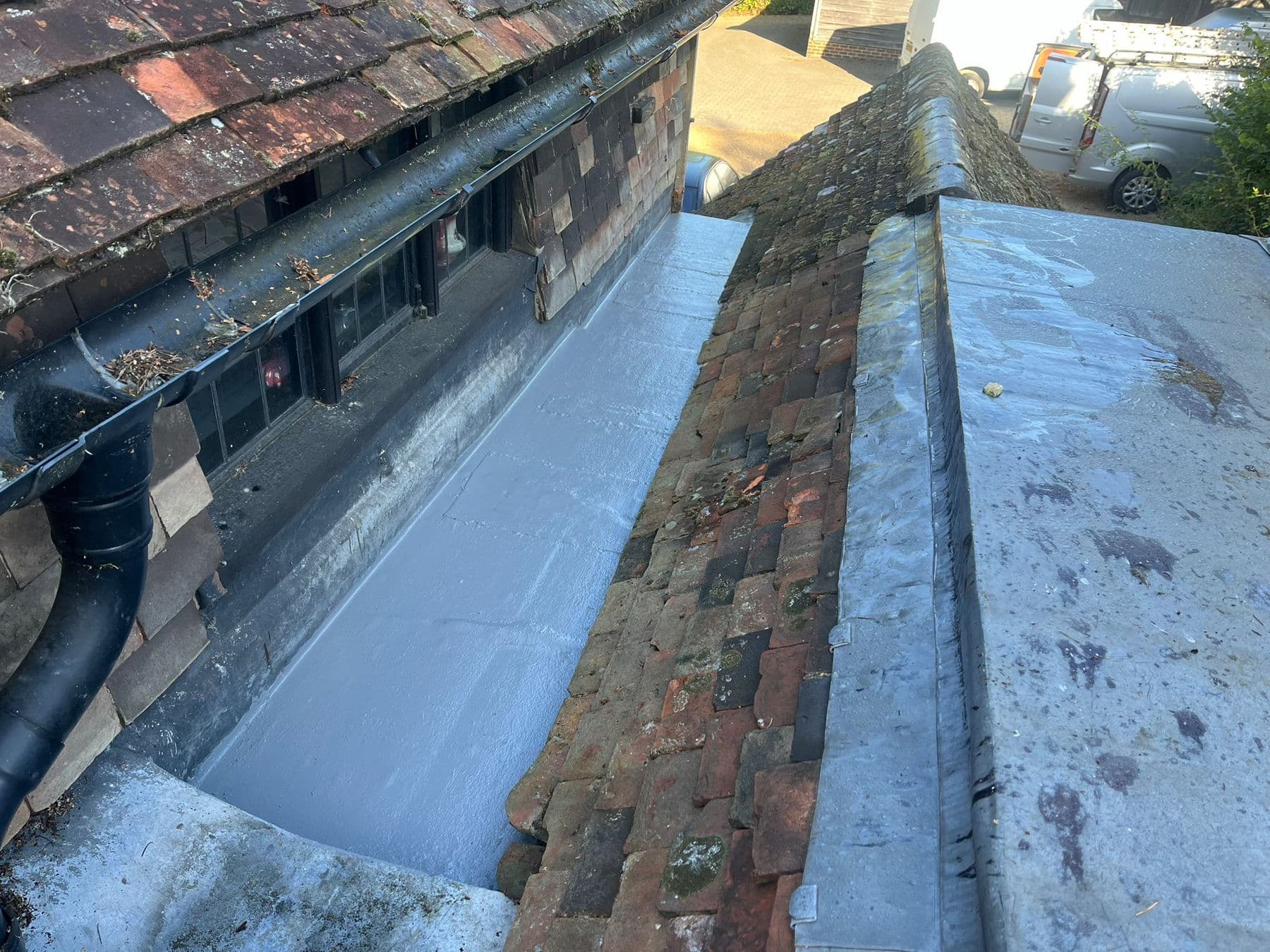
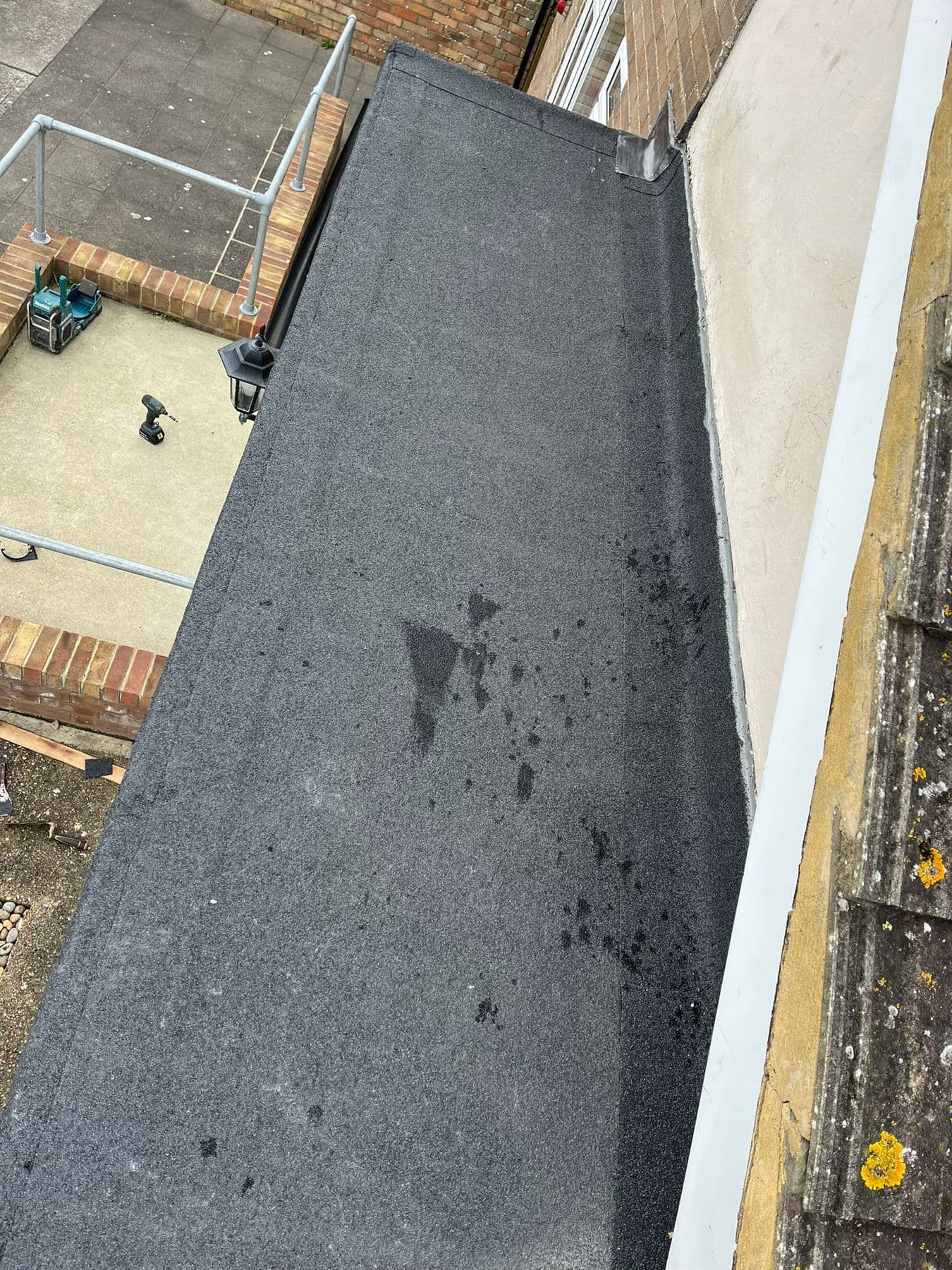
We explain flat roof repairs Kent to homeowners across the county quite often. Flat roofs are widely used on extensions, garages, and commercial buildings, and they can perform very well when installed and maintained correctly. However, because flat roofs deal with water differently than pitched roofs, problems can develop over time if small issues are not addressed early.
Flat roofs are exposed to rain, wind, and temperature changes throughout the year. These conditions can gradually weaken the roof surface and cause leaks if maintenance is ignored.
Why flat roofs sometimes develop problems
Flat roofs are designed with a slight slope so water can drain away slowly. If drainage becomes blocked or the surface begins to deteriorate, water may sit on the roof for longer than intended.
Over time this standing water can weaken the waterproof layer and allow moisture to enter the roof structure. This is why regular maintenance and timely repairs are important for flat roofs.
Common flat roof problems
Leaks and water ingress
The most common reason homeowners need flat roof repairs is a leak. Small cracks, damaged seams, or worn areas in the waterproof membrane can allow water to penetrate the roof surface.
Professional roof repairs can often resolve these problems quickly when caught early.
Standing water
If water regularly pools on a flat roof, this may indicate drainage issues or slight structural movement. While some water may remain temporarily after rainfall, large pools that stay for long periods can cause damage.
Surface cracks or blistering
Temperature changes throughout the year cause roofing materials to expand and contract. Over time, this movement may lead to cracks, bubbling, or blistering in the roof surface.
When these signs appear, repairs should be carried out before leaks begin.
Edge and flashing issues
Flat roofs often meet walls or chimneys at different points. These areas rely on secure leadwork and flashing to keep water out. If flashing becomes loose or worn, water can enter quickly.
Drainage and roofline components
Drainage is a key part of flat roof performance. Damaged or blocked guttering, fascias, and soffits can prevent water from flowing away from the roof properly.
When gutters overflow, water may run down walls or seep beneath roof edges, leading to further problems.
Regular cleaning and inspection of roofline components helps reduce the need for major repairs.
When flat roof repairs are enough
Many flat roof problems can be solved with targeted repairs. Small cracks can be sealed, damaged sections replaced, and flashing resecured.
Repairs are usually recommended when the roof is still structurally sound and the damage is limited to specific areas.
Acting quickly keeps repair costs lower and prevents damage spreading across the roof surface.
When flat roof replacement may be needed
In some cases, repairs are no longer the most effective solution. If a flat roof has widespread surface damage, repeated leaks, or has reached the end of its lifespan, replacement may be the better option.
During larger projects we may recommend new roof installations to ensure the property is properly protected long term.
Replacing the roof also allows us to inspect and renew the structure beneath if needed.
Planning permission and flat roof repairs
Most flat roof repairs carried out like for like do not require approval. However, changes to roof height or structure may require checking planning permission rules in England and Wales.
Homeowners can also review guidance from the Planning Portal on roof work to understand what work falls under permitted development.
Building regulations and flat roofing work
Some flat roofing projects must comply with GOV.UK building regulations, particularly when insulation or structural elements are affected.
Compliance is overseen by Local Authority Building Control. In Kent, this is managed through Kent County Council planning and building control. Professional roofing contractors ensure all work meets current standards.
Safety when repairing flat roofs
Working on a flat roof still involves working at height. All roofing work must follow HSE working at height guidance to ensure safe working practices.
Attempting DIY repairs without the proper equipment can be dangerous and may lead to further damage.
Why local experience matters
Flat roof systems vary depending on the age and design of the property. Homes across Kent also experience different weather conditions depending on location.
Understanding local roofing conditions helps ensure repairs are carried out correctly and long lasting solutions are provided.
Homeowners throughout the county continue to trust Premier Roofing for reliable roofing work and honest advice.
Preventing future flat roof problems
Regular inspections help identify small issues before they develop into larger problems. Clearing drainage outlets, checking flashing, and monitoring surface wear all help extend the lifespan of a flat roof.
Preventative maintenance is often far more cost effective than emergency repairs.
Flat roof repairs on exposed properties
A lot of our flat roof repair work is on extensions, garages and dormers between Hythe and the Marsh, and the pattern is consistent. Splits and failed seams inland, lifted edges and failed upstands nearer the sea. Water sitting where it should be leaving is the common cause behind both.
Conclusion
Professional flat roof repairs Kent services help protect homes and buildings from leaks and structural damage. Addressing small issues early keeps repair costs manageable and extends the life of the roof. If you have noticed signs of damage on your flat roof or would like it inspected, simply contact us and we will be happy to help.