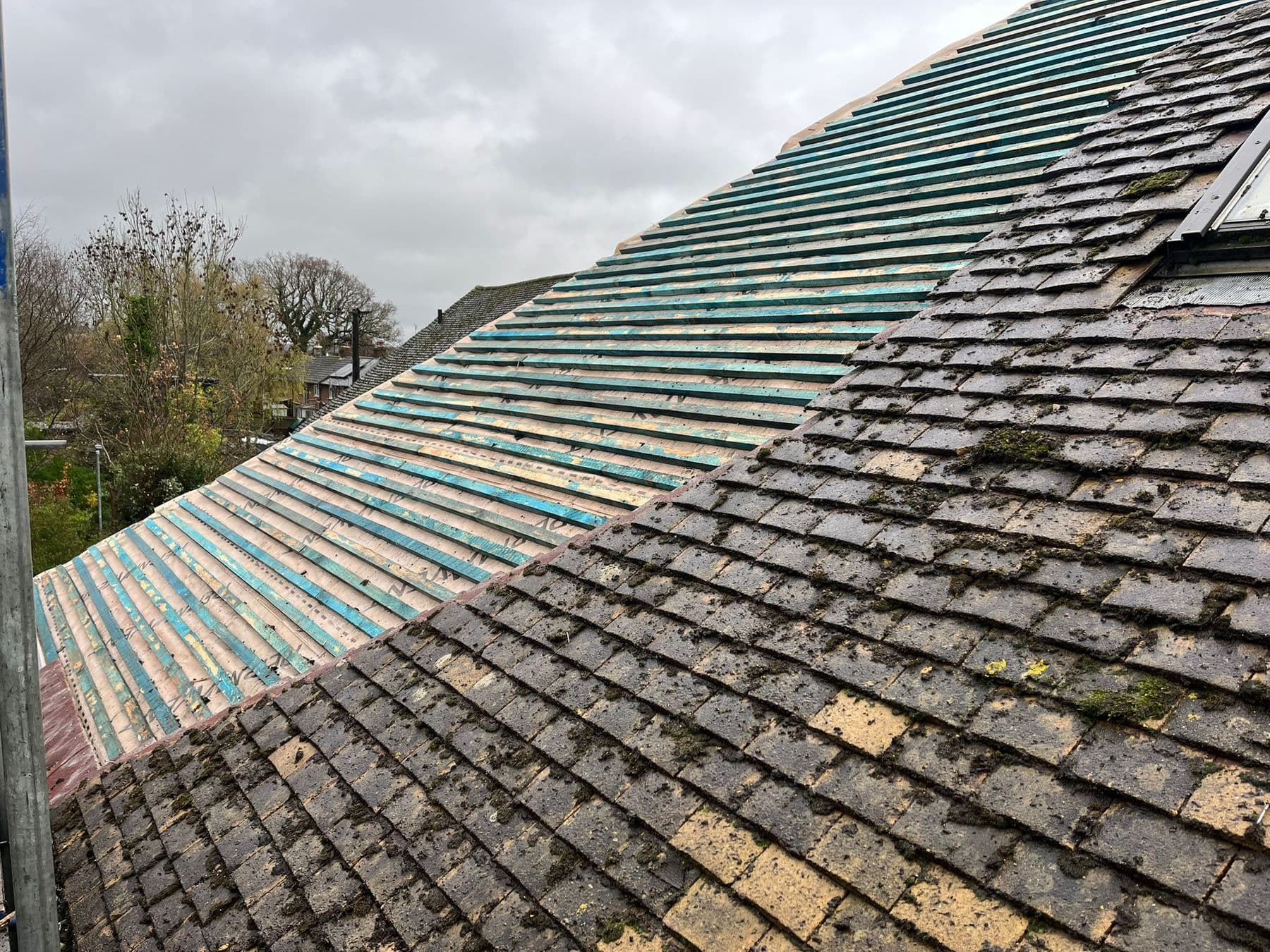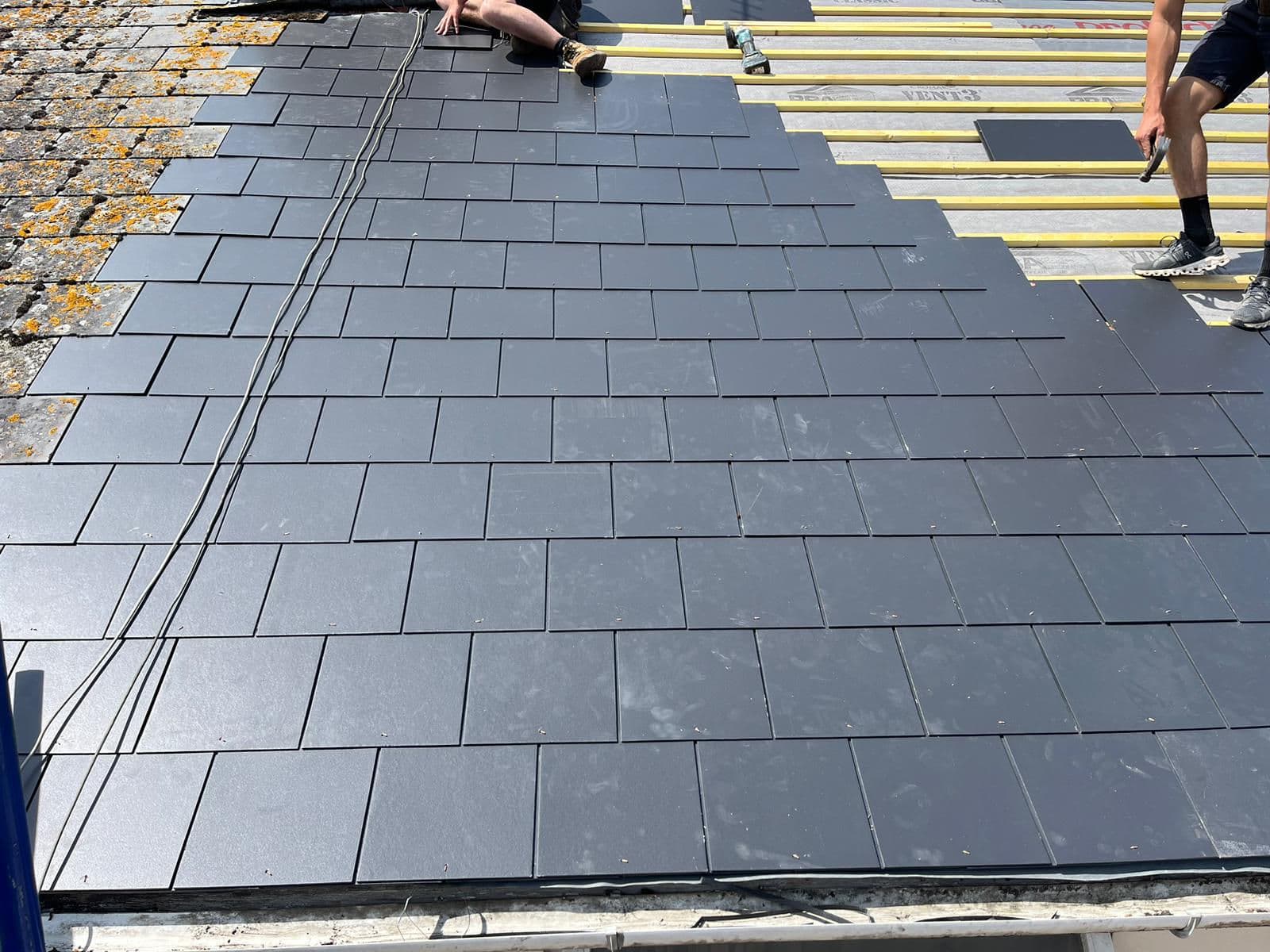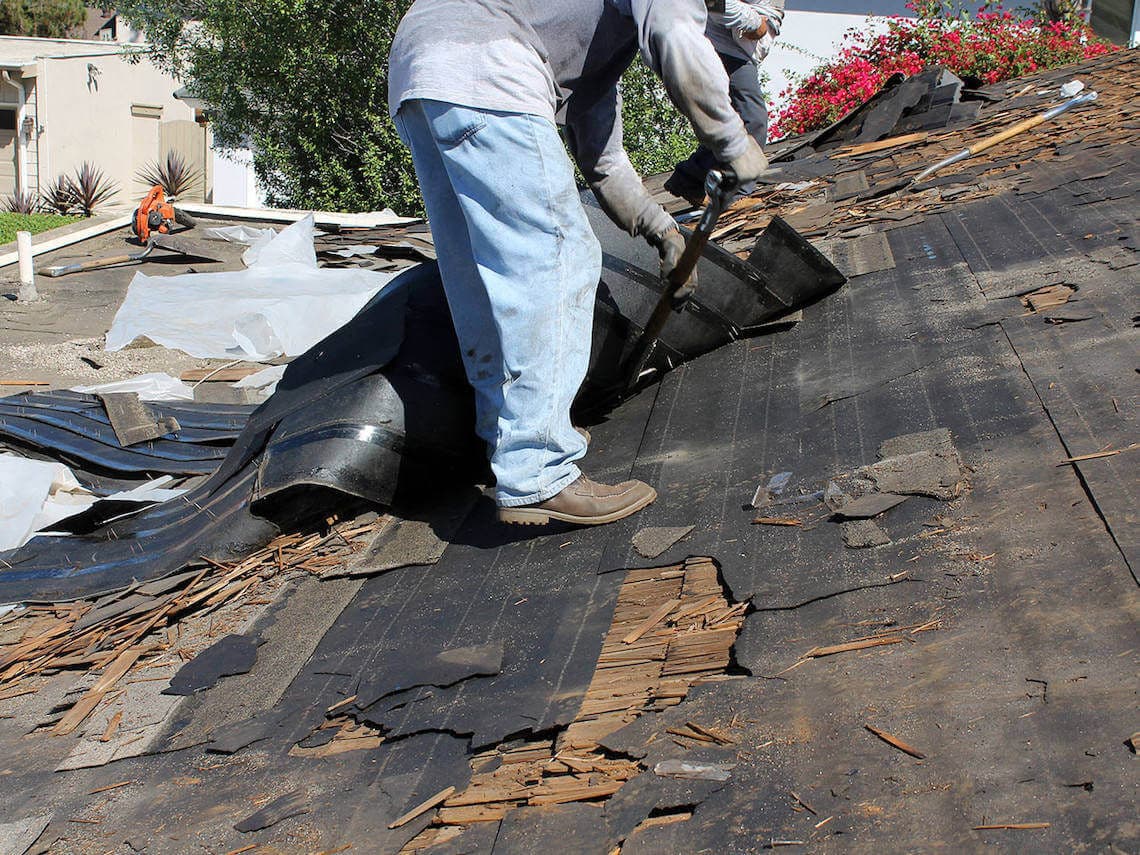
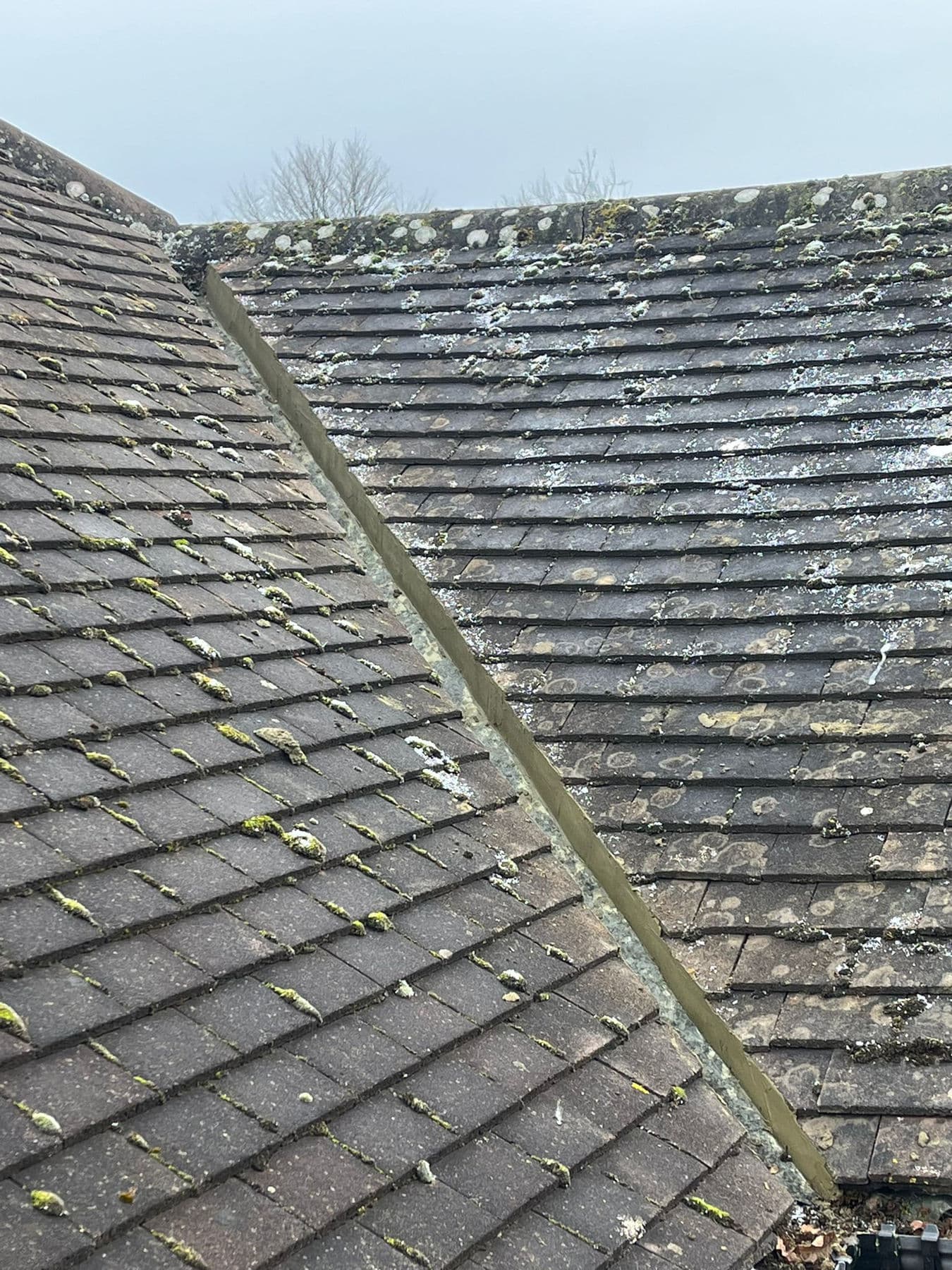
We explain how to maintain your roof in winter because colder months are when roofing problems often appear. Heavy rain, strong winds, frost, and occasional snow all put extra pressure on your roof. If small issues already exist, winter weather will usually make them worse. Taking simple steps before and during winter helps prevent leaks, damp, and costly repairs.
Homes across Kent face regular winter storms. Preparing early makes a big difference.
Why winter is hard on roofs
Winter weather increases moisture levels and reduces drying time. Tiles stay wet for longer, and frost can expand small cracks. Wind lifts loose tiles, and blocked gutters cause water to overflow.
If a roof is already ageing or poorly maintained, winter exposes those weaknesses quickly. That is why preparation is key.
Inspect your roof before winter sets in
The best time to maintain your roof in winter is actually before severe weather arrives.
From ground level, look for:
- Slipped or cracked tiles
- Loose ridge tiles
- Damaged flashing around chimneys
- Sagging areas along the roofline
If you notice anything unusual, arranging professional roof repairs before heavy rain and frost can prevent larger problems later.
Keep gutters clear
Blocked gutters are one of the most common causes of winter roof problems. Leaves, moss, and debris collect during autumn and prevent water from draining properly.
Damaged or blocked guttering, fascias, and soffits allow water to overflow and soak into roof edges and walls. During freezing temperatures, trapped water can expand and cause further damage.
Clearing gutters before winter and checking them after storms reduces risk significantly.
Check flashing and roof joins
Roof joins and chimney areas are vulnerable during winter storms. Properly installed leadwork and flashing prevent water from entering at these weak points.
If flashing is loose or cracked, heavy rain and wind can force water inside. A small issue here can quickly become a ceiling leak.
Watch for moss build up
Moss holds moisture against roof tiles. In winter, this moisture can freeze and expand, increasing the risk of tile movement or cracking.
While moss removal should be done carefully, monitoring build up and addressing it safely helps protect the roof surface.
Inspect your loft
Maintaining your roof in winter also involves checking inside the property.
In your loft, look for:
- Damp insulation
- Water stains on timbers
- Mould smells
- Daylight visible through tiles
These signs suggest water ingress and should be addressed quickly.
Be cautious with snow and ice
Heavy snow adds weight to the roof. While most roofs are designed to handle normal snowfall, uneven loads or existing weaknesses can cause stress.
Ice dams can also form along roof edges if drainage is blocked. Keeping gutters clear reduces this risk.
Never attempt to climb onto a snowy or icy roof. Roof work should always follow HSE working at height guidance to ensure safety.
When repairs are enough
If you catch issues early, minor repairs usually solve the problem. Securing loose tiles or resealing flashing before winter weather worsens the damage keeps costs manageable.
Regular maintenance extends roof life and reduces emergency call outs.
When winter damage reveals bigger issues
Sometimes winter weather exposes underlying structural problems. If multiple leaks appear or tiles fail across large areas, the roof may be nearing the end of its lifespan.
In these cases, it may be sensible to consider new roof installations once conditions allow. Replacing an ageing roof provides better protection against future winters.
Planning and winter roof work
Most maintenance and like for like repairs do not require approval. However, larger structural changes may require checks under planning permission rules in England and Wales.
Homeowners can also review guidance from the Planning Portal on roof work if unsure.
Building regulations and compliance
If winter repairs involve structural elements, they must comply with GOV.UK building regulations. These rules ensure the roof remains safe, insulated, and weather resistant.
Compliance is overseen by Local Authority Building Control. In Kent, this is managed through Kent County Council planning and building control. Professional roofers handle this process correctly.
Why local experience matters in winter
Kent’s winter weather varies between coastal and inland areas. Strong coastal winds can lift tiles, while inland properties often experience heavy rainfall and drainage issues.
Understanding local conditions helps ensure maintenance is focused on the areas most at risk.
Homeowners across the county continue to trust Premier Roofing for practical winter roofing advice and reliable work.
Preventative maintenance saves money
Maintaining your roof in winter is far more cost effective than dealing with emergency repairs during a storm. Small checks, timely repairs, and proper drainage reduce the risk of major leaks.
Planning maintenance before severe weather arrives gives you peace of mind throughout the colder months.
Winter on this stretch of coast
Winter is when the difference between our two ends shows most. Inland the risk is blocked gutters and standing water. At Dymchurch and Lydd it is wind, and wind pulls upwards on a roof rather than pressing down. Check the ridge, the verges and the eaves first, because on an exposed roof the trouble almost never starts in the middle of a slope.
Conclusion
Knowing how to maintain your roof in winter helps protect your home from leaks, damp, and structural damage. Regular inspections, clear drainage, and prompt repairs make a significant difference. If you would like your roof checked before or during winter, simply contact us and we will be happy to help.